Plants
Pomegranate (Punica granatum): A Complete Botanical Monograph
Comprehensive monograph on pomegranate covering botanical identity, phytochemistry, cultivation, propagation, extraction, and small-scale agricultural use.
On this page
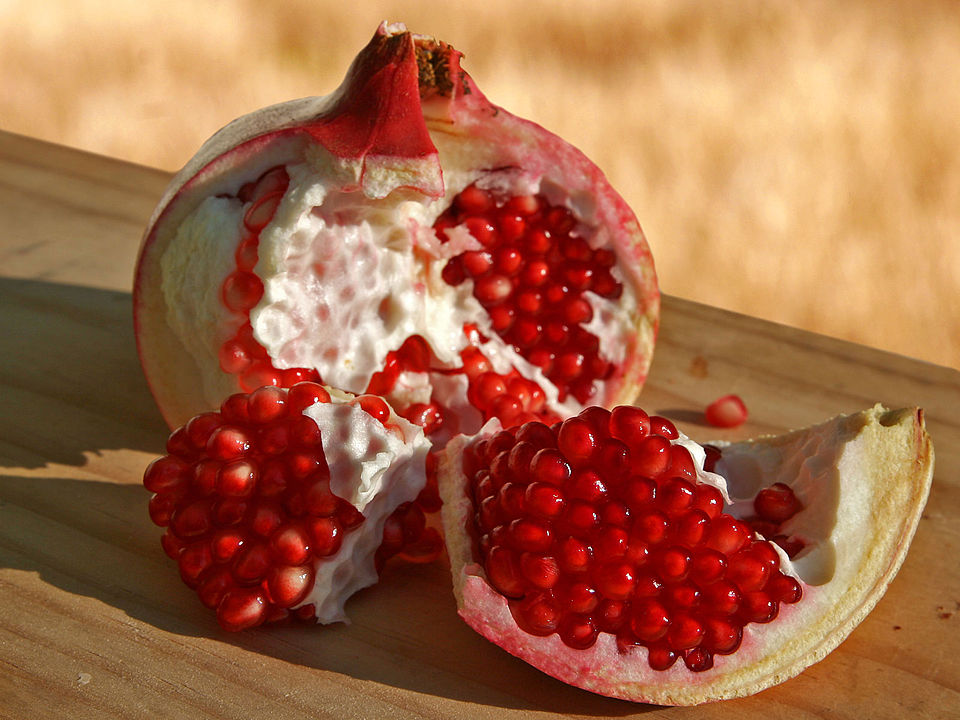
Pomegranate (Punica granatum) is a long-lived, deciduous to semi-evergreen shrub or small tree, typically reaching 8–20 feet in height, characterized by a dense, multi-stemmed growth habit, glossy narrow leaves, and striking scarlet flowers. The fruit is botanically classified as a balausta, defined by a thick leathery rind enclosing hundreds of arils, each aril consisting of a translucent, juice-filled sarcotesta surrounding a lignified seed.
Modern cultivars vary widely in fruit size, acidity, sugar content, tannin concentration, seed hardness, and pigment density. These differences are agriculturally and chemically significant, as different cultivars are favored for fresh consumption, juicing, polyphenol extraction, or rind utilization.
Unlike many fruiting trees, pomegranate exhibits extraordinary tolerance to drought, salinity, alkaline soils, and heat, making it particularly suited to arid and semi-arid climates where other fruit trees struggle.