Growing
Rhodiola (Rhodiola rosea): The Arctic Adaptogen That Vikings Used to Survive the North
Complete rhodiola cultivation guide covering arctic-alpine growing, roseroot propagation, salidroside and rosavin chemistry, Viking history.
On this page
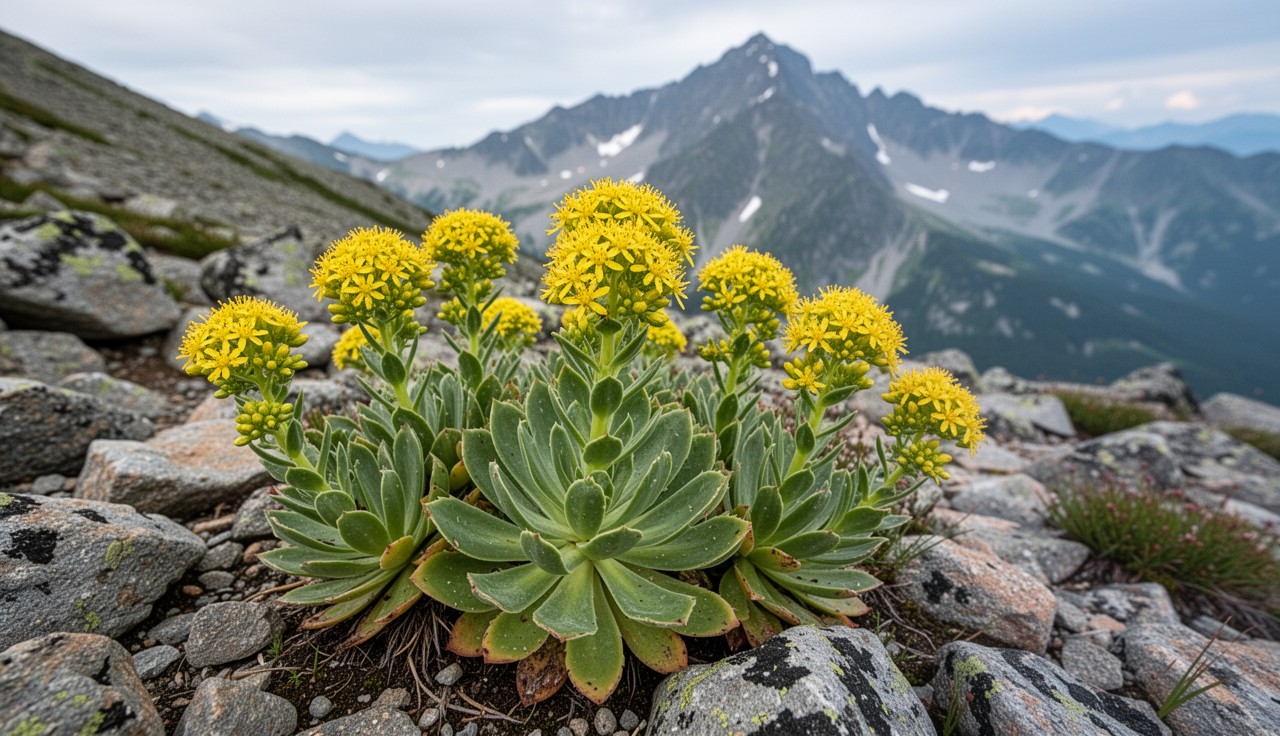
Rhodiola (Rhodiola rosea), also called roseroot, golden root, or arctic root, is a succulent perennial in the Crassulaceae family native to high-altitude and arctic regions of Europe, Asia, and North America. The plant forms compact rosettes of fleshy, blue-green leaves on short stems rising from a thick, knotted rhizome. When cut or scraped, the rhizome releases a distinctive rose-like fragrance, the source of both the species name rosea and the common name roseroot.
Plants are typically dioecious (separate male and female plants), with small yellow-to-greenish flowers clustered at stem tips. The entire plant rarely exceeds 12–16 inches in height, an adaptation to the extreme wind, cold, and UV exposure of its native high-altitude and arctic habitats. Rhodiola is found growing wild on sea cliffs in Scandinavia, alpine scree slopes in the Alps, and rocky tundra across Siberia and northern Canada.
A Genuinely Difficult Crop
Unlike most herbs in this guide, rhodiola presents real cultivation challenges for lowland growers. The plant evolved in environments with long winter dormancy, cool summers, intense UV, thin rocky soil, and excellent drainage. Replicating these conditions in Texas or the Southeast is possible but requires deliberate effort. Container culture in a gritty, mineral-rich substrate with winter cold exposure is the most reliable approach for warm-climate growers.