Extraction
How to Evaporate Solvent Safely: Hot Plate, Vacuum and Rotary Evaporator Basics
Why and how to remove ethanol from an extract, what a vacuum does to the boiling point, and the fire and vapour hazards.
On this page
Why would you remove the solvent from an extract?
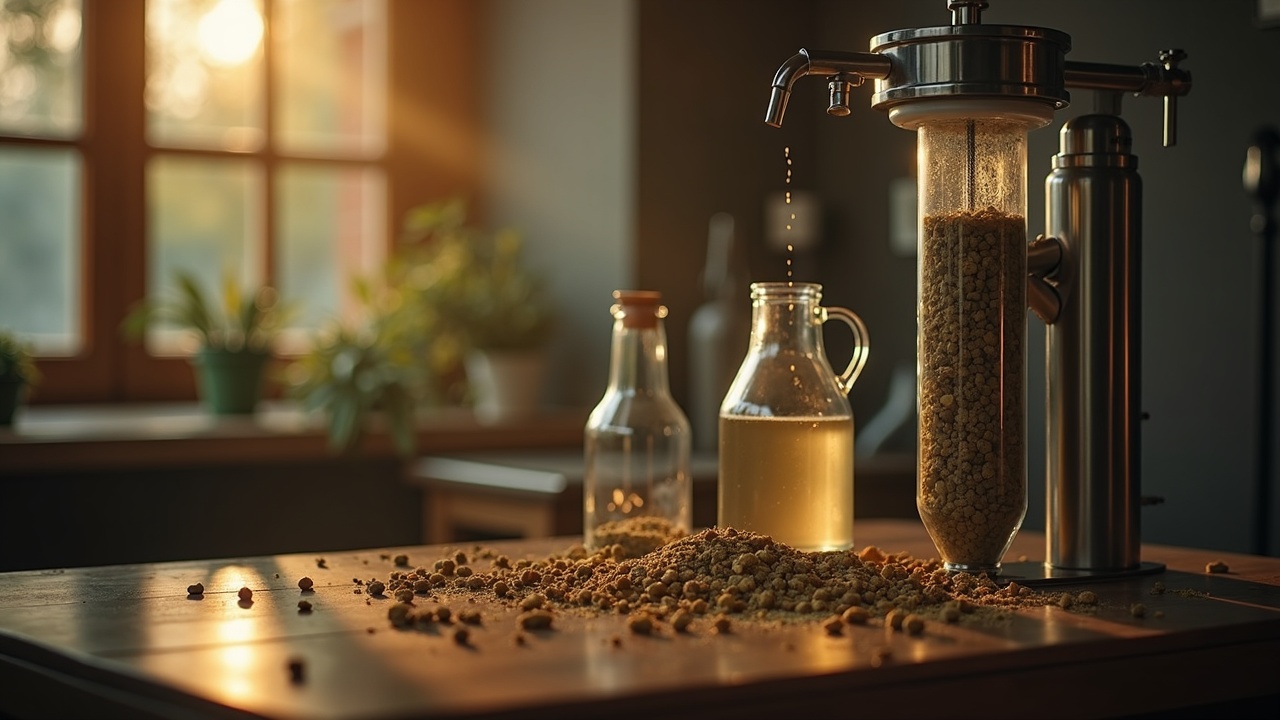
Solvent removal transforms an initial liquid extract into various useful forms. The primary reason to remove ethanol is to concentrate the desired plant compounds. Ethanol extraction yields a solution, the menstruum, containing dissolved constituents. Evaporating the solvent leaves behind a crude extract, which can then be encapsulated, tableted, or further refined. This process is detailed in evaporating solvent.
The final product form dictates how much solvent remains. Tinctures utilize the ethanol solution directly, typically at ratios from 1:3 to 1:10 herb-to-solvent. Fluid extracts are more concentrated, often a 1:1 ratio achieved through partial solvent evaporation via percolation.
Complete solvent removal is essential when creating dry or semi-solid extracts for standardized supplements. This allows precise dosing and formulation. The choice of ethanol percentage impacts the final product; 90-95% ethanol targets resins, while 40-50% ethanol suits flavonoids and general herbs. A 25-30% solution is best for tannins.
However, solvent removal isn’t always complete. Glycerin extraction](/articles/glycerin-extraction) offers an alcohol-free alternative, though it extracts fewer compounds and has a shorter shelf life, around one to two years versus the five or more of ethanol tinctures. Similarly, oil infusions /oil infusion utilize lipids as the solvent, resulting in a different product profile.
The decision depends on intended use. For long-term storage and potency, alcohol is preferred. When creating products for specific populations, like children, or avoiding alcohol altogether, alternative solvents are considered. Proper drying herbs before extraction aids in solvent removal efficiency. Always prioritize solvent safety and use only food-grade ethanol.
How do you evaporate ethanol safely at home?
Ethanol evaporation requires careful attention to safety. Ethanol is flammable; never evaporate near open flames, sparks, or heat sources exceeding a safe working temperature. [evaporating solvent] details best practices.
A double boiler setup provides gentle, controlled heating. Fill the lower pot with water and bring it to a simmer - do not boil vigorously. The upper pot holds the ethanol-extract solution. Maintain a water temperature below the flashpoint of ethanol; specific temperatures are not provided in our resources, so proceed cautiously.
Alternatively, use a fan in a well-ventilated space. Spread the menstruum thinly on a heat-safe surface like stainless steel or glass. Direct airflow accelerates evaporation but increases flammability risk. Continuous monitoring is essential.
For crude extracts intended for encapsulation or tableting, complete solvent removal is critical. Residual ethanol must be within acceptable limits for consumption. A vacuum oven offers the most efficient and safe method, though it requires specialized [equipment]. Without a vacuum oven, prolonged air drying with gentle heat and airflow may suffice, but thorough testing is necessary to confirm safety.
The final product form dictates evaporation extent. For [ethanol tincture] production at ratios of 1:3 to 1:10 herb-to-solvent, partial evaporation concentrates the extract. Fluid extracts, typically a 1:1 ratio, require more extensive solvent removal. Complete evaporation yields dry or semi-solid crude extracts.
Remember that ethanol percentages impact extraction outcomes. Using 90-95% ethanol targets resins and volatile oils, while 40-50% is better for flavonoids and phenolics. Diluting Everclear (190 proof / 95% ethanol) with distilled water achieves the desired percentage. Vodka (40% ethanol / 80 proof) may be adequate for some extractions but offers limited adjustability. Glycerin [glycerin extraction] or apple cider vinegar are alternatives, though they extract fewer compounds and produce different products.
What does a vacuum do to the boiling point?
Boiling occurs when a liquid’s vapor pressure equals atmospheric pressure. A vacuum reduces atmospheric pressure. Therefore, a vacuum lowers the boiling point of any liquid, including ethanol. This principle is critical in evaporating solvent after an extraction like ethanol extraction.
Consider this: at standard atmospheric pressure, ethanol (with water content up to ten percent) boils at approximately seventy-eight degrees Celsius. However, applying a vacuum allows evaporation to occur at much lower temperatures. This is vital when working with heat-sensitive compounds. Some plant molecules degrade with prolonged heat exposure; the Soxhlet method, while efficient, uses heat that may not be ideal for all botanicals.
Lowering the temperature preserves delicate constituents. For example, extracting flavonoids and phenolics - found in herbs like echinacea using a forty to fifty percent ethanol solution - benefits from vacuum assistance. High temperatures can damage these compounds, reducing extract quality.
Vacuum evaporation also improves efficiency. It requires less energy to change a liquid into vapor at a lower temperature. This is especially important when concentrating fluid extracts to a one-to-one ratio of herb to solvent or creating crude extracts for encapsulation. The process allows removal of the ethanol while minimizing thermal degradation, resulting in a more potent and stable final product.
The precise vacuum level needed depends on the desired evaporation temperature and the specific compounds being extracted. Careful control is essential to avoid damaging target molecules and ensure a high-quality botanical extract.
How does a rotary evaporator work?
After ethanol extraction, removing the solvent is essential for creating crude extracts, purified isolates or fluid extracts. A rotary evaporator, or rotovap, efficiently achieves this through controlled heating and vacuum. It’s a standard laboratory technique but increasingly common in small-scale production.
The process begins with the menstruum, the ethanol-compound solution, placed into a round-bottom flask. This flask is submerged in a heated water bath. The temperature of the water bath must be carefully managed; excessive heat degrades sensitive compounds.
A vacuum pump reduces the pressure within the system. Lowering the pressure dramatically decreases the boiling point of the ethanol. Instead of needing to reach its normal boiling point, it vaporizes at a much lower temperature. This is critical for preserving delicate plant chemistry.
The evaporated ethanol rises into a condenser, a coiled glass tube cooled by circulating water. Here, the ethanol vapor reverts to liquid form and collects in a receiving flask. The recovered solvent can be reused.
Simultaneously, the round-bottom flask slowly rotates. Rotation increases the surface area of the liquid exposed to the vacuum, accelerating evaporation. It also prevents bumping or splashing.
The resulting concentrate left in the round-bottom flask is the crude extract. Further processing, like chromatographic purification, may follow. The final product’s form depends on how much solvent remains after evaporating solvent. Fluid extracts are made by partial evaporation following [percolation], while completely evaporated material yields dry extracts for encapsulation or tableting.
Using food-grade ethanol, diluted to between 25% and 95%, is crucial. Remember that a 1:1 ratio can create fluid extracts. Always prioritize solvent safety when working with flammable liquids.
What are the fire and inhalation hazards?
Ethanol is highly flammable. Its flash point is low, meaning it vaporizes easily and can ignite from heat, sparks, or open flames. [Solvent safety] details precautions. Work in well-ventilated areas away from ignition sources when using ethanol, especially at higher concentrations like 90-95%. Even a small spill poses a fire risk. Keep a Class B fire extinguisher nearby, designed for flammable liquids.
Inhalation of ethanol vapors is also hazardous. High concentrations can cause dizziness, nausea, and irritation to the respiratory tract. Prolonged or excessive exposure may lead to central nervous system depression. [Evaporating solvent] requires adequate ventilation; use a fume hood if possible.
The risk increases with temperature. While some methods like Soxhlet utilize heat, it’s crucial to control this carefully. Heat not only intensifies the fire hazard but also accelerates evaporation and vapor concentration. Methods such as maceration do not involve direct heating, reducing that specific risk.
Different ethanol percentages present varying hazards. Diluting with water lowers flammability, but concentrations above 40% remain dangerous. Vodka (40% ethanol / 80 proof) is less flammable than 190 proof Everclear or organic grape alcohol (95% ethanol), though still requires caution.
When using [ethanol extraction] methods like percolation, ensure the equipment is properly grounded to prevent static electricity buildup. The process of [drying herbs] before extraction reduces water content which can affect solvent behavior and potentially increase flammability if not handled correctly. Proper [storing extracts] also means keeping flammable liquids sealed and away from heat sources.
Glycerin ([glycerin extraction]) and apple cider vinegar do not present the same fire hazards, but they are still liquids requiring careful handling to prevent slips and falls.
Before any solvent work: use glass or stainless steel rated for the solvent, work outdoors or beside a fan pulling the vapour away from you, heat ethanol only on an electric or induction hot plate (never an open flame or a gas burner), and do not breathe solvent vapour. This guide is education, not medical advice: check with a doctor before using any herbal extract alongside medication, during pregnancy or for a child.
Which guides go with this one?
- Ethanol tincture
- Glycerin extraction
- Oil infusion
- Drying herbs
- Solvent safety
- Ethanol extraction
- Choosing a method
- Storing extracts
Sources
- Pure Extracts guide: extraction ethanol
- doi:10.1127/archiv-hydrobiol/109/1987/445
- doi:10.1111/j.1365-2621.2003.tb14146.x
- doi:10.1016/j.biortech.2006.02.029
- doi:10.1002/(sici)1097-0061(199711)13:14<1347::aid-yea176>3.0.co;2-o1097-0061(199711)13:14<1347::aid-yea176>3.0.co;2-o)
- doi:10.1073/pnas.77.6.3494
- Pure Extracts guide: tincture production guide
- https://www.swsbm.com
- https://www.ecfr.gov/current/title-21/chapter-I/subchapter-B/part-111
- Pure Extracts guide: extraction methods
- doi:10.1016/0038-0717(87)90052-690052-6)
- doi:10.1139/o59-099
- doi:10.1006/abio.1987.9999