Plants
How to Make a Ashwagandha Extract: Methods, Solvents and Shelf Life
Which parts of ashwagandha to use, which method pulls out its compounds, the solvent and ratio, safety and how long the extract keeps.
On this page
What are you extracting from ashwagandha?
Ashwagandha root is extracted for its withanolides, the primary active compounds responsible for its adaptogenic effects. These steroidal lactones are structurally similar to ginsenosides and exert influence on both stress response and neurotransmitter signaling. The goal of extraction is to maximize their concentration in a stable, usable form.
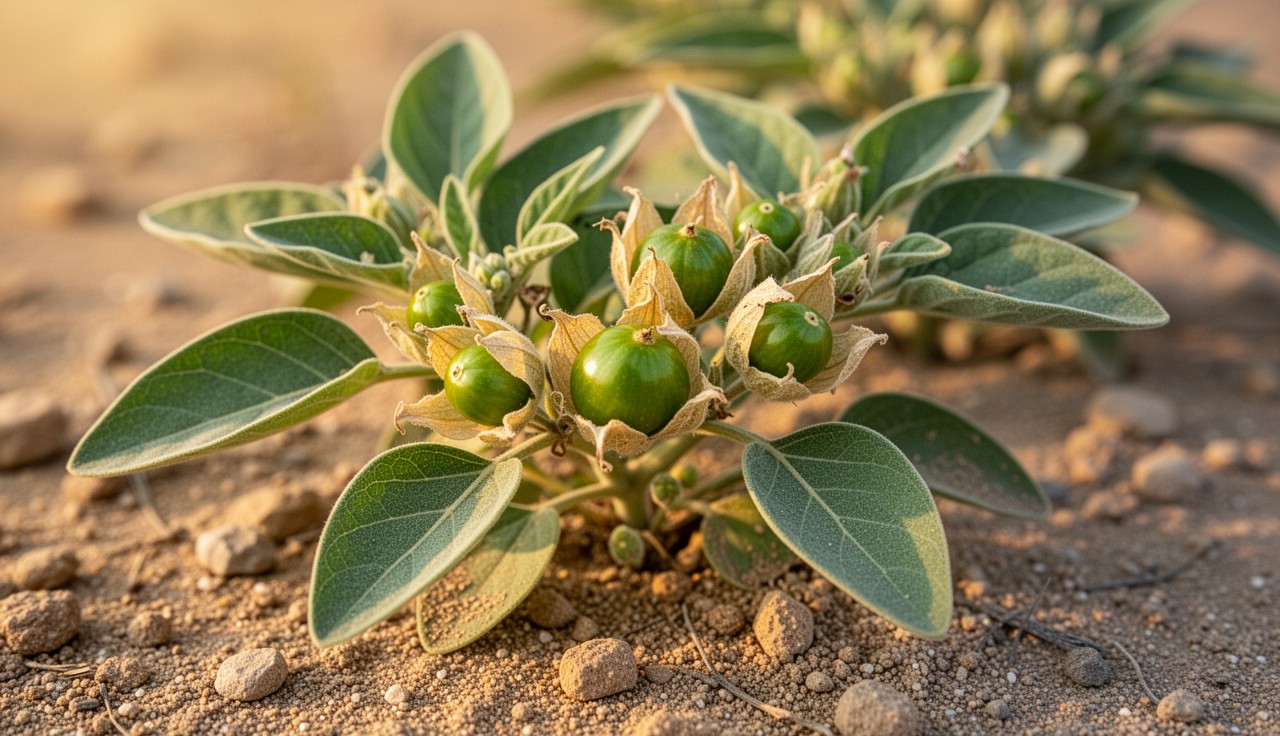
The plant material itself requires careful handling. Roots must be harvested at peak maturity - 150-180 days from transplant - when withanolide concentrations are highest. Leaves begin yellowing, berries turn fully red-orange, and growth visibly slows as indicators. Once pulled or forked from the soil, roots should not be washed until immediately before processing to avoid mold. drying herbs is essential to preserve potency.
Several extraction methods are suitable depending on desired outcome. An ethanol tincture offers versatility. Ethanol percentage determines which compounds are best captured; 60-70% ethanol with 30-40% water works well for alkaloids and glycosides, while 40-50% is better for flavonoids and phenolics. Food-grade ethanol only should be used.
Alternatively, a glycerin extraction provides an alcohol-free option using a typical ratio of 60% glycerin to 40% water, though potency will be lower and shelf life shorter (1-2 years). Water extraction is possible but less efficient for withanolides.
Regardless of the solvent chosen, temperature control is vital. Delicate compounds require gentle processing; heat can degrade target molecules. After extraction, filtering and clarifying removes particulate matter. If using ethanol, evaporating solvent concentrates the extract. Proper storing extracts in airtight containers away from light and heat maintains stability for 5+ years with alcohol tinctures.
How to Choose an Extraction Method for Any Herb
Match the method to the plant: what polarity and heat sensitivity mean, and which solvent pulls out which compounds.
For a More In-Depth Read, Click HereWhich extraction method suits ashwagandha, and why?
Ashwagandha root presents specific challenges and opportunities for extraction. Given its key compounds are withanolides, steroidal lactones structurally similar to ginsenosides, an [ethanol tincture] is the most effective method. The ideal ethanol percentage depends on targeting those withanolides, falling within the 60-70% range with 30-40% water. This ratio suits alkaloids and glycosides, maximizing extraction of the plant’s adaptogenic constituents.
While a broader range of percentages exists, lower concentrations like those used in [glycerin extraction] would not efficiently capture these compounds. Glycerin extracts fewer molecules overall and is unsuitable as an equivalent to alcohol-based methods. Similarly, water extraction, or decoction, while useful for polar compounds, will not effectively pull out the withanolides.
The root requires careful handling after harvest. Quality degrades rapidly if processing is delayed. Slicing roots into smaller pieces increases surface area and solvent contact. The process demands food-grade ethanol only; denatured alcohol poses a risk due to toxic additives.
Considerations extend beyond the initial extraction. Proper [drying herbs] before extraction is essential, as moisture promotes mold. After extraction, [filtering and clarifying extracts] removes particulate matter. Finally, secure [storing extracts] in airtight containers away from light and heat preserves potency for five years or more. The entire process requires attention to detail, but yields a potent extract reflecting the plant’s 3,000-year history as a Rasayana.
What solvent and ratio should you use for ashwagandha?
Ashwagandha root contains withanolides, which are best extracted using an ethanol solution. The ideal percentage depends on the desired outcome, but a ratio of 40-50% ethanol to 50-60% water is appropriate for general-purpose herbal tinctures. This strikes a balance between dissolving a broad range of compounds and preserving potency.
For ashwagandha specifically, targeting withanolides means prioritizing a solvent that extracts steroidal lactones like those found in ginsenosides. While other options exist, ethanol offers the best combination of effectiveness and stability. Avoid glycerin extraction [/articles/glycerin-extraction] as it yields lower potency and is not equivalent to an alcohol tincture. Apple cider vinegar or water extraction [/articles/extraction-water] are unsuitable for withanolide capture.
Use food-grade ethanol only; denatured alcohol is toxic solvent safety. Begin with 190 proof / 95% ethanol, like Everclear or organic grape alcohol, and dilute to the target percentage using distilled water.
The root should be sliced before extraction. Proper post-harvest handling is critical; avoid excessive water exposure as it promotes enzymatic degradation. Ensure thorough drying drying herbs to maximize shelf life - alcohol tinctures can last 5+ years. Consider your overall process when choosing a method.
How to Make a Glycerite: Glycerin Herbal Extracts
The alcohol-free extract: which herbs suit vegetable glycerin, how much water to add, how to make it and how long it keeps.
For a More In-Depth Read, Click HereHow do you make a ashwagandha extract step by step?
Ashwagandha root extract begins with harvest at 150-180 days from transplant, when leaves yellow and berries turn red-orange. Proper post-harvest handling is critical; roots should be brushed clean and briefly rinsed only if needed to avoid enzymatic degradation. Slicing the roots prepares them for extraction. drying herbs is essential before storage or processing.
The choice of solvent dictates extract composition. For withanolides, an ethanol tincture is effective. Begin with food-grade ethanol, Everclear (190 proof / 95% ethanol) or organic grape alcohol are suitable starting points. Dilute to the appropriate percentage based on target compounds; ashwagandha benefits from a 40-50% ethanol solution. This ratio balances extraction efficiency and preservation of delicate constituents.
Combine plant material with solvent in a clean jar, ensuring the herb is fully submerged. Allow this mixture to macerate for several weeks, agitating daily. A percolation method, described in older pharmacopeias, offers continuous flow but requires specialized equipment.
After maceration, separate the liquid from plant matter using filtering and clarifying. Multiple filtration stages may be needed for a clear extract.
If reducing alcohol content is desired, carefully perform evaporating solvent under low heat. This step requires caution and adherence to solvent safety protocols. A glycerin extraction can be performed as an alternative if alcohol is undesirable, though potency will differ.
Store the finished extract in a dark glass bottle away from heat and light; proper storing extracts extends shelf life to five years or more. Consider that the effect of withanolides diminishes with chronic use.
Who should be careful with ashwagandha?
Ashwagandha is not for everyone. Certain individuals require caution when considering its use. Ashwagandha modulates the hypothalamic-pituitary-adrenal (HPA) axis and attenuates cortisol secretion under stress; therefore, those with autoimmune diseases should consult a healthcare provider before use. This herb may stimulate immune activity, potentially exacerbating symptoms.
Individuals with thyroid conditions also need to be careful. While research suggests potential benefits for subclinical hypothyroidism, ashwagandha can increase T4 levels. Monitoring is essential if you have any thyroid condition and are considering ashwagandha supplementation.
Pregnant or breastfeeding individuals should avoid ashwagandha due to insufficient safety data. The effects on fetal development or infant health are unknown.
Ashwagandha’s impact on the nervous system means caution is advised for those taking sedatives, anxiolytics, or immunosuppressants. It acts as a GABA-mimetic, promoting GABAergic signaling, and could amplify the effects of these medications.
Those preparing to undergo surgery should discontinue ashwagandha at least two weeks prior due to its potential impact on central nervous system activity.
Traditional preparations used dried root powder cycled seasonally rather than taken continuously; the effect diminishes with chronic uninterrupted use. When harvesting for drying herbs, remember that root-harvest maturity occurs at 150-180 days from transplant. Post-harvest, root quality degrades rapidly if not handled correctly.
When making an extract, consider the target compounds. Withanolides are primary active compounds best extracted with a 60-70% ethanol solution for alkaloids and glycosides or a 40-50% solution for flavonoids and phenolics. Ethanol tincture production requires food-grade ethanol only; denatured alcohol is unsafe. If opting for an alternative, understand that glycerin extraction yields lower potency and shorter shelf life (1-2 years). Always prioritize solvent safety during any extraction process.
Before any solvent work: use glass or stainless steel rated for the solvent, work outdoors or beside a fan pulling the vapor away from you, heat ethanol only on an electric or induction hot plate (never an open flame or a gas burner), and do not breathe solvent vapor. This guide is education, not medical advice: check with a doctor before using any herbal extract alongside medication, during pregnancy or for a child.
How do you store a ashwagandha extract, and how long does it keep?
Ashwagandha extract storage depends on the solvent used during production. Alcohol tinctures, made with ethanol percentages ranging from 25% to 95%, are stable for five years or more if stored correctly. Keep them in dark glass bottles, tightly sealed, away from heat and light. A cool, dark place is best.
Glycerin extractions, created via [glycerin extraction], have a shorter shelf life of one to two years. Glycerin’s viscosity and sugar content promote degradation over time. Refrigeration can extend this slightly but isn't essential.
Oil infusions, produced through [oil infusion], are susceptible to rancidity. Store in dark glass bottles away from light and heat. Shelf life is typically one year. Monitor for changes in smell or taste indicating spoilage.
Regardless of the method, proper drying of roots before extraction is vital; [drying herbs] impacts stability. Roots harvested at 150-180 days maturity, with leaves beginning to yellow, yield best results. Improperly dried material will mold and degrade quickly.
After extraction, [filtering and clarifying] removes particulate matter that can accelerate degradation. Then, [storing extracts] requires airtight containers. Avoid exposure to oxygen, which causes oxidation of sensitive compounds like withanolides.
If using a solvent like ethanol, complete [evaporating solvent] before long-term storage. Residual alcohol impacts stability and legality. Always prioritize [solvent safety]. The resulting extract should be stored as described above. A consistent temperature below 21 °C (70 °F) (21C) is ideal for all types of ashwagandha extracts.
Which guides go with this one?
- Drying herbs
- Ethanol tincture
- Glycerin extraction
- Filtering and clarifying
- Evaporating solvent
- Storing extracts
- Solvent safety
- Choosing a method
- Equipment
How to Filter and Clarify an Extract: Carbon, Bentonite and Silica
From coarse straining to fine filters, and how activated carbon, bentonite clay and silica clean up an extract.
For a More In-Depth Read, Click HereSources
- sleep, At week eight, SOL was significantly reduced across treatment groups, with the ARE-MLT (p < 0.0001) combination showing the greatest improveme
- anxiety, RESULTS: Compared to the placebo, ashwagandha intake was associated with greater reductions in self-reported stress in the full analysis set
- hair growth, RESULTS: In the per protocol analysis of 61 participants, Ashwagandha group demonstrated significant reduction in hair shedding in the 6
- menopause, RESULTS: At the end of the study, the total MRS score reduced significantly (p < 0.0001) with ARE intervention, in psychological (p < 0.00
- menopause, RESULTS: Supplemented groups showed significant dose-dependent decrease MENQOL and RI compared with placebo (P < 0.0001). (
- BEAT IT vs sertraline, say "a prescription antidepressant" in the hook. weight loss: Ashwagandha treatment was more effective than Sertraline in redu
- MATCHED IT vs diazepam, say "a prescription sedative" in the hook. anxiety: The extract showed anxiolytic-like activity at 250 μg/mL by reducing dark
- compared, outcome unclear from the abstract vs sertraline, say "a prescription antidepressant" in the hook. testosterone: Mitigating testosterone dep
- TRUSTED general - Preparation: Tincture: 6- 15ml per day (1:3 @ 45%). Decoction: 3 to 8 g/day of dried root by decoction, or equivalent prep
- TRUSTED general - Indications: Adrenal fatigue, anxiety, and insomnia. (Restorative Medicine
- TRUSTED diabetes - It’s generally safe to use ashwagandha in food and tea. However, talk with your healthcare providers before taking supple
- TRUSTED general - Research shows that some ashwagandha preparations may be effective for insomnia and stress. However, evidence is unclear a
Common questions
What are you extracting from ashwagandha?
Ashwagandha root is extracted for its withanolides, the primary active compounds responsible for its adaptogenic effects. These steroidal lactones are structurally similar to ginsenosides and exert influence on both stress response and neurotransmitter signaling. The goal of extraction is to maximize their concentration in a stable, usable form. The plant material itself requires careful handling. Roots must be harvested at peak maturity - 150-180 days from transplant - when withanolide concentrations are highest.
Which extraction method suits ashwagandha, and why?
Ashwagandha root presents specific challenges and opportunities for extraction. Given its key compounds are withanolides, steroidal lactones structurally similar to ginsenosides, an [ethanol tincture] is the most effective method. The ideal ethanol percentage depends on targeting those withanolides, falling within the 60-70% range with 30-40% water. This ratio suits alkaloids and glycosides, maximizing extraction of the plant’s adaptogenic constituents. While a broader range of percentages exists, lower concentrations like those used in [glycerin extraction] would not efficiently capture these compounds.
What solvent and ratio should you use for ashwagandha?
Ashwagandha root contains withanolides, which are best extracted using an ethanol solution. The ideal percentage depends on the desired outcome, but a ratio of 40-50% ethanol to 50-60% water is appropriate for general-purpose herbal tinctures. This strikes a balance between dissolving a broad range of compounds and preserving potency. For ashwagandha specifically, targeting withanolides means prioritizing a solvent that extracts steroidal lactones like those found in ginsenosides. While other options exist, ethanol offers the best combination of effectiveness and stability.
How do you make a ashwagandha extract step by step?
Ashwagandha root extract begins with harvest at 150-180 days from transplant, when leaves yellow and berries turn red-orange. Proper post-harvest handling is critical; roots should be brushed clean and briefly rinsed only if needed to avoid enzymatic degradation. Slicing the roots prepares them for extraction. drying herbs is essential before storage or processing. The choice of solvent dictates extract composition.
Who should be careful with ashwagandha?
Ashwagandha is not for everyone. Certain individuals require caution when considering its use. Ashwagandha modulates the hypothalamic-pituitary-adrenal (HPA) axis and attenuates cortisol secretion under stress; therefore, those with autoimmune diseases should consult a healthcare provider before use. This herb may stimulate immune activity, potentially exacerbating symptoms. Individuals with thyroid conditions also need to be careful.
How do you store a ashwagandha extract, and how long does it keep?
Ashwagandha extract storage depends on the solvent used during production. Alcohol tinctures, made with ethanol percentages ranging from 25% to 95%, are stable for five years or more if stored correctly. Keep them in dark glass bottles, tightly sealed, away from heat and light. A cool, dark place is best. Glycerin extractions, created via [glycerin extraction], have a shorter shelf life of one to two years.
What are related guides?
Plants Activated Charcoal Production Plants Adaptogenic Compounds Plants Oregano, Medicinal Applications . How botanical extracts are made, step by step, from the people who run the extractions. What we learn, sent about once a week. All guides Ebooks Courses Free extras . About Contact Privacy Terms .
Browse by topic
More guides to explore
 ExtractionCold Press Extraction
 ExtractionEnzymatic Extraction
 ExtractionEthanol Extraction
 ExtractionMicrowave-Assisted Extraction
 ExtractionNatural Dye Extraction and Use
 ExtractionPressurized Hot Water Extraction
 ExtractionSteam Distillation