Guides
Fig (Ficus carica) Extraction Guide: Ultrasonic Soaks, Juice, Leaf Decoction and Sap
How we extract figs: quick ultrasonic soaks, a rotary evaporator at low temperature, heptane or butane, two juice routes, the fruit as jam, and the cautions for leaf and sap.
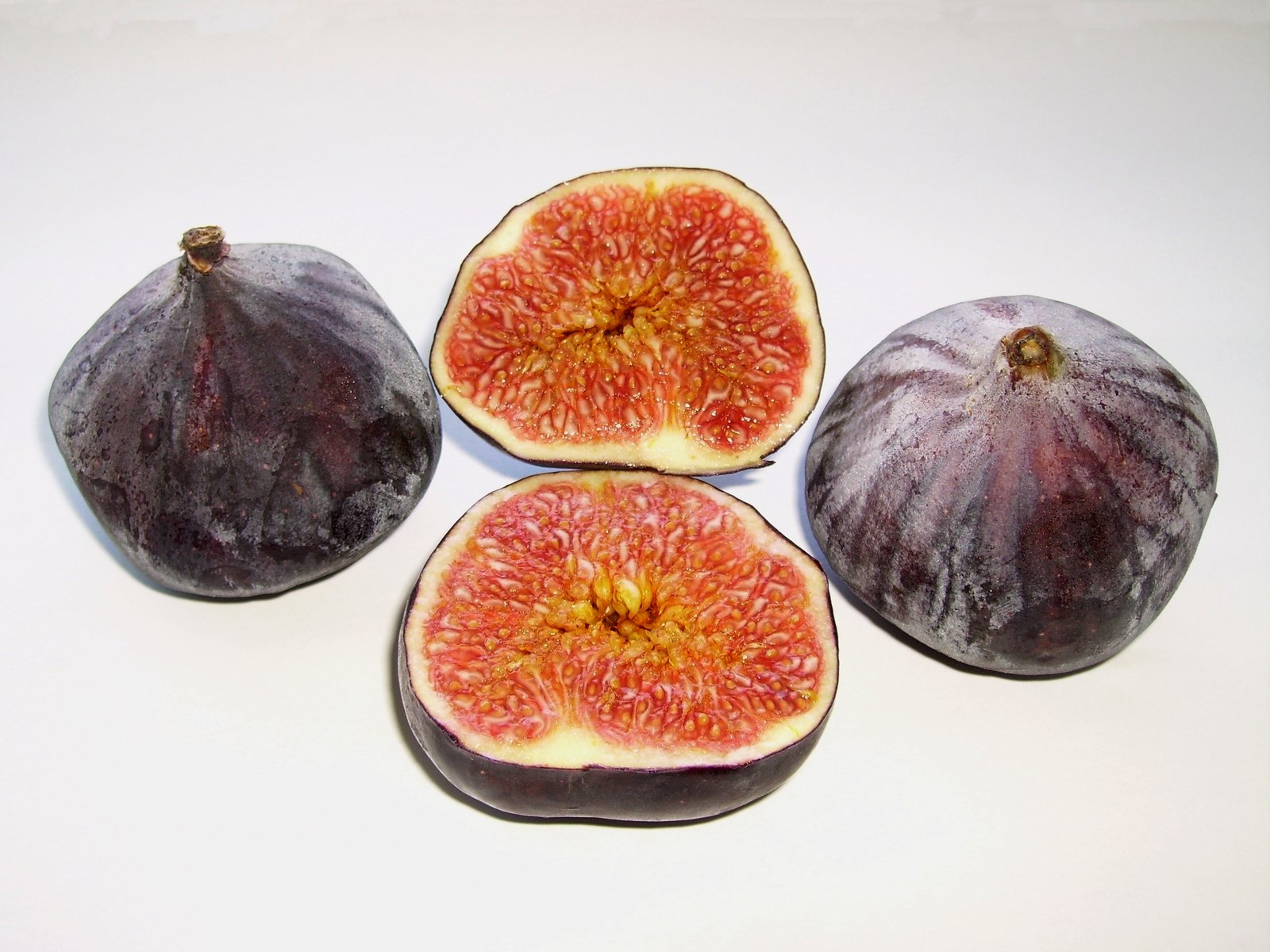
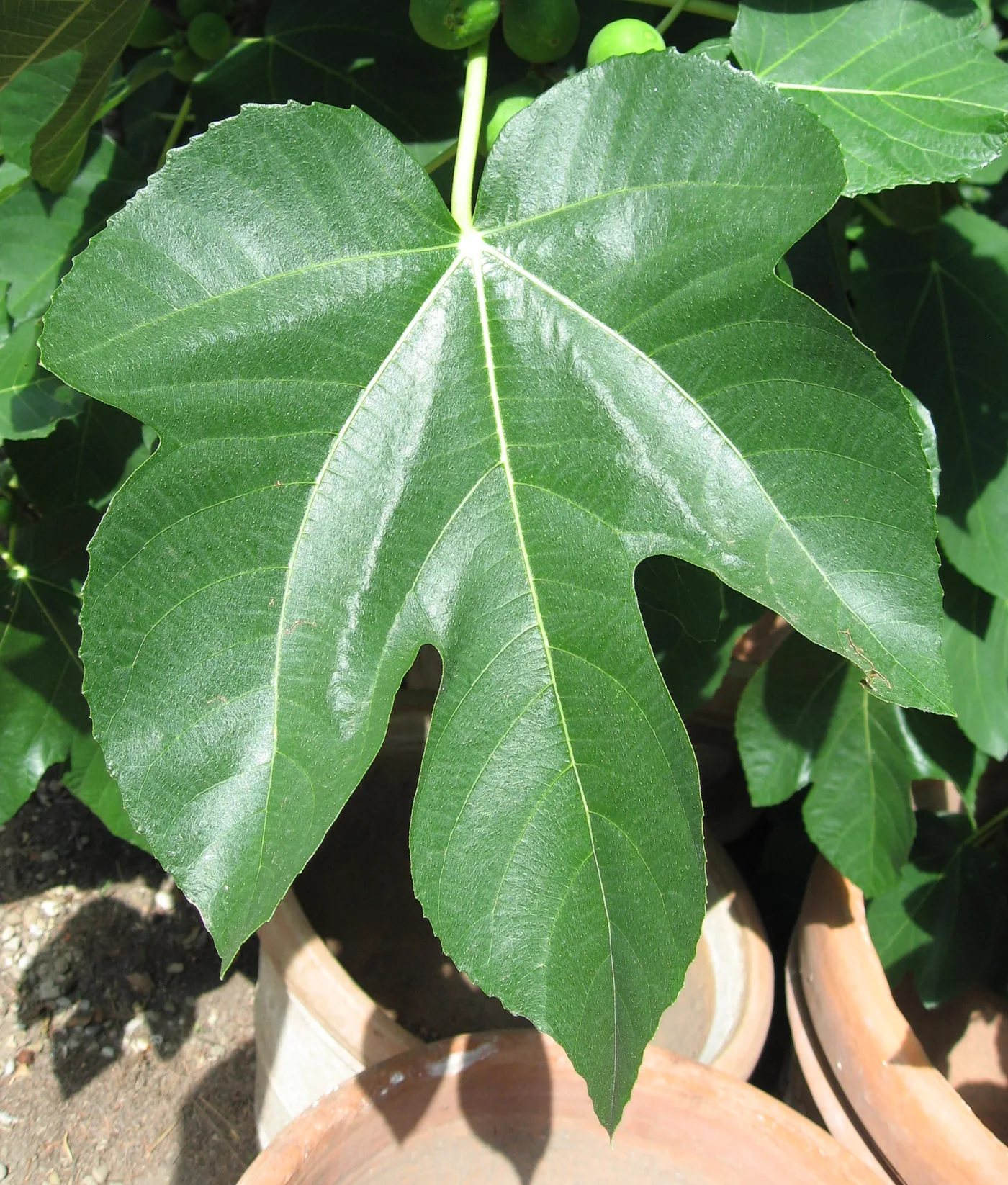
Photograph: Garitzko, Public domain. Source: Wikimedia Commons

On this page
Introduction
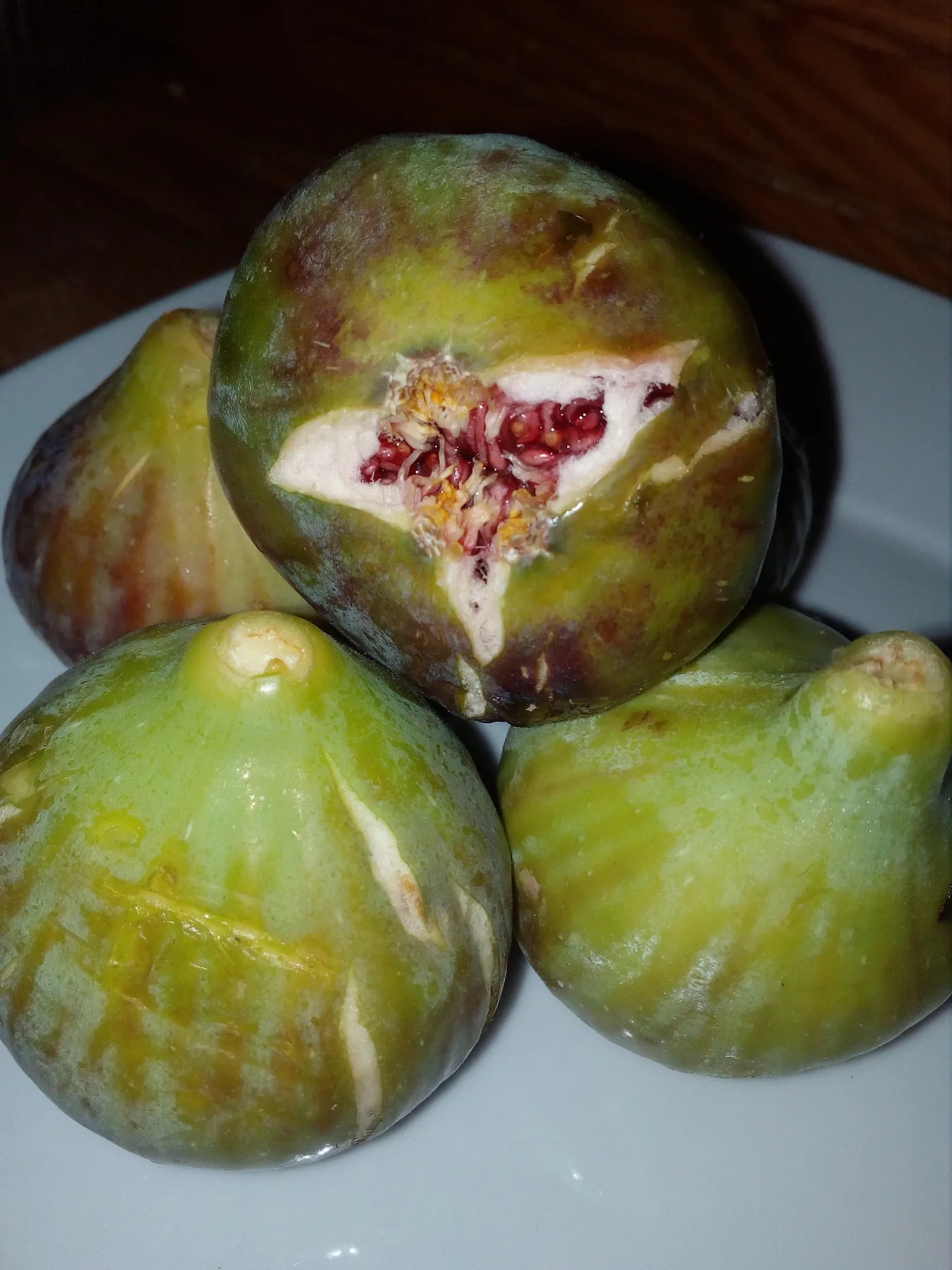
A fig is a flower turned inside out. What looks like fruit is a hollow pod of stem tissue, packed with hundreds of tiny flowers, and it is 79 percent water. Around it stands a tree with two other raw materials that matter: a leaf that carries most of the plant chemistry people study, and a milky sap, called latex, that burns skin in sunlight. Each part asks for a different method, and mixing them up is the commonest way to waste a batch or get hurt.
This guide covers the common fig, Ficus carica, and it describes how we work with it. Our main method is quick: short soaks in an ultrasonic bath, a fast filter, another short soak on the same material, and then the combined liquid is concentrated in a rotary evaporator at low temperature under deep vacuum. We use heptane or butane when we want a nonpolar solvent. Our count of fig extracts is still small, so where our own numbers are still being collected we say so, and we give examples of what is done in general. We also cover the two juice routes, the fruit as jam or jelly, the leaf decoction, and the sap, which is the most interesting and the most difficult material on the tree.
Summary
- Main method: quick ultrasonic soaks, filter, repeat fast, then concentrate in a rotary evaporator at low temperature under deep vacuum. No soak in this guide runs for weeks.
- Why fast: the active compounds in the sap break down quickly. Heat, light, air and time are the enemies, so every step is built to shorten all four.
- Solvents: heptane or butane for the nonpolar work. Both are flammable and their vapor is heavier than air, so it stays low and travels to a spark.
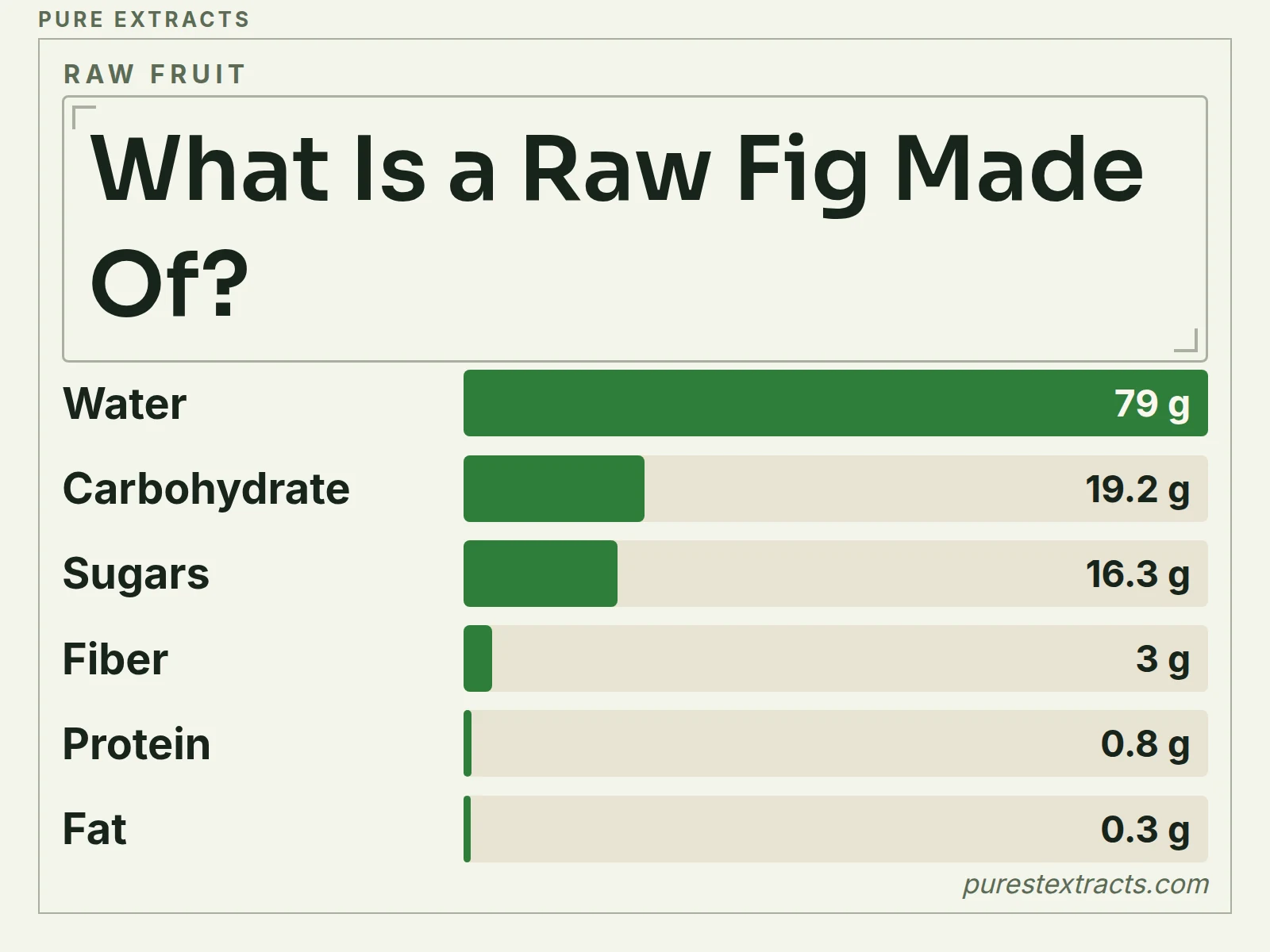
- Fruit: raw figs are 79 g water, 19.2 g carbohydrate and 3 g fiber per 100 g. They make excellent jam or jelly and need little concentration.
- Sap: the interesting extract, and the hazard. Leaf and sap carry psoralen and bergapten, which burn skin that meets sunlight.
- Dose: toxicity depends on dose here as it does for most plant compounds. We do not recommend an amount of anything known to be toxic.
Why start with the parts and not the solvents? Because the part decides the chemistry, and the chemistry decides which solvent and which speed make sense.
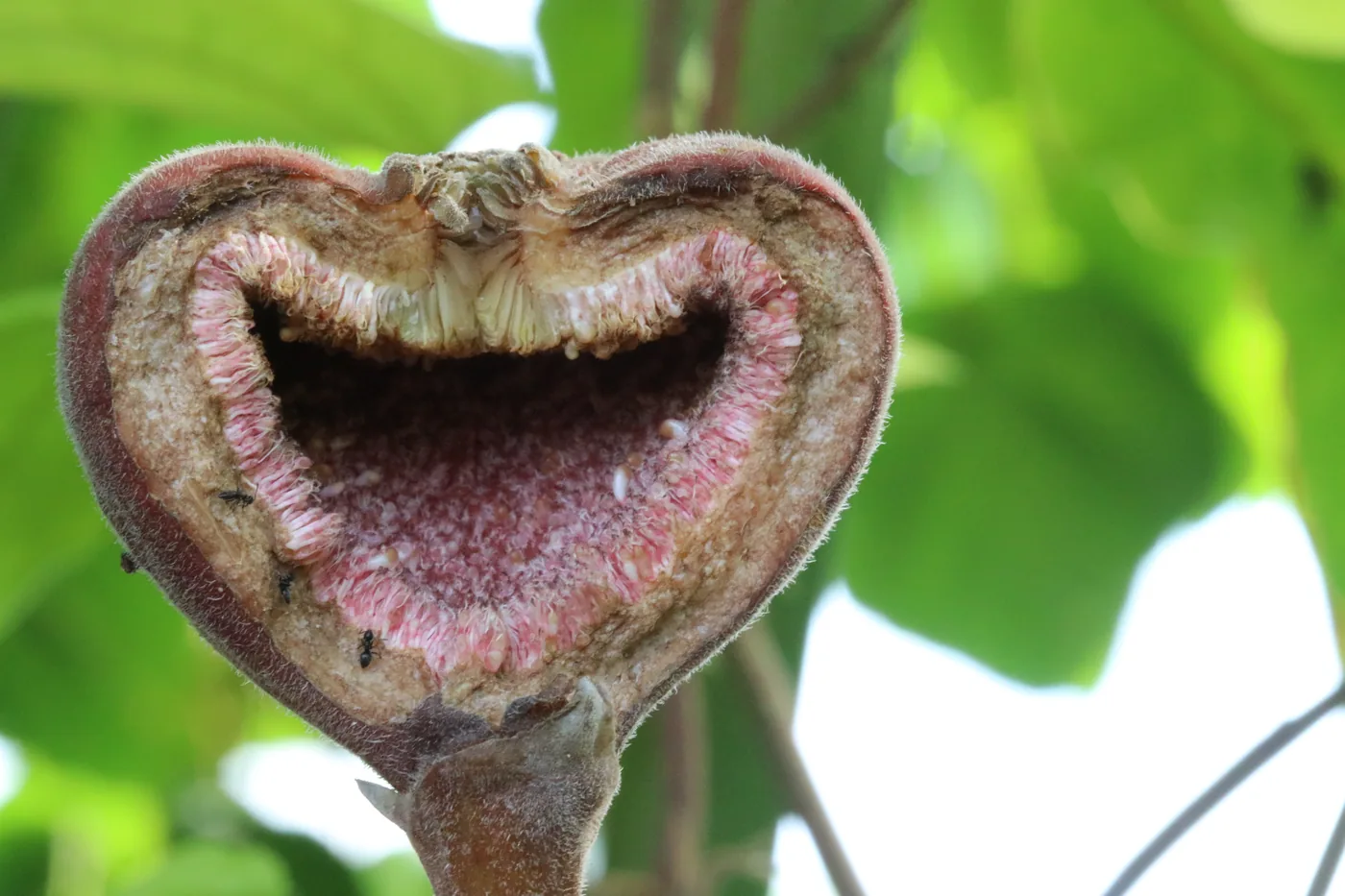

The grower's side of this tree, from a rooted cutting to a tree over fifteen feet tall, sits on our partner website, and a link to it appears near the end of this guide.
What the Fig Holds
Start with the numbers for the fruit itself, because they set every design choice that follows.
| Per 100 g | Raw fig | Dried fig |
|---|---|---|
| Water | 79 g | 30 g |
| Carbohydrate | 19.2 g | 63.9 g |
| Sugars | 16.3 g | 47.9 g |
| Fiber | 3 g | 9.8 g |
| Protein | 0.8 g | 3.3 g |
| Fat | 0.3 g | 0.93 g |
| Potassium | 232 mg | 680 mg |
| Vitamin K | 4.7 µg | 15.6 µg |
Sugar is the bulk of what is not water. In fresh figs, glucose and fructose are close to equal, with glucose a little higher and almost no sucrose, and that sugar load is why a fig juice is thick and why a plain solvent extract of the pulp comes out sticky.
The small compounds are where the interest lies. Researchers have identified gallic acid, chlorogenic acid, syringic acid, catechin, epicatechin and rutin in fig, which are all phenolic compounds, plant chemicals that act as antioxidants in a test tube. In dark figs the red-purple pigment is an anthocyanin, mainly cyanidin 3-O-rutinoside, and a frozen fig study found quercetin 3-glucoside to be the most abundant polyphenol, followed by cyanidin 3-glucoside.
How much pigment is there? One cultivar survey measured total anthocyanin at 5.29 mg per 100 g of fresh 'Brown Turkey' fruit, a modest figure that explains why fig extracts are tan or pink and not the deep red of a berry.
Which Part to Use
A fig tree gives you four raw materials, and they are not interchangeable. Sorted by what they hold, they behave very differently at the bench.
| Part | What it holds | What to expect |
|---|---|---|
| Fruit pulp and juice | Sugars, fiber, anthocyanins, phenolic acids, flavonoids | A safe, water-rich material that spoils fast |
| Fruit skin | Most of the dark pigment | A smaller, more colored extract |
| Leaf | Polyphenols plus the furanocoumarins psoralen and bergapten | The most studied for blood sugar, and a part that burns skin |
| Sap (latex) | Ficin, an enzyme, plus furanocoumarins | The interesting extract, the fastest to degrade, and the biggest skin and allergy hazard |
Most people want the fruit, so the jam and juice sections stay with it. The skin of a dark fig carries the pigment, and the pulp carries the sugar. Researchers who optimized the extraction of fig peel found that ultrasound with 100 percent ethanol for 21 minutes at 310 W gave 3.11 mg of cyanidin 3-rutinoside per gram of dried peel, which tells you that ethanol and mechanical help pull the most color from the skin, and that minutes are enough.
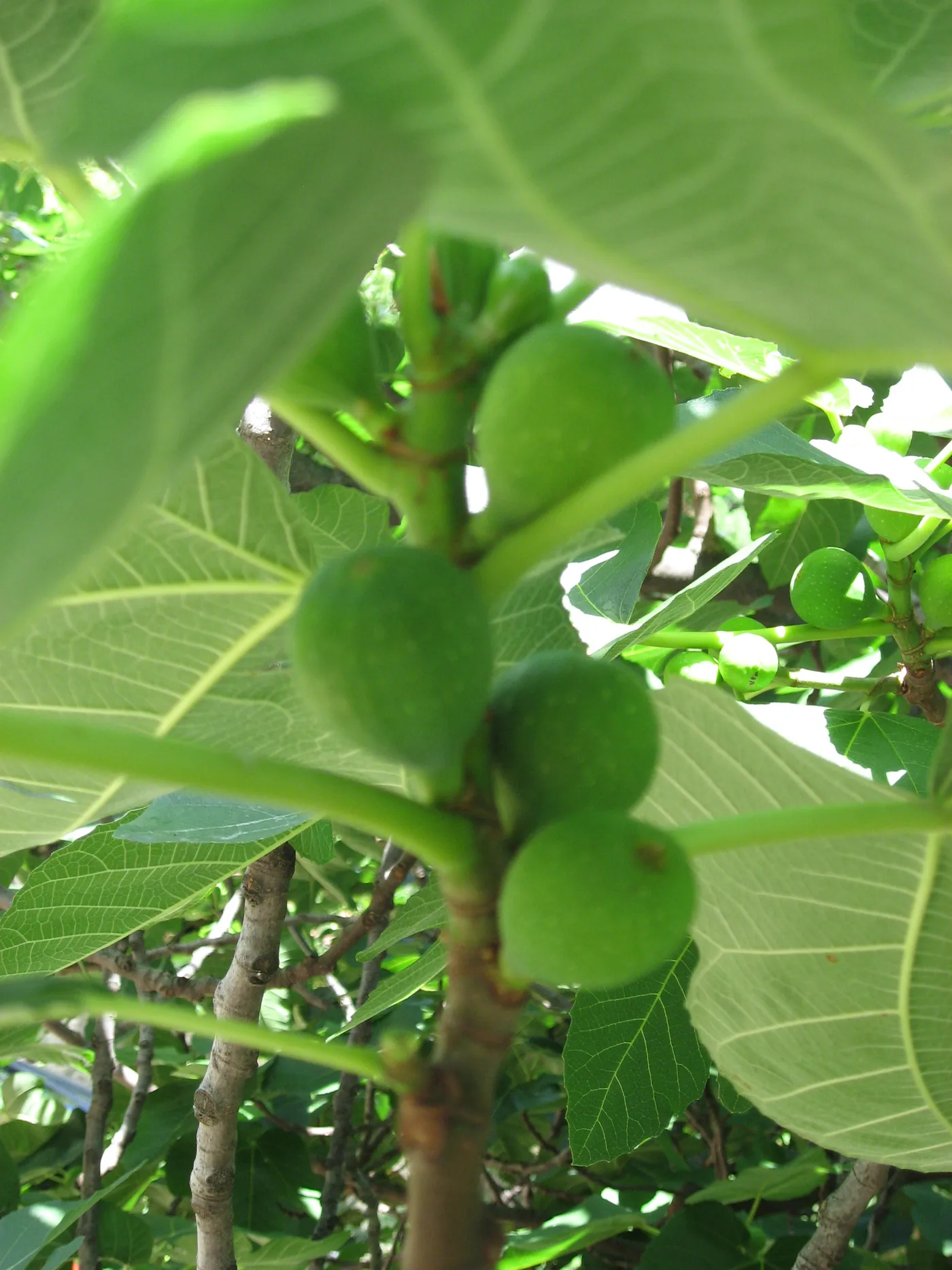

The leaf and the sap are separate projects with their own rules, and the sections on each give them in full.
How to Choose an Extraction Method for Any Herb
Match the method to the plant: what polarity and heat sensitivity mean, and which solvent pulls out which compounds.
For a More In-Depth Read, Click HereChoosing a Method
Five methods are in use, and each one suits a different goal. The first is ours and the others are routes people use for specific parts.
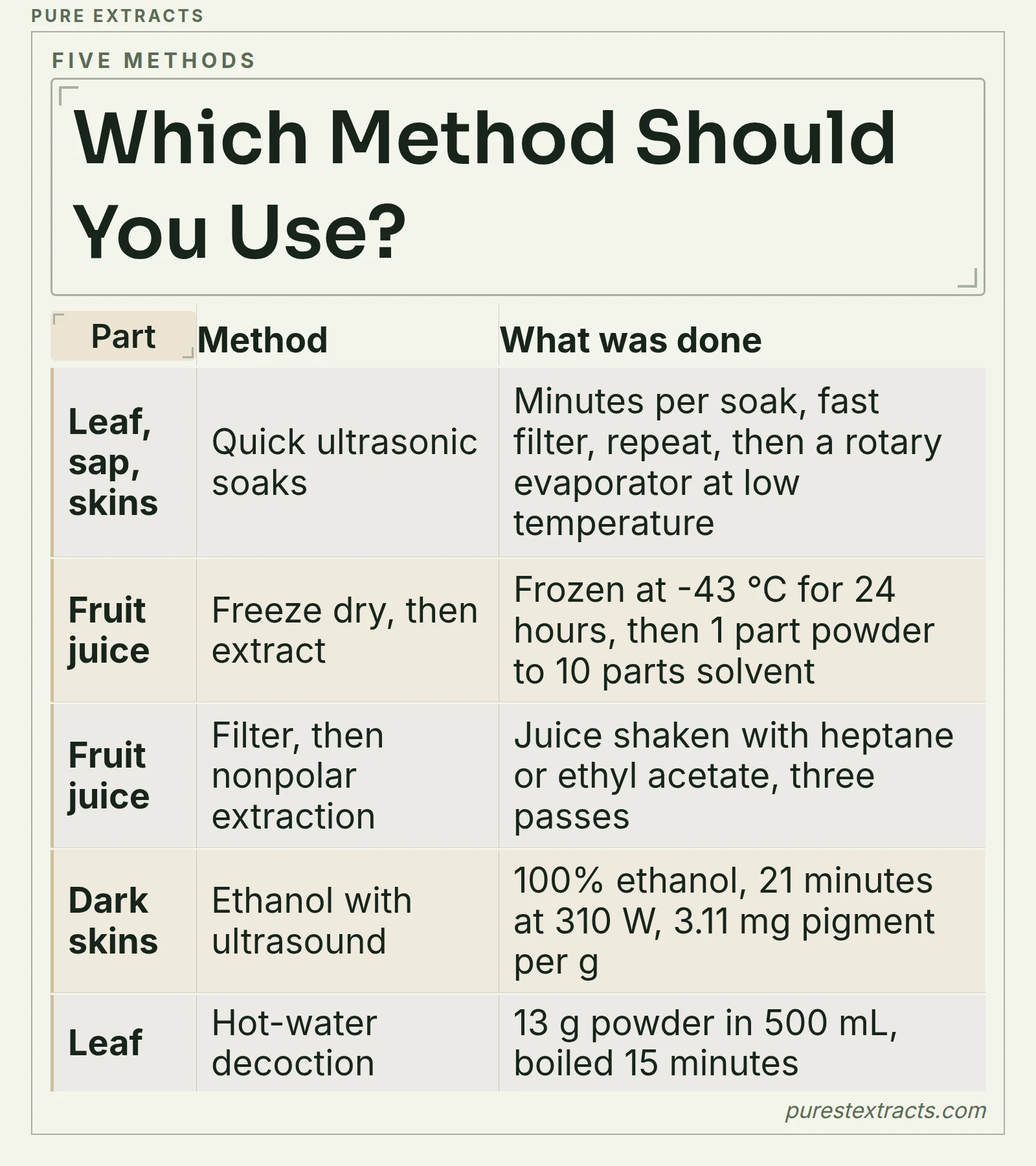
For leaf and sap the quick soak is the method, because those materials lose their best compounds with time. A whole fruit is mostly water, so for the fruit the juice routes make more sense, and a freeze dryer improves the first of them for anyone who owns one. Color from dark skins calls for ethanol with ultrasound. As for a hot-water leaf decoction, it is the only preparation with a human trial behind it, and we cover it below.
Best Method For Each Compound
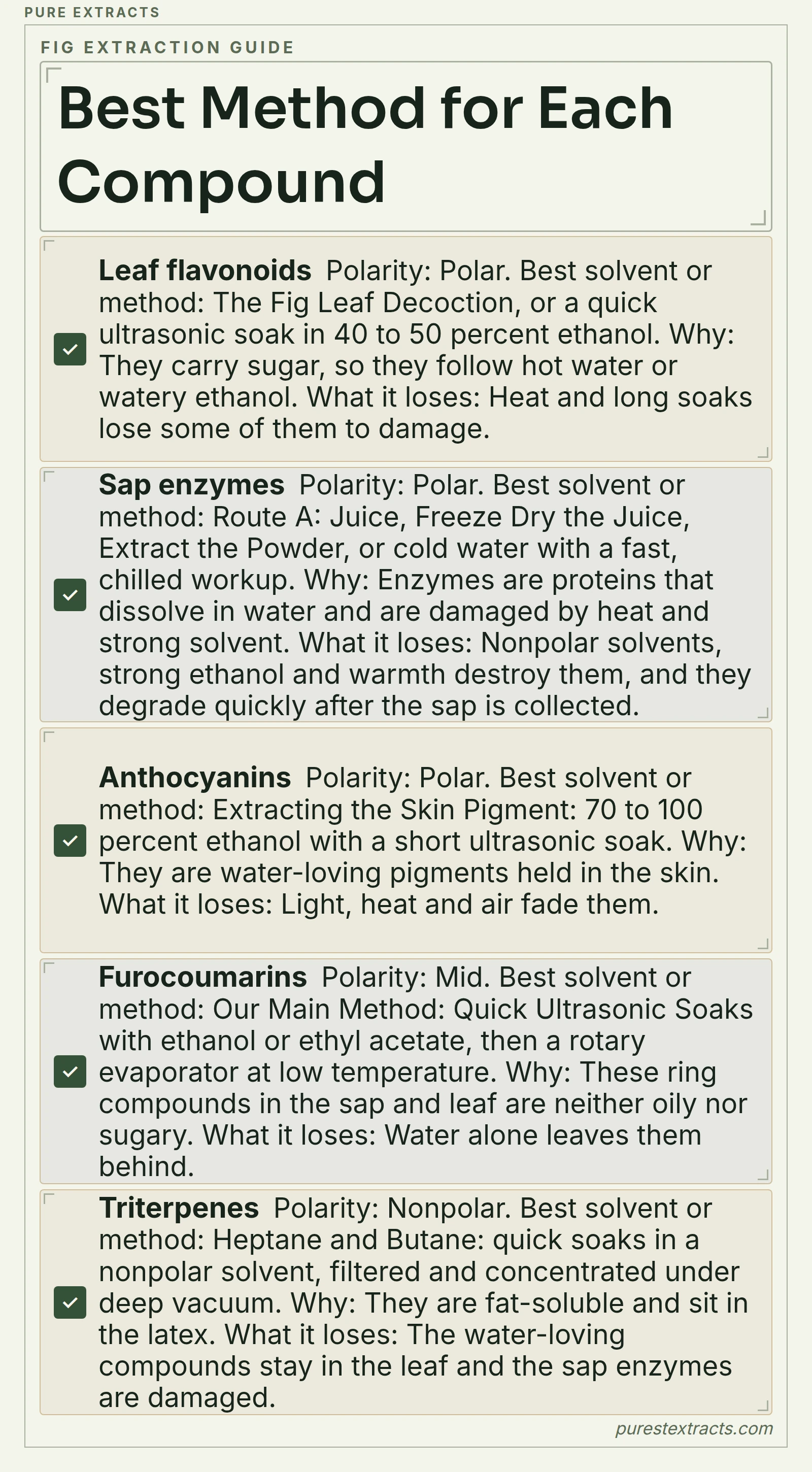
A fig tree gives several materials with different chemistry, so no single solvent suits all of them. The leaf's flavonoids carry sugar and follow water, the sap enzymes are proteins that need a gentle water-based method, the skin pigment follows watery ethanol, the furocoumarins sit in the middle, and the latex fats follow a nonpolar solvent. Our own quick soak with a nonpolar solvent is the method for the sap and the middle group, as described next.
| Compound | Polarity | Best solvent or method | Why | What it loses |
|---|---|---|---|---|
| Leaf flavonoids | Polar | The Fig Leaf Decoction, or a quick ultrasonic soak in 40 to 50 percent ethanol | They carry sugar, so they follow hot water or watery ethanol | Heat and long soaks lose some of them to damage |
| Sap enzymes | Polar | Route A: Juice, Freeze Dry the Juice, Extract the Powder, or cold water with a fast, chilled workup | Enzymes are proteins that dissolve in water and are damaged by heat and strong solvent | Nonpolar solvents, strong ethanol and warmth destroy them, and they degrade quickly after the sap is collected |
| Anthocyanins | Polar | Extracting the Skin Pigment: 70 to 100 percent ethanol with a short ultrasonic soak | They are water-loving pigments held in the skin | Light, heat and air fade them |
| Furocoumarins | Mid | Our Main Method: Quick Ultrasonic Soaks with ethanol or ethyl acetate, then a rotary evaporator at low temperature | These ring compounds in the sap and leaf are neither oily nor sugary | Water alone leaves them behind |
| Triterpenes | Nonpolar | Heptane and Butane: quick soaks in a nonpolar solvent, filtered and concentrated under deep vacuum | They are fat-soluble and sit in the latex | The water-loving compounds stay in the leaf and the sap enzymes are damaged |
Furocoumarins also make the sap irritate skin in sunlight, so the safety section governs how every one of these is handled. Match the method to the part and the compound you want, and write down the solvent, the ratio and the minutes for each batch.
Our Main Method: Quick Ultrasonic Soaks
An ultrasonic bath shakes the liquid with sound waves too high to hear. The waves make tiny bubbles that collapse next to plant cells and break them open, so the solvent reaches the contents in minutes and not days. That is the whole reason a short soak can do the job of a long one. A long soak also gives air, light and heat hours to damage the compounds you are trying to catch, and in fig the sap compounds degrade fast, so we avoid it.

Published work shows how short these soaks can be. A study of fig leaf found that 50 percent ethanol with 20 minutes of ultrasound gave its best total phenolic result from sun-dried leaf, and a separate optimization of total flavonoids from fig leaf used 40 percent ethanol, a ratio of 1 g of leaf to 60 mL of liquid, and 50 minutes of sonication. Both are examples of what is done in general, and in both the unit of time is minutes. We have not yet fixed our own time per soak, and we say so in the notes we keep for this guide.
- Dry the leaf or skin lightly and grind it coarse, or cut fresh material small, and weigh it.
- Put it in a clean flask or jar with the chosen solvent, in a ratio you write down.
- Set the jar in the ultrasonic bath with cold water, because the bath warms as it runs, and sonicate for a short soak of minutes.
- Filter at once through cloth and then a paper or membrane filter, and keep the liquid cold and out of the light.
- Put the filtered plant material back in the jar with fresh solvent and soak it again, quickly.
- Repeat until the liquid comes away pale, then combine the filtrates.
- Concentrate the combined liquid in the rotary evaporator, as described next.
Why repeat instead of soaking once for longer? Each fresh batch of solvent starts with none of the dissolved material in it, so it pulls harder than the same solvent would after an hour of sitting. Several fast passes recover more than one slow pass, and the material spends less time warm and exposed to air.
Concentrating Under Deep Vacuum
A rotary evaporator spins a flask half full of liquid in a warm bath while a pump pulls the air out. Lowering the pressure lowers the boiling point of the solvent, so it leaves the flask at a temperature the compounds can survive, and the spinning spreads the liquid into a thin film that evaporates quickly. The solvent condenses on a chilled coil and runs into a receiving flask where you can reuse or dispose of it properly.
| Setting | What it does | Why it matters for fig |
|---|---|---|
| Low bath temperature | Keeps heat off the extract | Sap compounds and ficin break down when warm |
| Deep vacuum | Lets the solvent boil far below its normal boiling point | Removes solvent fast without the heat |
| Cold condenser | Catches the solvent vapor | Keeps flammable vapor out of the room |
| Flask half full or less | Gives the liquid room to spread and avoids bumping | Stops a sticky fig extract from foaming over |
A fig extract is sugary and protein-rich, so it foams. Bring the vacuum down slowly, keep the flask no more than half full, and let the film form before you push the pressure lower. We keep the bath well below 40 °C, and the exact bath and vacuum numbers for each solvent are on the list we are still filling in. Stop as soon as the flask is dry, since a dry extract sitting on a warm flask is a damaged extract.
Heptane and Butane
A nonpolar solvent is one that does not mix with water. We use heptane or butane when we want the fat-soluble fraction of a fig material, because both leave the sugars and the sugar-bound polyphenols behind and both evaporate cleanly. We have done only a few extracts with them on fig so far.
| Solvent | Main hazard | How to handle it |
|---|---|---|
| Heptane | Highly flammable liquid, with a closed-cup flash point near -4 °C, so it gives off ignitable vapor in a cold room. Flammable in air from about 1 to 6.7 percent | Fume hood or open air, no flame or spark, grounded metal containers, vapor heavier than air so keep drains and low spots clear |
| Butane | An extremely flammable gas kept as a liquid under pressure. Vapor is more than twice as heavy as air and collects in low places | Only a closed system built for it, outdoors or in a space rated for flammable solvents, no open flame, no pilot lights, no ordinary electrical switches nearby |
| Ethyl acetate | Flammable, irritates eyes and airways | Ventilated space, no open flame |
| Hexane | Flammable, and n-hexane damages nerves with repeated exposure | Choose heptane instead, and use gloves and a hood |
| Methanol | Toxic if swallowed or breathed | Never use it for anything that will be tasted |
| Dichloromethane | Toxic vapor, a suspected carcinogen | Keep out of the workflow |
The point that catches people is the weight of the vapor. Heptane vapor and butane gas are both heavier than air, so a leak does not rise and disperse. It slides along the floor, fills a pit or a stairwell, and finds a pilot light or a switch across the room. Work outdoors or under a hood that draws from the bench, use no flame anywhere nearby, and keep a way out clear. Butane adds pressure to the list, because a cylinder or a vessel that holds liquid butane can fail violently if it is overfilled or heated, and a spill of the liquid is cold enough to freeze skin.
The safety data sheets for these solvents list the flash point and the flammable range for the exact product you buy, and we read them before each new solvent comes into the shop. Finish with the rotary evaporator or a vacuum oven until no smell of solvent remains, and treat any nonpolar fraction as a laboratory material. It is not for eating.
Two Juice Routes
A juice is the natural starting point for a soft fruit like this. From there the road splits, and the split is a question of which compounds you want to keep.

| Route | What it keeps | What it loses | Best for |
|---|---|---|---|
| A: juice, freeze dry, extract the powder | Sugars, anthocyanins, phenolic acids, glycosides | Volatile aroma and some heat-sensitive compounds | A water-soluble, whole-fruit extract |
| B: juice, filter, nonpolar extraction | The fat-soluble fraction in the solvent layer | Sugars and most glycosides, which stay in the water | A concentrated, sugar-free fraction |
Route A is an improvement we have in mind more than a part of our daily work, because we do not own a freeze dryer. Our methods could be better with one. Route B needs only glassware and a rotary evaporator, so it fits our shop as it stands.
Route A: Juice, Freeze Dry the Juice, Extract the Powder
Freeze drying removes water as ice vapor at low temperature, which is the gentlest way to turn a juice into a stable powder, and it answers the same worry as the rest of this guide: heat, light, air and time damage what you are trying to keep. In a fig powder study the freeze-dried samples were held at -43 °C for 24 hours, and the finished powders had 6.5 to 8.5 percent moisture, a water activity of 0.40 to 0.60 and a particle size of 15 to 30 micrometers. Tray drying the same fruit at 50, 60 and 70 °C for 3 hours gave the same moisture band, but heat is harder on pigment.
- Juice the washed, quartered figs in a slow juicer and weigh the juice.
- Strain the juice through a fine cloth to take out the seeds and fibers.
- Pour the juice into shallow trays to a depth of about 1 cm, so it freezes fast and dries evenly.
- Freeze the trays solid at -20 °C or colder before they go into the freeze dryer.
- Run the freeze dryer until the cake is dry and brittle and the vacuum has recovered.
- Grind the cake to a fine powder and seal it at once in a foil bag with a drying packet, because the sugar in fig powder pulls moisture from the air.
- Extract 10 g of powder in 100 mL of 50 percent ethanol, or in plain water, with quick ultrasonic soaks and a fast filter as above.
A juice with this much sugar gives a sticky cake, so a thin layer matters more than any setting on the machine. What does the route keep? Nearly everything that dissolves in water, including the glycosides and the anthocyanins. What does it lose? Whatever is volatile, plus the fat-soluble compounds that never dissolved in the juice at all.
Route B: Juice, Filter Further, Extract With a Nonpolar Solvent
The second route skips drying and treats the juice as a water phase. When you shake a nonpolar solvent with it, the two separate into layers, and fat-soluble compounds move into the solvent layer. This is called liquid-liquid extraction. Sugars, organic acids and the sugar-bound polyphenols prefer the water, so they stay where they are.
- Juice the fruit and strain it through a fine cloth.
- Filter again through a coffee filter, then through a fine membrane or a 5 micrometer cartridge, until the juice is clear enough to see through. Particles left in the juice make a stubborn cuff of foam at the boundary between the layers.
- Chill the juice to 4 °C and measure its volume.
- Pour it into a separatory funnel, a glass funnel with a tap at the bottom, and add heptane at 1 part to 2 parts of juice.
- Stopper the funnel, invert it, and open the tap at once to vent the pressure. Shake gently for a minute and vent again.
- Stand the funnel in a ring stand and wait until the layers are sharp. Drain the water layer first, then collect the solvent layer.
- Repeat the extraction on the water layer two more times and combine the solvent fractions.
- Dry the combined solvent over a pinch of anhydrous sodium sulfate, filter, and take the solvent off in the rotary evaporator at low temperature under deep vacuum.
Heptane is truly nonpolar and leaves the polar polyphenols in the water. Ethyl acetate sits in the middle. It takes the less polar flavonoids and phenolic acids that heptane will not touch, and it is the one most used for plant juices. We have no partition data of our own for fig juice yet, so the fractions are not tabulated here.
One rule keeps Route B honest. Treat the solvent layer from any juice that touched leaf or sap as a skin hazard. Psoralen and bergapten dissolve in organic solvents, so the solvent layer concentrates exactly the compounds that burn skin. Juice from clean, washed fruit does not have that problem, since neither compound was detected in the fruit.
The Fruit: Jam and Jelly
Here is a plain fact about this tree: the fruit does not need much concentration. A fig is already sweet, soft and rich, and the best thing to make of it is a jam or a jelly. The 79 percent water evaporates gently, the sugar and fruit acids set the rest, and nothing about the result calls for a solvent.
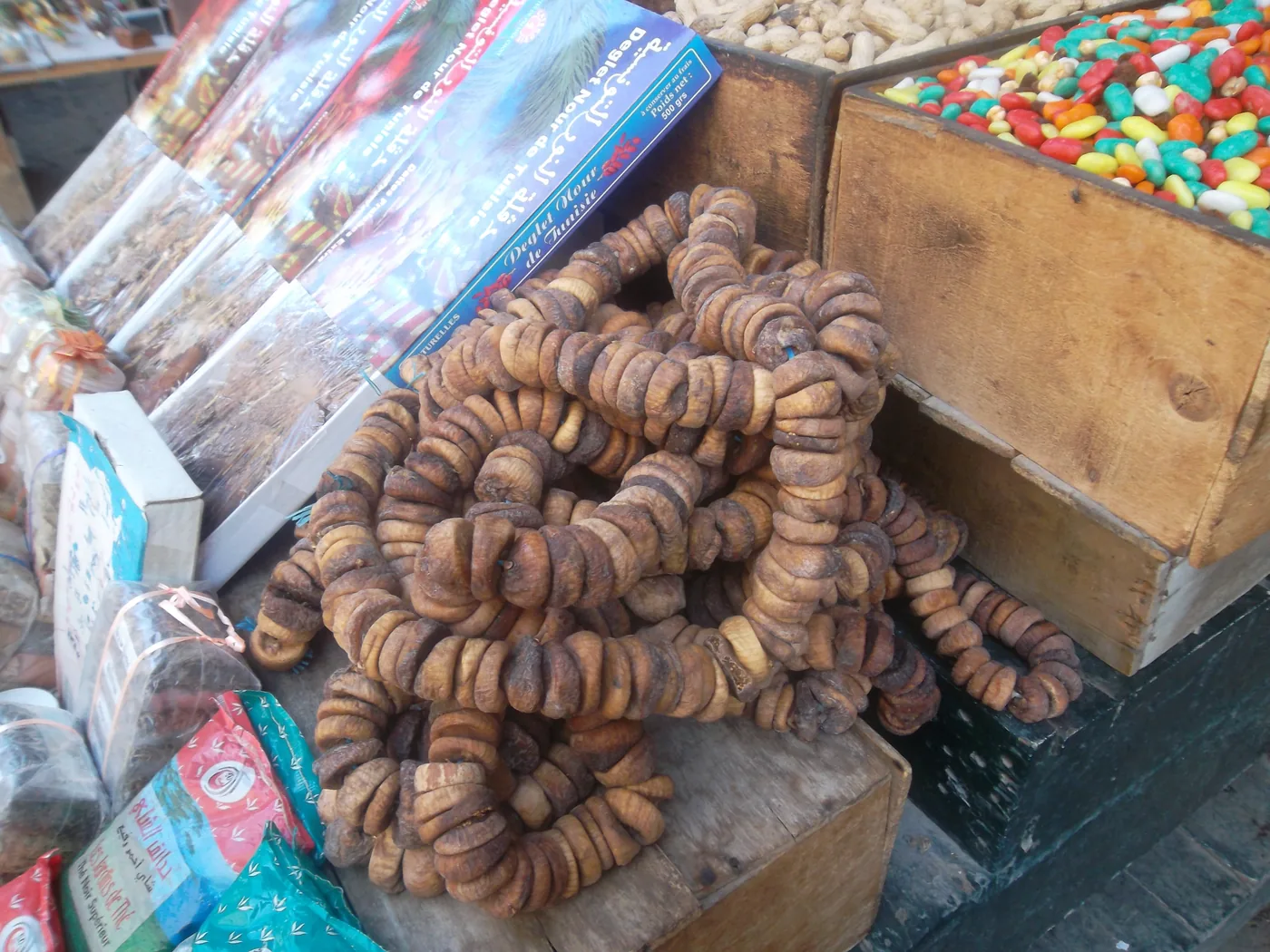

- Harvest fruit that is soft, fully colored and sweet-smelling, wash it, and trim the stems.
- Chop the figs and weigh them.
- Cook them gently with sugar and a little lemon juice, stirring so the bottom does not scorch.
- Cook for jam until it passes the cold-plate test, a spoonful that wrinkles when pushed on a chilled saucer, or until a thermometer reads 8 °F above the boiling point of water where you live.
- For jelly, simmer the fruit with water first, strain it through a jelly bag without squeezing, and cook the clear liquid with sugar to the same set point.
- Pour into clean, hot jars, seal, and process or refrigerate as the recipe you follow directs.
Dried figs are the other easy form of the fruit, and because they hold 30 g of water per 100 g against 79 g fresh, they keep for months. Whatever the form, the fruit is food, and the sap is the interesting extract.
Why People Reach for Figs
Fig has a long place in folk practice around the Mediterranean and western Asia, where it grew long before records began. The fruit was eaten fresh and dried, and the leaf was boiled as a tea. Modern work follows those same two uses. The fruit is a source of fiber, potassium and polyphenols, and the leaf is the part tested for blood sugar.
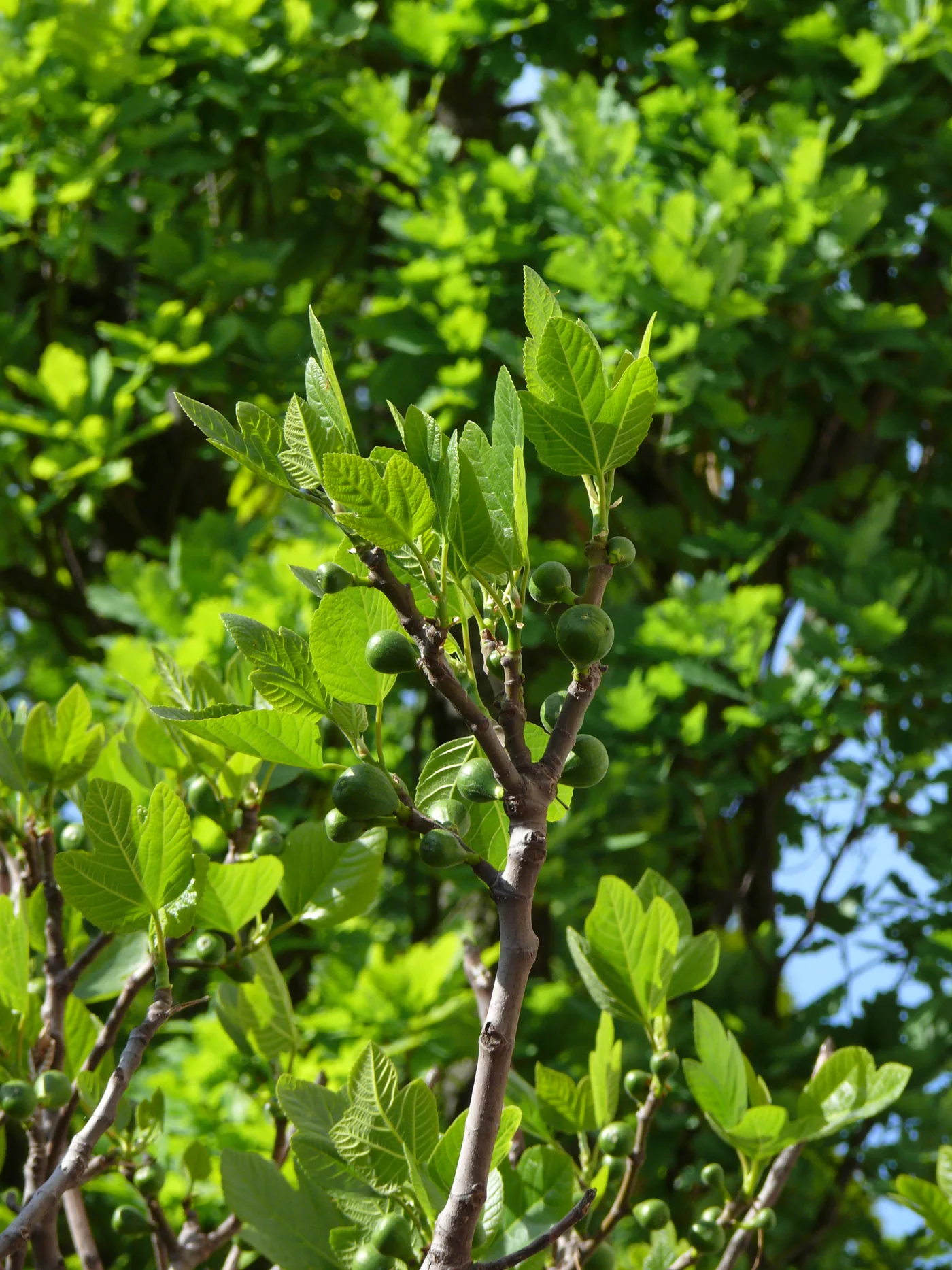

That history is a reason to look closely, and it is not proof. A tea that has been drunk for centuries can still interact with a drug, and a fruit that is safe in a bowl can be a trouble in a concentrated form. This is why the safety section sits in the middle of the guide and why every recipe asks you to write down what you did.
The same caution applies to dose. The only dose we can quote from a trial is the leaf decoction below, one cup a day from 13 g of dried leaf. For fruit extracts, we found no human dose at all, so none is given here.
How to Make a Glycerite: Glycerin Herbal Extracts
The alcohol-free extract: which herbs suit vegetable glycerin, how much water to add, how to make it and how long it keeps.
For a More In-Depth Read, Click HereExtracting the Skin Pigment
If you want color and polyphenols without the sugar, work on the skin. Peel the figs, dry the skins at 50 °C until they snap, and grind them through a fine sieve. Then use 1 part powder to 10 parts 70 to 100 percent ethanol and sonicate it in a short soak. Strain at once, soak the skin again with fresh ethanol, and combine the liquids.
The published optimum used ultrasound for 21 minutes at 310 W. Anthocyanins fade in light, heat and air, so keep the bath cool, and keep the finished liquid cold and sealed. The rotary evaporator turns the ethanol liquid into a concentrate without heat.
Is the yield worth the work? The 3.11 mg per gram of dried peel is small, and it adds up only when you start with a lot of skin. A kilogram of fresh figs gives only a little skin, so plan for several kilograms.
The Fig Leaf Decoction
The leaf is the part of the tree with human trials behind it, and the method is simpler than any solvent. A decoction is a tea made by boiling plant material in water, and it extracts the water-soluble polyphenols from tough leaf.
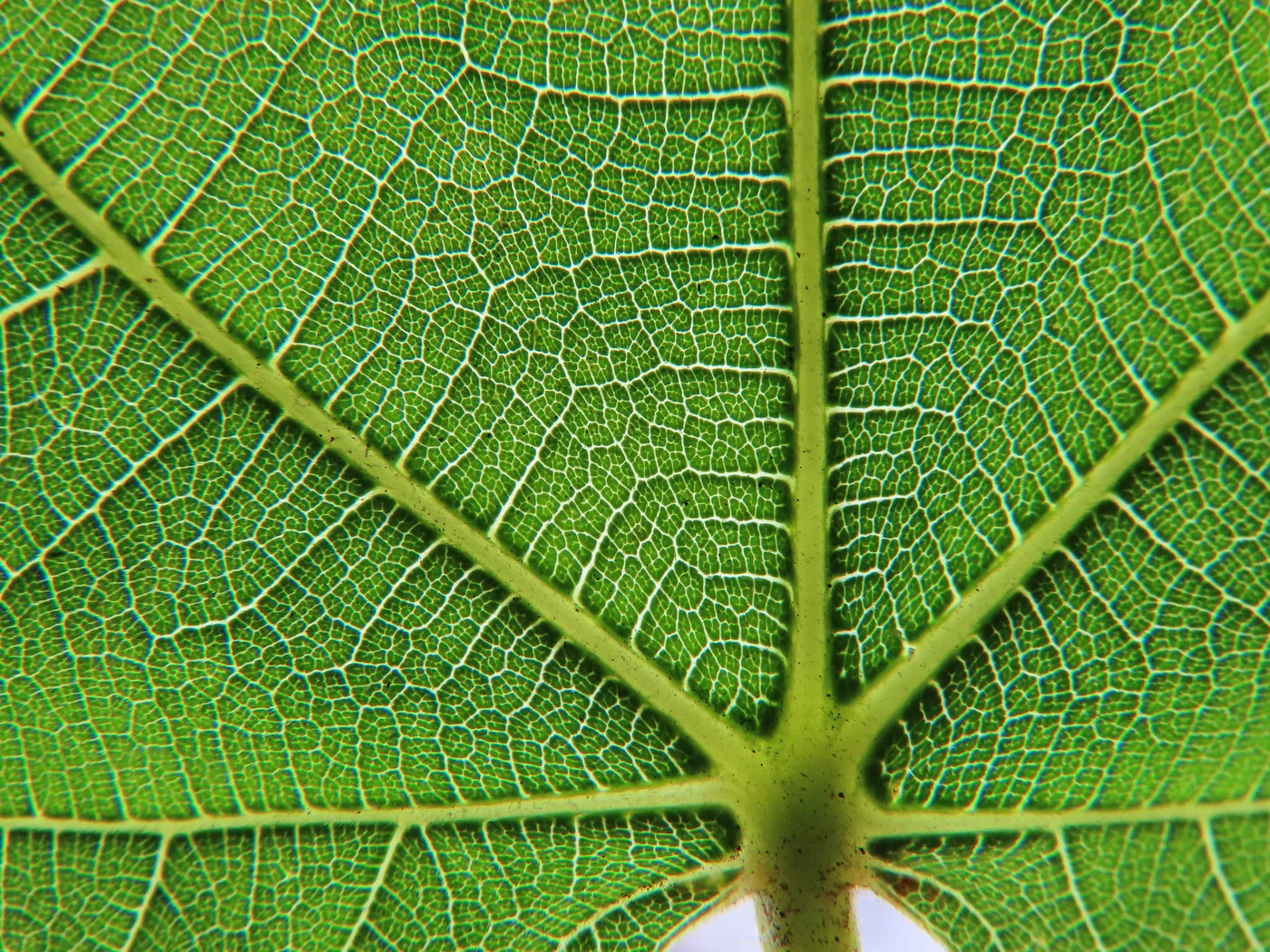

The 2016 trial used 13 g of dried, powdered leaf boiled in 500 mL of distilled water for 15 minutes, cooled and filtered. Patients drank one cup a day with breakfast. Here is how to follow that preparation.
- Harvest healthy, mature leaves and wear gloves and long sleeves, because the sap can burn skin in sunlight.
- Wash the leaves and dry them in the shade or a dehydrator at 40 °C until they crumble.
- Grind them to a coarse powder and weigh out 13 g.
- Boil the powder in 500 mL of water for 15 minutes with a lid on.
- Let it cool, then strain through a cloth and a coffee filter.
- Use the preparation the same day, and discard the rest after a day in the refrigerator.
Drying the leaf matters. The fresh leaf holds the most sap, and dried leaf powder is easier to weigh and to keep. Wash your hands, tools and countertop after you finish, and stay out of strong sun for the rest of the day if any sap reached your skin.
What the Evidence Says
Fig leaf has the best trial record of any part of the tree, and the record is still small. Two human trials are on file. A 1998 study of insulin-dependent patients gave a fig-leaf decoction with breakfast and is titled for a hypoglycemic action. The 2016 trial was a double-blind crossover study in people with type 2 diabetes, aged 40 to 60, with HbA1c between 7 and 8.5 percent, and it used green tea as the control. Each phase lasted 21 days with a 7-day washout between them.
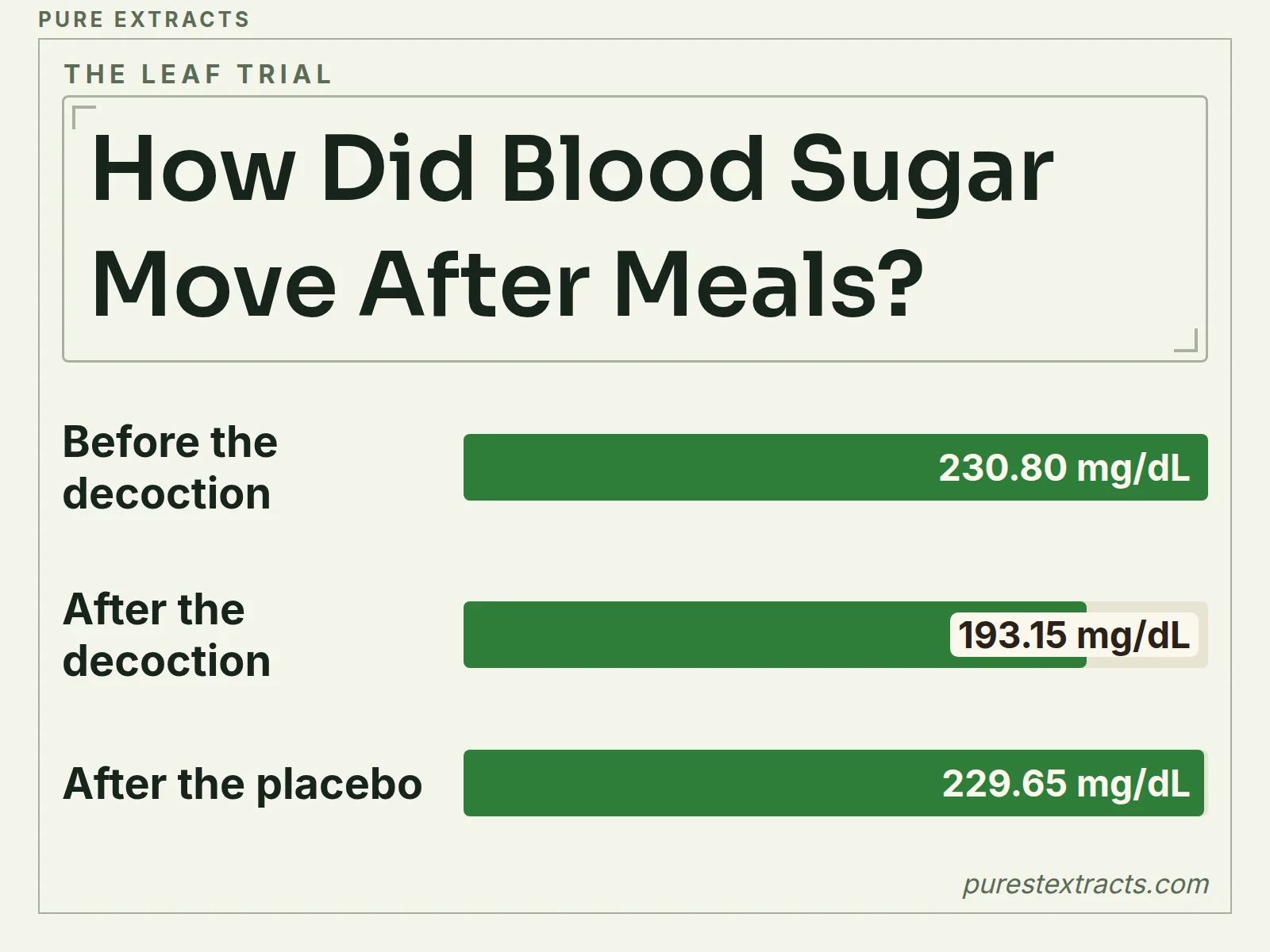
The trial reported these glucose results for the decoction group.
| Measure | mg/dL |
|---|---|
| 2-hour glucose before the decoction | 230.80 |
| 2-hour glucose after the decoction | 193.15 |
| 2-hour glucose after the placebo | 229.65 |
| Fasting glucose before | 152.76 |
| Fasting glucose after | 146.92 |
The change in the 2-hour reading was significant, and the fasting reading and HbA1c did not move enough to count. Liver enzymes did not change, and no other harm was reported. In a separate animal study, an ethyl acetate extract of fig leaves given to diabetic rats at 250 and 500 mg/kg for 28 days lowered blood glucose, cholesterol and triglycerides.
These are early findings in small groups over short periods. They tell you the leaf is worth studying, and they do not tell you that a leaf tea treats diabetes. Anyone with diabetes should talk to their doctor before drinking it.
Of the fruit, the evidence is thinner. Its polyphenols and anthocyanins act as antioxidants in the lab, and that is the extent of what we can say.
The Sap
When you snap a fig stem, a white sap runs out. It comes from laticifers, cells that run through the whole tree, and it carries two things you should know about. One is ficin, a protein-digesting enzyme that is also the main fig allergen. The other is the same pair of furanocoumarins found in the leaf, psoralen and bergapten, which make skin react to ultraviolet light.
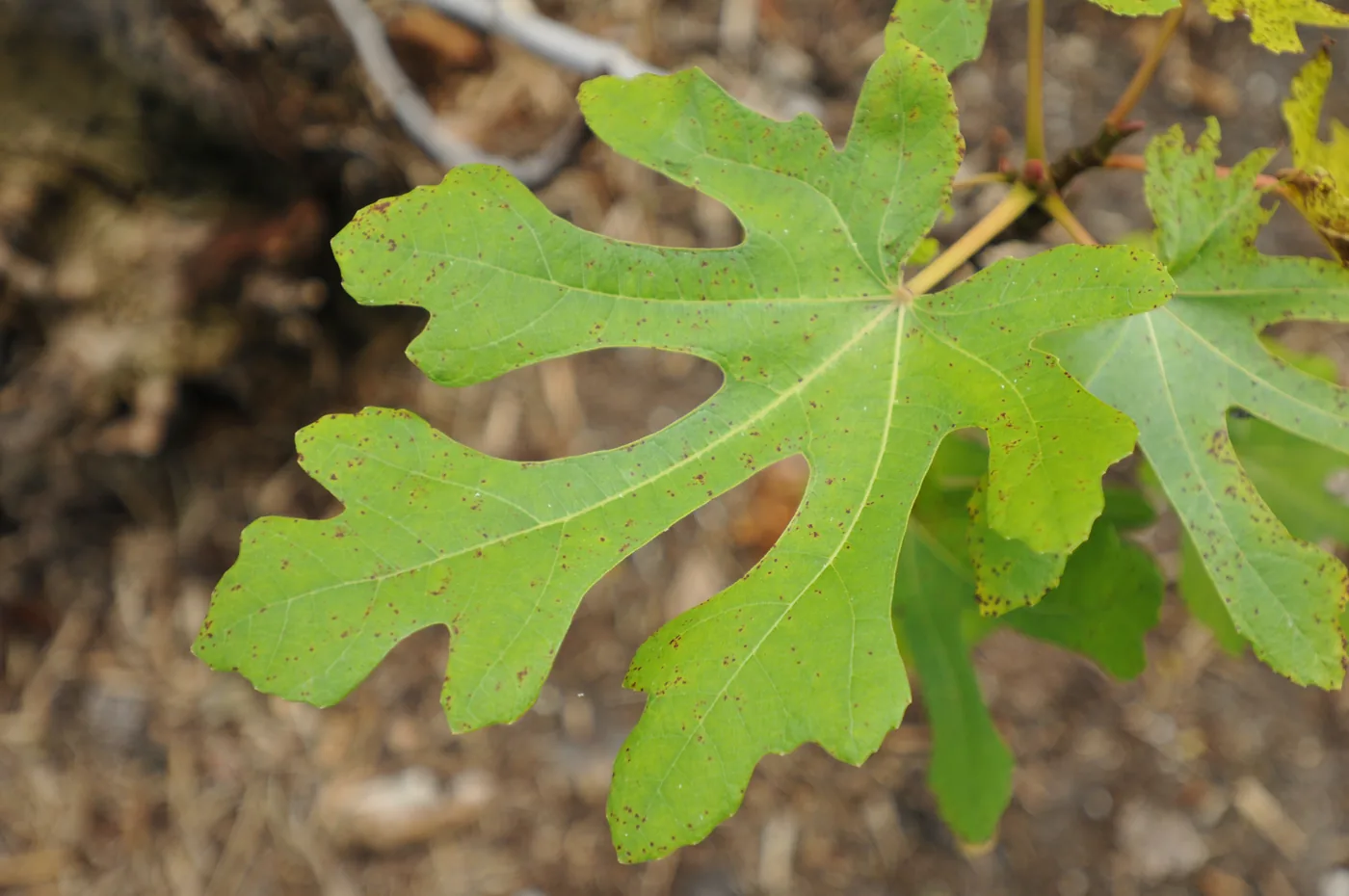

This is the interesting extract, and it is also the one that punishes slow work. Ficin breaks itself down, a process called autolysis, and a study of ficin stored warm found every form of it degraded, more so with every extra day of storage. Heat, light, air and time all work against the sap compounds, which is why a sap extract is built around speed and cold, not around patience.
What is done in general with sap is short and cold. People collect the drops straight into a chilled vial, fill it to the top so little air remains, and move to the solvent step within the hour. A published comparison of solvents on fig latex tried methanol, ethanol, 75 percent ethanol, ethyl acetate and n-hexane at latex-to-solvent ratios from 1 to 1 up to 1 to 15. That is an example of what is done, and it is not a recommendation to use the product.
A skin reaction from the sap is called phytophotodermatitis. The sap soaks into the skin, sunlight activates it, and a red, blistering burn appears a day or two later. We do not recommend taking anything from this tree that is known to be toxic, and a sap extract is a laboratory material, never a supplement. If sap gets on you, wash with soap and water straight away and cover the skin from the sun for at least 48 hours.
Dose and Toxicity
Toxicity here depends on dose, as it does for most plant compounds. A fig is food. The leaf as a tea has been used in small amounts in trials. The sap carries compounds that harm skin and cause allergic reactions at amounts that would not matter in a fruit. For that reason we do not recommend large amounts of any fig preparation, and we do not give a dose for any extract that carries furanocoumarins or ficin.
What we can do is describe what is done in general: fruit is eaten as food, the leaf is drunk as a tea in cup-sized amounts, and the sap is handled by laboratories with gloves, eye protection and no sunlight on the skin. The line between those is the one this guide keeps drawing, and it is the reason the safety section is long.
Storage and Batch Records
An extract is only as good as its record. Write down the fruit variety, the weight in, the weight of juice or powder out, the solvent and its strength, the soak times, the bath temperature and the vacuum. Six months from now, that page is the only way to repeat a batch that worked or to learn why one failed.
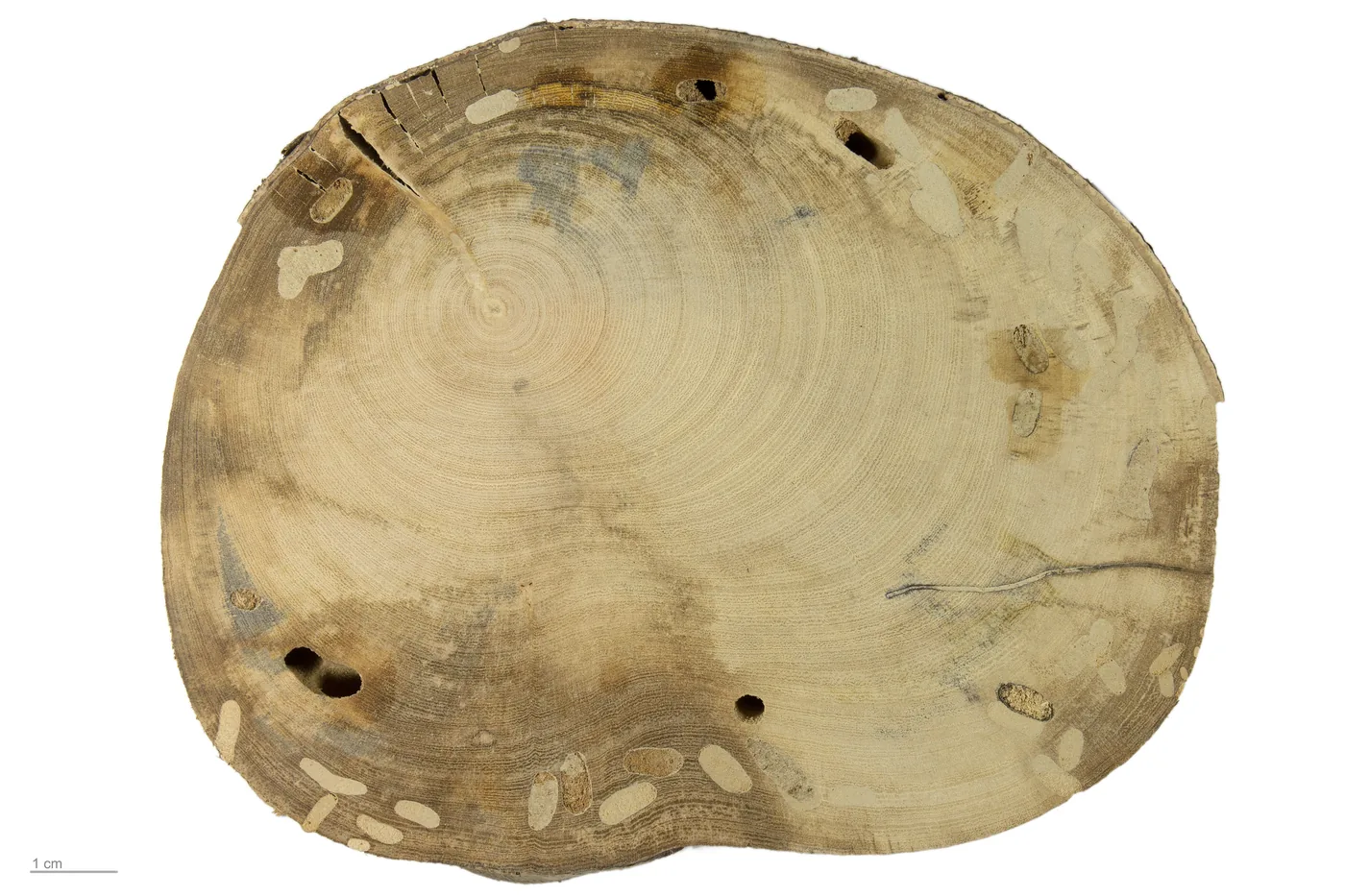

Keep each form the way it behaves. Fresh juice lasts a day or two in the refrigerator and months in the freezer if you portion it into small containers. Freeze-dried powder keeps best in a foil bag with a drying packet in a cool, dark place, since the sugar pulls water from the air and turns the powder to paste. A concentrate belongs in dark glass, filled to the neck so little air is left, tightly capped and cold. A leaf decoction is a fresh preparation only.
We have no storage test of our own for fig extracts, so we cannot give a shelf life in months. Smell, color and clarity are your instruments. A cloudy bottle, a sour smell or any mold means the batch is finished.
Equipment
Each route asks for different tools, and the quick method asks for a few that a kitchen does not have.
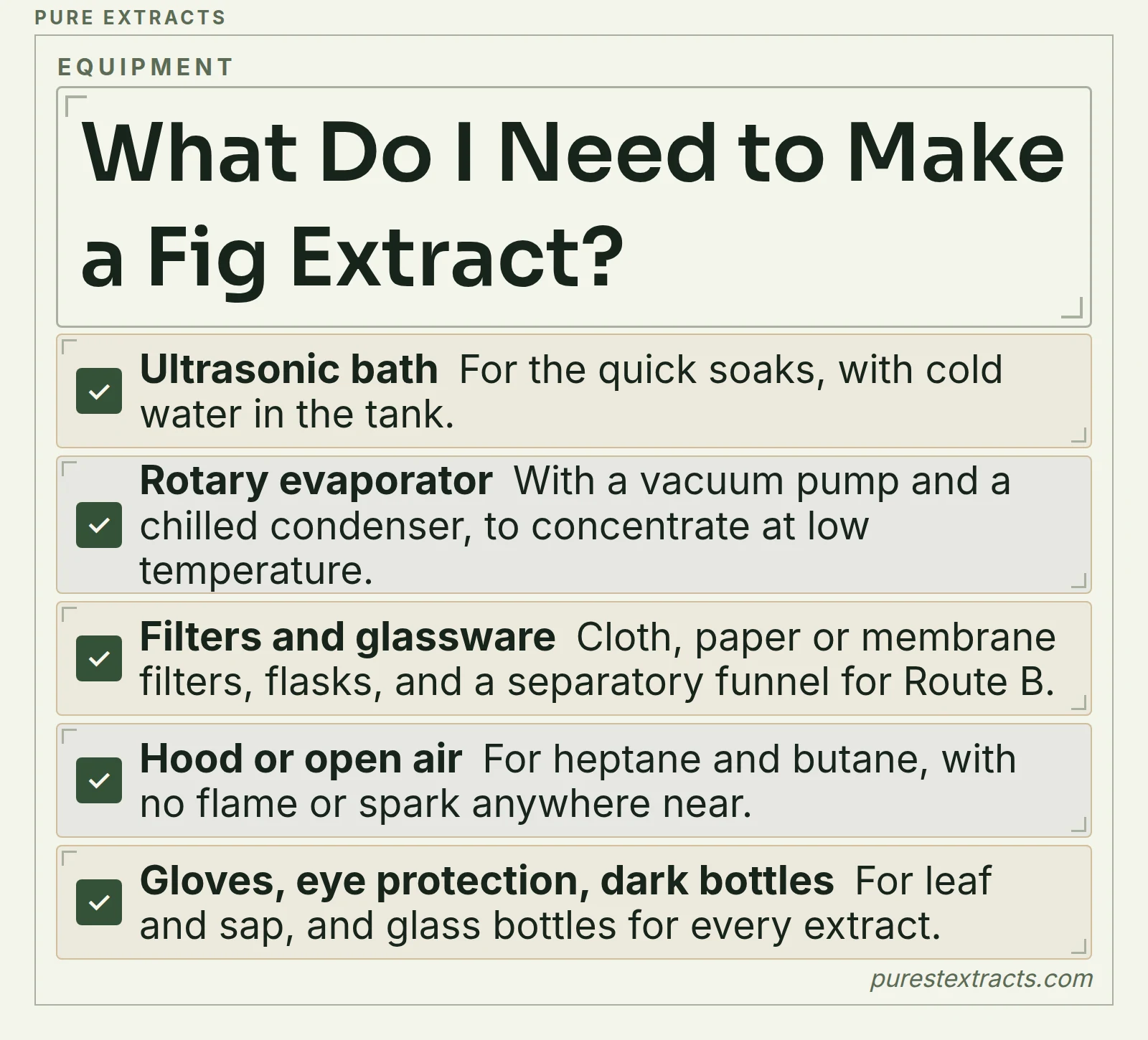
The cheapest item here, a thermometer, prevents the most mistakes, because a bath that runs warmer than its dial damages the sap compounds long before you notice.

Safety
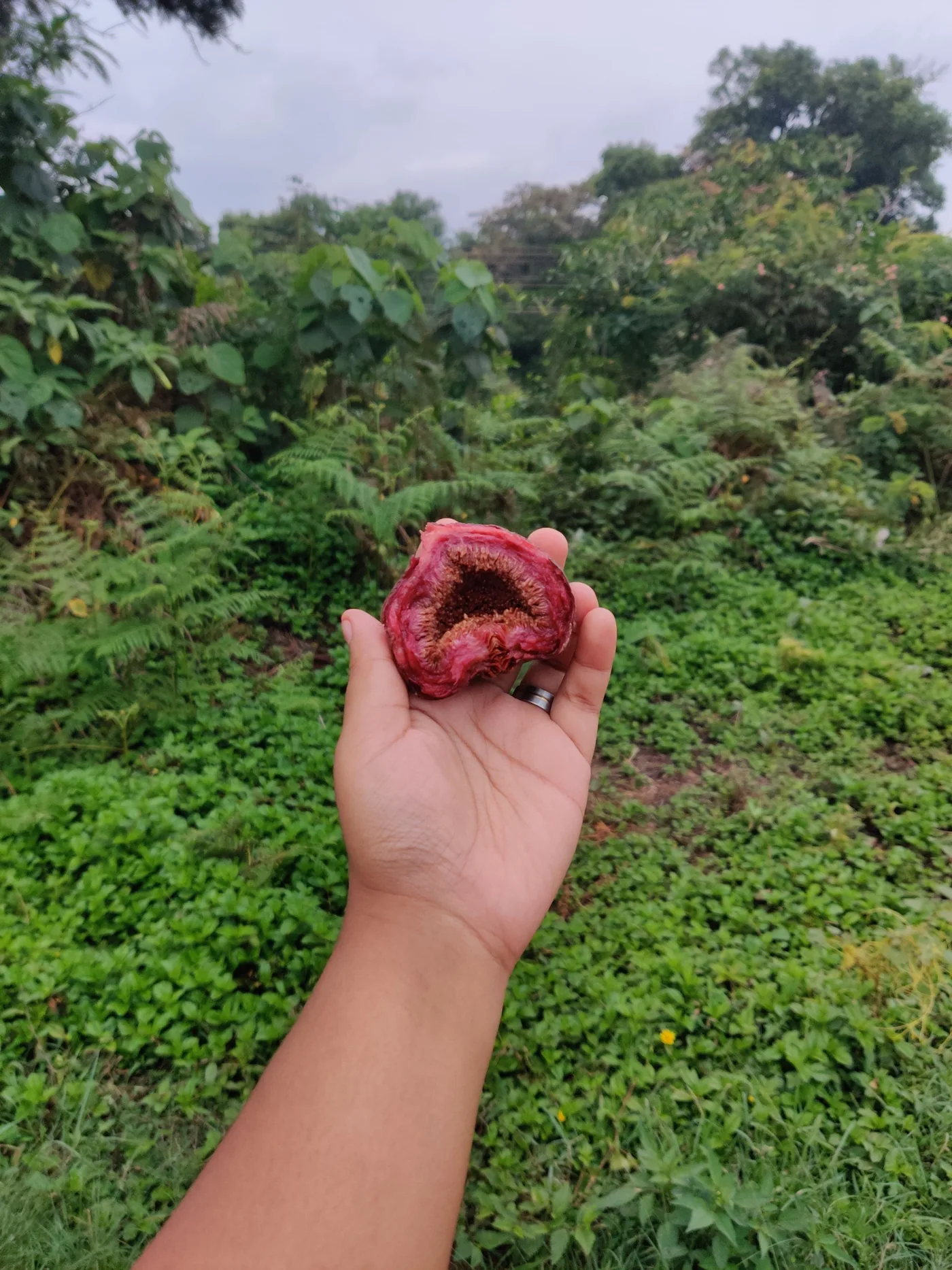
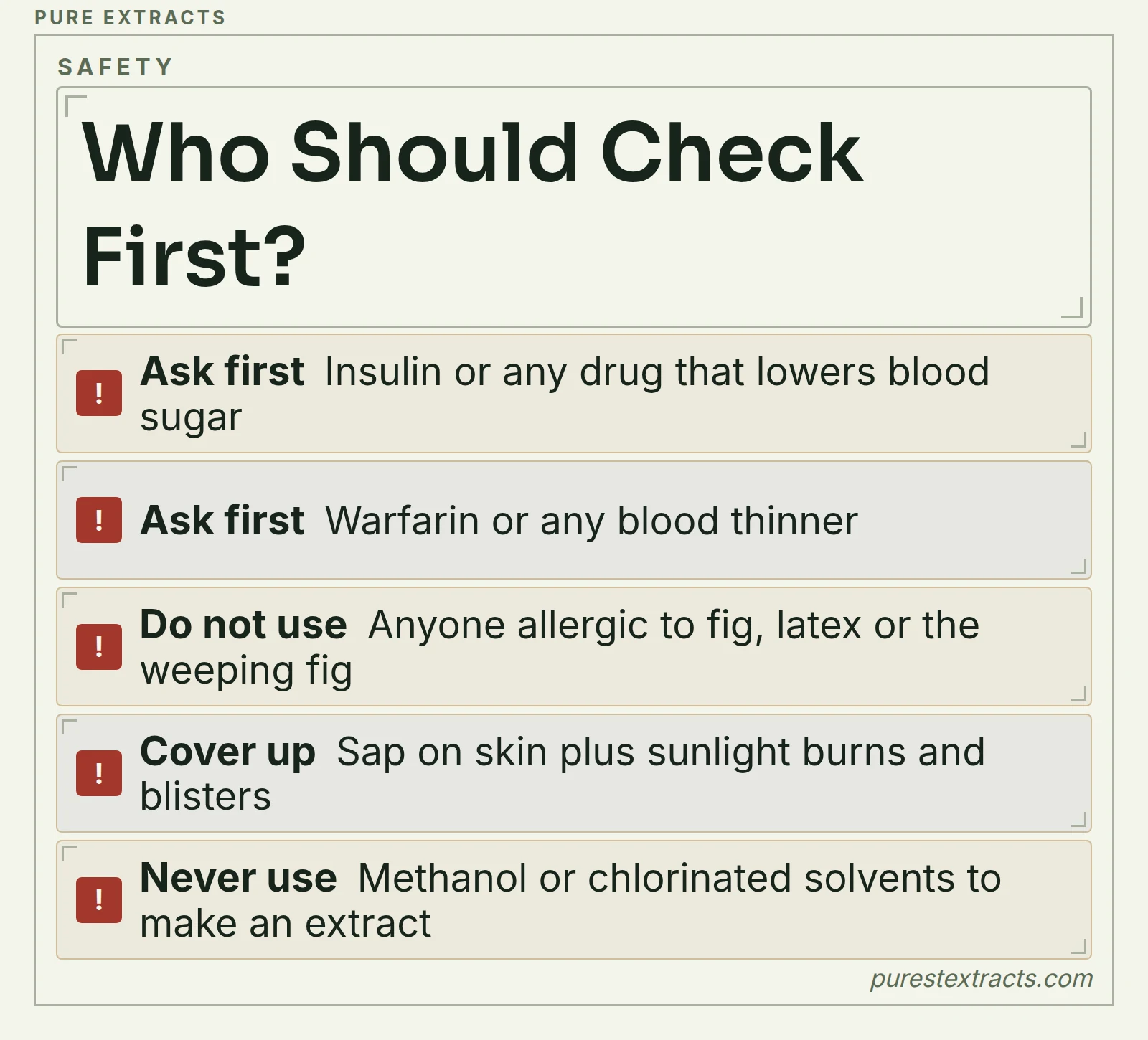
A fig looks harmless, and the fruit largely is. The sap, the leaf and the solvents are what need respect. Read this list before you begin, and again before you drink or share anything.
What to do
These steps keep the cook and everyone nearby out of trouble.
- Wear gloves, long sleeves and eye protection when you handle leaves, shoots or sap, and wash with soap and water afterward.
- Stay out of direct sun for 48 hours if sap touched your skin, and cover the area.
- Talk to your doctor before you drink fig leaf tea if you take insulin or any diabetes medicine, because the leaf can lower blood sugar further.
- Tell your doctor before you use leaf tea or a concentrated extract if you take warfarin. Fresh figs carry 4.7 micrograms of vitamin K per 100 g, dried figs 15.6, and a steady daily intake is what keeps warfarin levels stable.
- Try a small piece of fruit first if you have never eaten it, and stop at once if your mouth itches or swells.
- Work with heptane, butane, ethanol and ethyl acetate outdoors or under a hood that draws from the bench, away from flames and sparks, and remember that their vapors sink and travel along the floor.
- Keep butane in a closed system built for it and never in an enclosed room, and ground metal containers when you pour heptane.
- Label every jar with the part, the solvent, the strength and the date, and store it out of reach of children.
Allergy to fig is rare and real. A case report described a 50-year-old woman with severe abdominal pain and nasal symptoms right after eating a fig, with positive skin tests to both fresh and dried fruit. Another described a child who reacted to fresh fig, and the authors proposed that ficin, a cysteine protease, may cross-react with a dust mite protein of similar shape. Fig allergy is also linked to allergy to the weeping fig, Ficus benjamina, a common houseplant, and to latex allergy.
What not to do
- Never taste or swallow sap, and keep it away from eyes and mouth.
- Never recommend, sell or take an amount of a fig preparation that is known to be toxic.
- Avoid sunbathing, tanning beds and long outdoor work after any contact with leaf or sap.
- Skip methanol and chlorinated solvents entirely, because neither belongs in a kitchen or in anything meant to be tasted.
- Never light a flame, run a spark-making tool or leave a pilot light on near heptane or butane.
- Keep nonpolar solvent fractions away from food, and never promise anyone that an extract treats or prevents a disease.
- Leave fig leaf preparations to adults who are not pregnant, because no trial covers pregnancy or nursing, and keep every extract from babies and children.
Who should skip all of this? Anyone with a fig, latex or weeping fig allergy, anyone with a history of reacting to sap, and anyone on diabetes drugs or warfarin until a doctor has weighed in. Our laboratory advice is one thing, and your health is another.
Troubleshooting
Most problems with a fig extract have a simple cause, and the usual ones are in this list.
| What you see | The usual cause | What to do |
|---|---|---|
| The juice turns brown fast | Enzymes oxidize the cut flesh | Work cold, add a little lemon juice, freeze at once |
| The freeze-dried cake is sticky | Too much sugar, a thick layer, or damp air | Use thinner trays, run longer, grind and seal in a dry room |
| A thick foam sits between the layers | Particles or pectin in the juice | Filter again, swirl instead of shaking hard, let it stand |
| The flask foams over on the evaporator | Sugar and protein in the liquid, vacuum pulled too fast | Fill the flask halfway at most and lower the pressure slowly |
| The extract is pale | A light-skinned fig has little pigment | Use dark-skinned figs and extract the skins |
| A sap extract loses its activity or darkens | Heat, light, air or waiting | Work colder and faster, fill the vial, keep it dark |
| A red, blistered patch on the skin | Sap plus sunlight | Wash, keep out of the sun and see a doctor if it blisters |
If a problem is not on the list, the safest response is the plain one. Throw the batch out and begin again with clean equipment and ripe, fresh material.

Growing the Tree Yourself
A fig is among the easiest fruit trees to propagate, and a rooted cutting can start a tree that fills a corner of the yard. Our partner website has the full growing guide, including how our own mother tree is kept and how its leaves go back into the soil as feed.
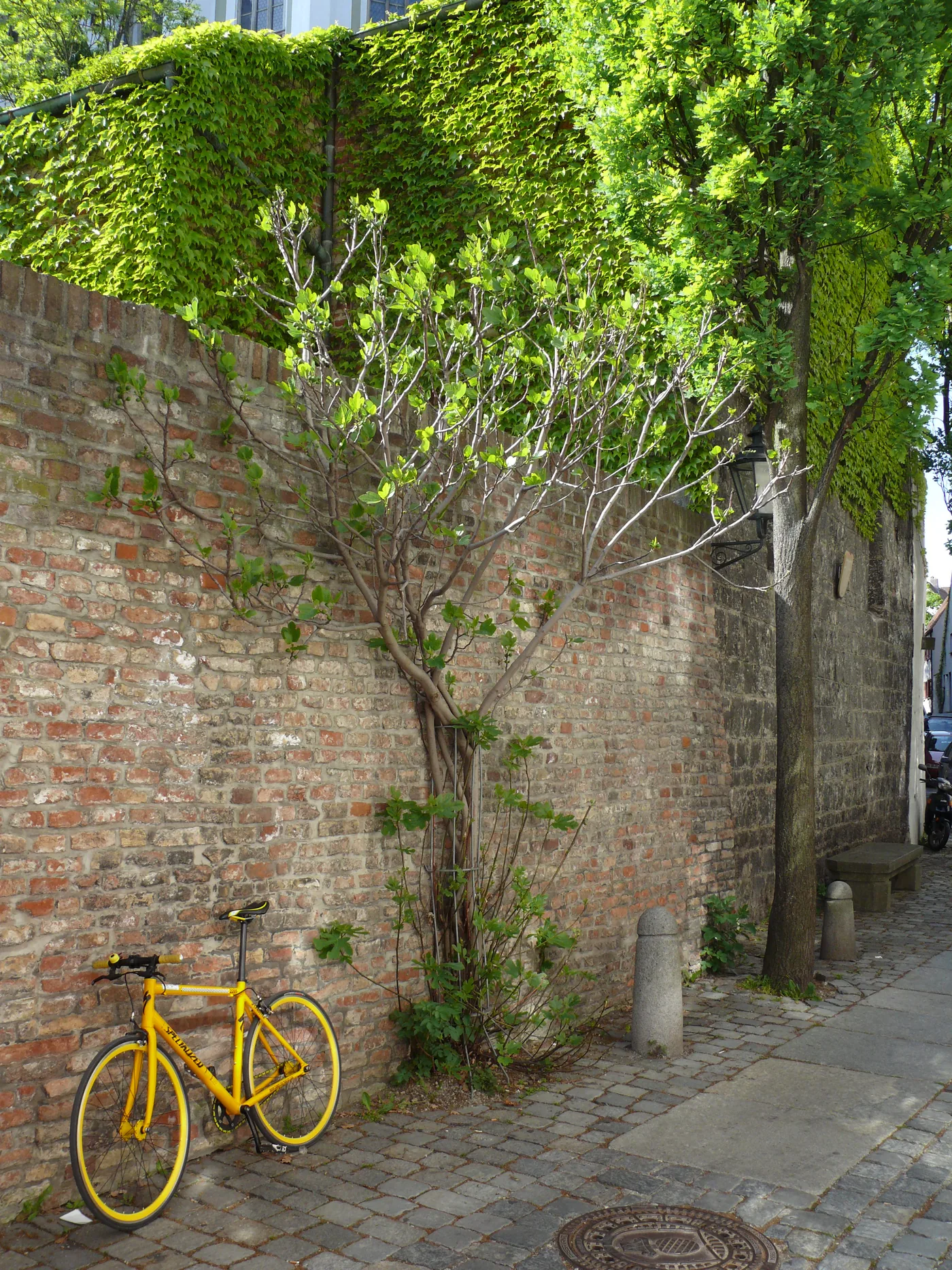

Your own tree lets you choose the day you harvest and the part you process.
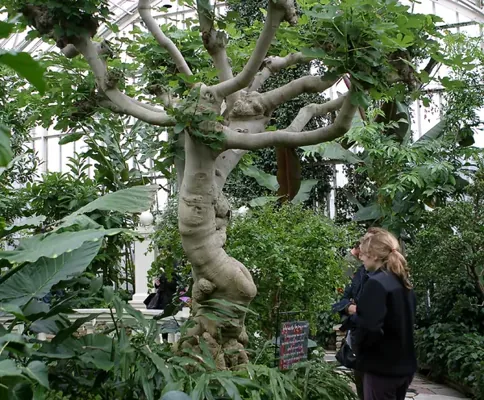
Our partner website, Shearer Farms
Fig (Ficus carica) Guide: Cuttings, Pruning, Freeze Protection and Harvest
Grow figs (Ficus carica): Celeste and Texas Everbearing, cuttings, planting, pruning, freeze protection, fig rust.
How to Filter and Clarify an Extract: Carbon, Bentonite and Silica
From coarse straining to fine filters, and how activated carbon, bentonite clay and silica clean up an extract.
For a More In-Depth Read, Click HereReferences
- Wikipedia, Common fig: nutrition per 100 g raw and dried fruit, latex, psoralen and bergapten, polyphenols, anthocyanins, cultivation.
- Effect of fig leaf decoction on glycemic control in type 2 diabetes, a double-blind crossover trial (Ahmadi Mazhin and colleagues, 2016), Jundishapur Journal of Natural Pharmaceutical Products.
- Hypoglycemic action of an oral fig-leaf decoction in type-I diabetic patients, Diabetes Research and Clinical Practice (1998).
- Protective effects of Ficus carica leaves on glucose and lipids levels, carbohydrate metabolism enzymes and beta-cells in type 2 diabetic rats, PMC.
- Effects of tray and freeze drying on physico-chemical and structural properties of fig fruit powder, Journal of Agricultural Engineering (2023).
- Optimization of heat, microwave and ultrasound extraction of anthocyanins from fig peel, Instituto Politecnico de Braganca repository.
- Phytochemical constituents of fig cultivars Afghan, Deanna and Brown Turkey, Plant Archives: anthocyanin content.
- Effect of freezing procedure on polyphenol and sugar contents of fig during storage, CROSBI record.
- Fig allergy case report with house dust mite cross-reactivity and the role of ficin, Clinical and Molecular Allergy (2020).
- Immediate anaphylaxis after the ingestion of fig fruit (Ficus carica), Clinical and Translational Allergy (2015).
- Phytophotodermatitis from fig, case report, Dermatology Online Journal: furocoumarins in leaf and shoot sap.
- Ask the doctor: is it okay to eat leafy greens while taking warfarin? Harvard Health.
- Ultrasound-assisted extraction of total flavonoids from fig leaves (Food Science, 2010): 40 percent ethanol, 1 to 60, 60 °C, 50 minutes.
- Ficus carica leaf ultrasonic extraction time and ethanol strength, Vietnamese study: 50 percent ethanol, 20 minutes.
- Solvent comparison on fig latex (methanol, ethanol, ethyl acetate, n-hexane), Scientific Reports (2020).
- Purification and autolysis of the ficin isoforms from fig latex, Phytochemistry (2013).
- n-Heptane safety data sheet: flash point and flammable range.
- Butane safety data sheet: vapor heavier than air, flammable gas.
Common questions
How do I choose a method?
Five methods are in use, and each one suits a different goal. The first is ours and the others are routes people use for specific parts. For leaf and sap the quick soak is the method, because those materials lose their best compounds with time. A whole fruit is mostly water, so for the fruit the juice routes make more sense, and a freeze dryer improves the first of them for anyone who owns one. Color from dark skins calls for ethanol with ultrasound.
What is happening chemically in fig extraction?
A fig tree gives several materials with different chemistry, so no single solvent suits all of them. The leaf's flavonoids carry sugar and follow water, the sap enzymes are proteins that need a gentle water-based method, the skin pigment follows watery ethanol, the furocoumarins sit in the middle, and the latex fats follow a nonpolar solvent. Our own quick soak with a nonpolar solvent is the method for the sap and the middle group, as described next.
What is concentrating under deep vacuum?
A rotary evaporator spins a flask half full of liquid in a warm bath while a pump pulls the air out. Lowering the pressure lowers the boiling point of the solvent, so it leaves the flask at a temperature the compounds can survive, and the spinning spreads the liquid into a thin film that evaporates quickly. The solvent condenses on a chilled coil and runs into a receiving flask where you can reuse or dispose of it properly. Low bath temperature (Keeps heat off the extract): Sap compounds and ficin break down when warm.
What are two juice routes?
A juice is the natural starting point for a soft fruit like this. From there the road splits, and the split is a question of which compounds you want to keep. A: juice, freeze dry, extract the powder (Sugars, anthocyanins, phenolic acids, glycosides, Volatile aroma and some heat-sensitive compounds): A water-soluble, whole-fruit extract. B: juice, filter, nonpolar extraction (The fat-soluble fraction in the solvent layer, Sugars and most glycosides, which stay in the water): A concentrated, sugar-free fraction.
What are why people reach for figs?
Fig has a long place in folk practice around the Mediterranean and western Asia, where it grew long before records began. The fruit was eaten fresh and dried, and the leaf was boiled as a tea. Modern work follows those same two uses. The fruit is a source of fiber, potassium and polyphenols, and the leaf is the part tested for blood sugar. That history is a reason to look closely, and it is not proof.
What is extracting the skin pigment?
If you want color and polyphenols without the sugar, work on the skin. Peel the figs, dry the skins at 50 °C until they snap, and grind them through a fine sieve. Then use 1 part powder to 10 parts 70 to 100 percent ethanol and sonicate it in a short soak. Strain at once, soak the skin again with fresh ethanol, and combine the liquids. The published optimum used ultrasound for 21 minutes at 310 W.
What is the fig leaf decoction?
The leaf is the part of the tree with human trials behind it, and the method is simpler than any solvent. A decoction is a tea made by boiling plant material in water, and it extracts the water-soluble polyphenols from tough leaf. The 2016 trial used 13 g of dried, powdered leaf boiled in 500 mL of distilled water for 15 minutes, cooled and filtered. Patients drank one cup a day with breakfast; here is how to follow that preparation.
What is the sap?
When you snap a fig stem, a white sap runs out. It comes from laticifers, cells that run through the whole tree, and it carries two things you should know about. One is ficin, a protein-digesting enzyme that is also the main fig allergen. The other is the same pair of furanocoumarins found in the leaf, psoralen and bergapten, which make skin react to ultraviolet light. This is the interesting extract, and it is also the one that punishes slow work.
Is fig extraction safe?
Toxicity here depends on dose, as it does for most plant compounds. The leaf as a tea has been used in small amounts in trials. The sap carries compounds that harm skin and cause allergic reactions at amounts that would not matter in a fruit. For that reason we do not recommend large amounts of any fig preparation, and we do not give a dose for any extract that carries furanocoumarins or ficin. What we can do is describe what is done in general: fruit is eaten as food, the leaf is drunk as a tea in cup-sized amounts, and the sap is handled by laboratories with gloves, eye protection and no sunlight on the skin.
How is the result of fig extraction stored?
An extract is only as good as its record. Write down the fruit variety, the weight in, the weight of juice or powder out, the solvent and its strength, the soak times, the bath temperature and the vacuum. Six months from now, that page is the only way to repeat a batch that worked or to learn why one failed. Keep each form the way it behaves. Fresh juice lasts a day or two in the refrigerator and months in the freezer if you portion it into small containers.
What equipment does fig extraction need?
Each route asks for different tools, and the quick method asks for a few that a kitchen does not have. The cheapest item here, a thermometer, prevents the most mistakes, because a bath that runs warmer than its dial damages the sap compounds long before you notice.
What usually goes wrong with fig extraction?
Most problems with a fig extract have a simple cause, and the usual ones are in this list. The juice turns brown fast (Enzymes oxidize the cut flesh): Work cold, add a little lemon juice, freeze at once. The freeze-dried cake is sticky (Too much sugar, a thick layer, or damp air): Use thinner trays, run longer, grind and seal in a dry room. A thick foam sits between the layers (Particles or pectin in the juice): Filter again, swirl instead of shaking hard, let it stand.
How do I grow the tree yourself?
A fig is among the easiest fruit trees to propagate, and a rooted cutting can start a tree that fills a corner of the yard. Our partner website has the full growing guide, including how our own mother tree is kept and how its leaves go back into the soil as feed. Your own tree lets you choose the day you harvest and the part you process. Our partner website, Pure Extracts. Fig (Ficus carica) Guide: Cuttings, Pruning, Freeze Protection and Harvest .
Browse by topic
More guides to explore
 ExtractionCold Press Extraction
 ExtractionEnzymatic Extraction
 ExtractionEthanol Extraction
 ExtractionMicrowave-Assisted Extraction
 ExtractionNatural Dye Extraction and Use
 ExtractionPressurized Hot Water Extraction
 ExtractionSteam Distillation