Guides
Goji Berry (Lycium barbarum) Extraction Guide: Juice, Ethanol Precipitation and Ultrasonic Soaks
How to turn ripe goji berries (Lycium barbarum) into a freeze-dried juice extract, a nonpolar split of the juice, a polysaccharide fraction or a carotenoid extract, and which compounds each route keeps.
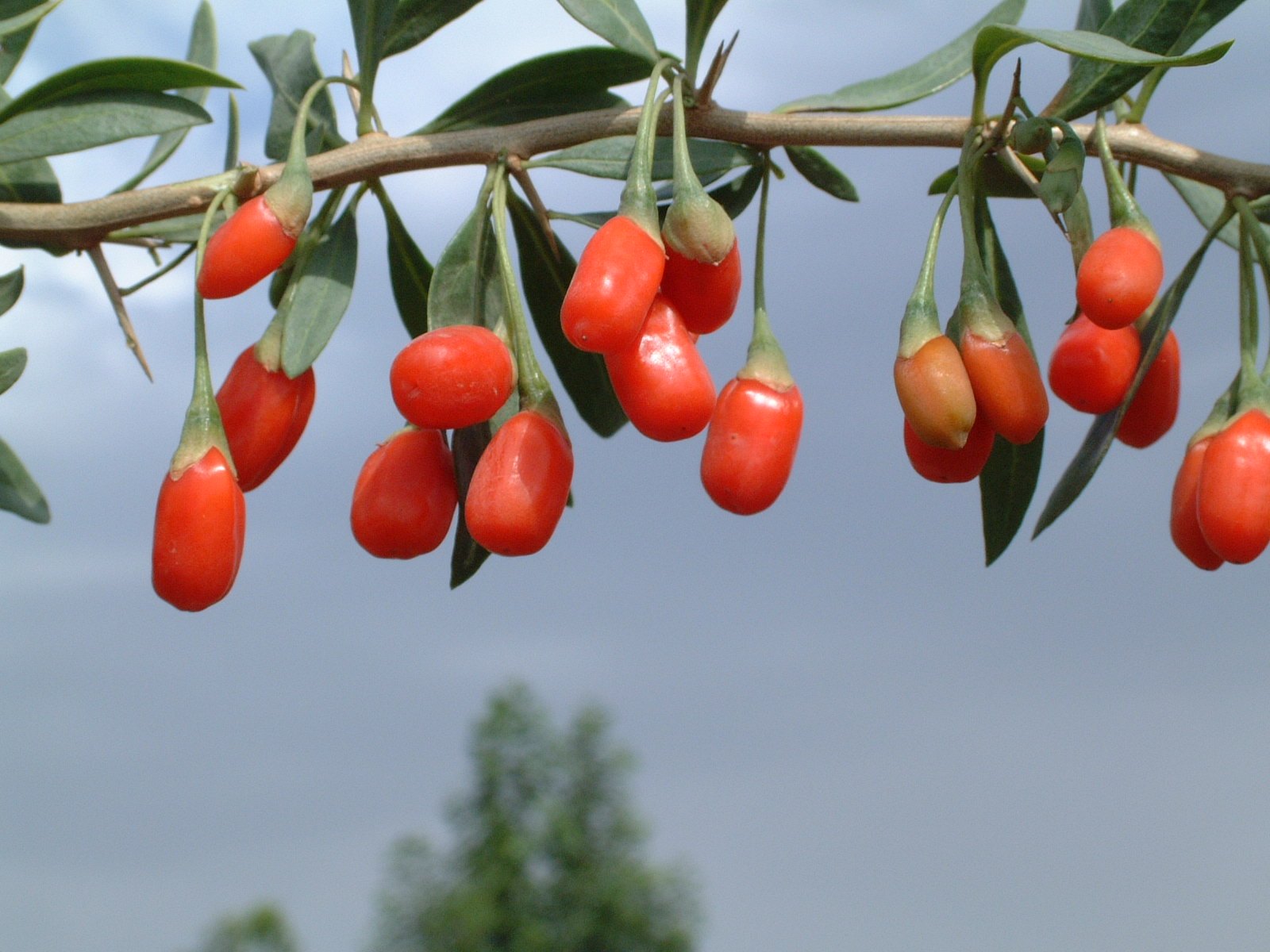
Photograph: Paul144 at English Wikipedia, Public domain. Source: Wikimedia Commons

On this page
Introduction
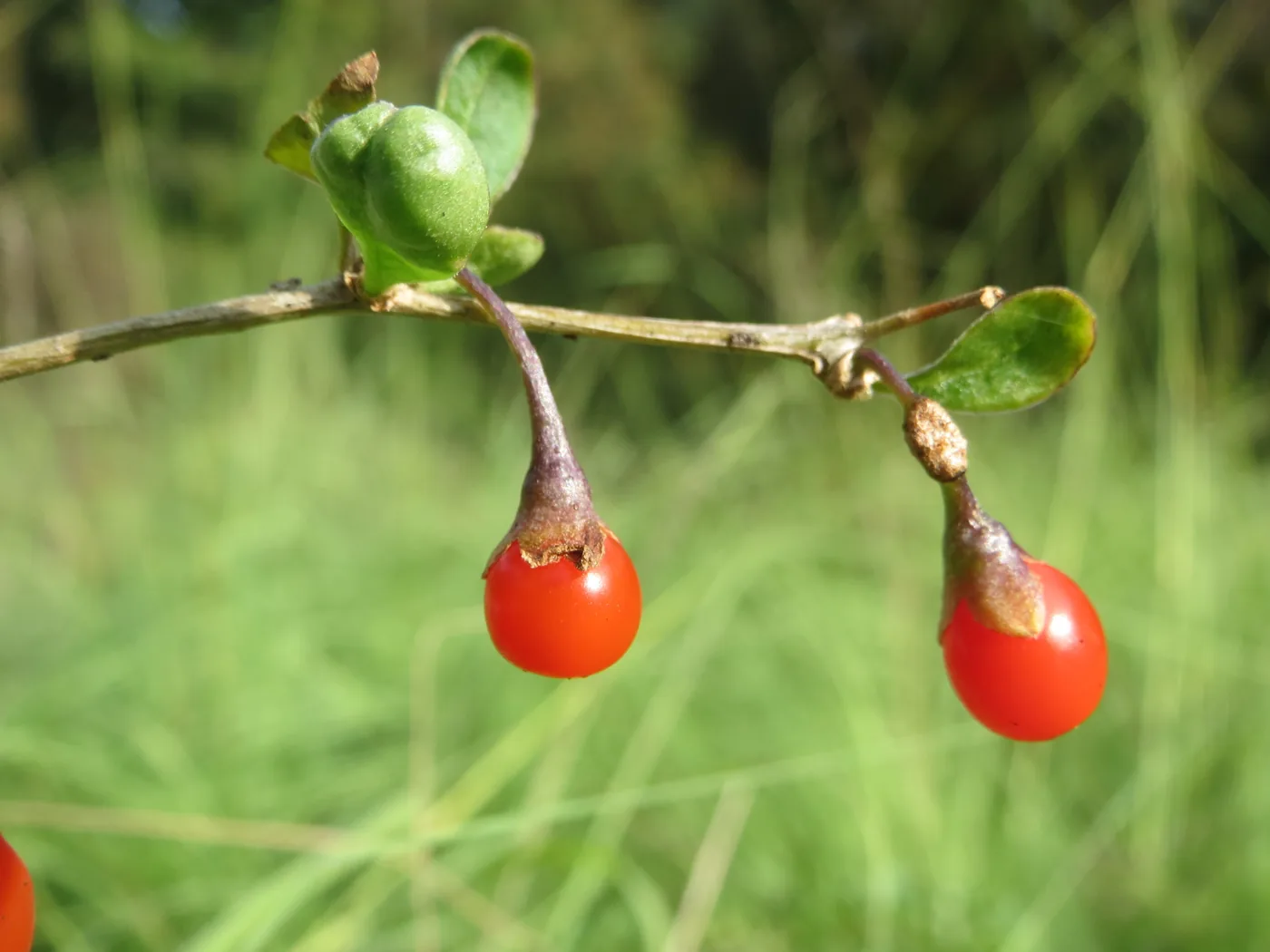
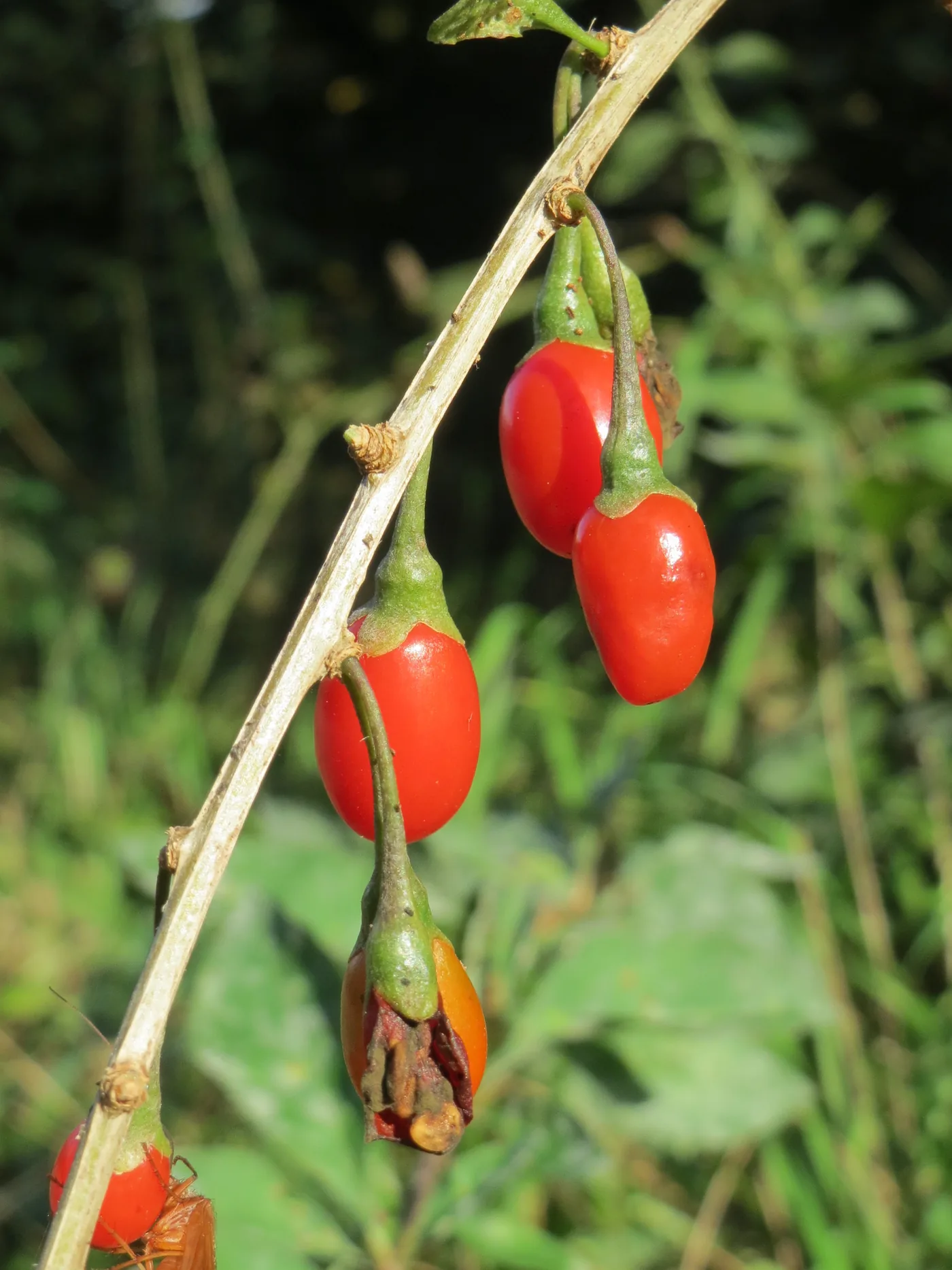
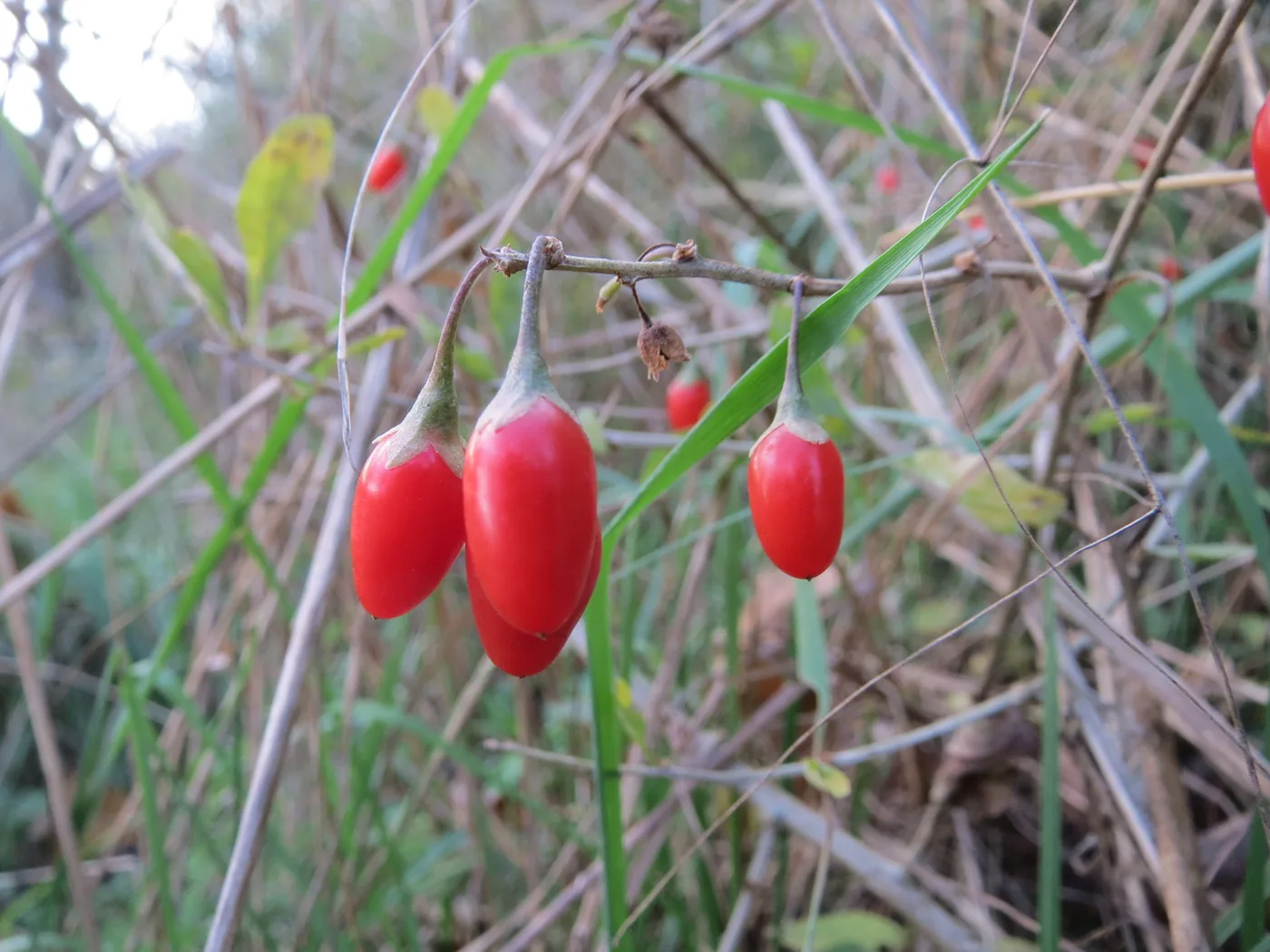
Goji berries are the fruit of Lycium barbarum, a thorny deciduous shrub that grows 3 to 10 feet tall with long, arching stems. The berry is a bright orange-red ellipsoid 1 to 2 centimeters across, with 10 to 60 small seeds inside. It is also called wolfberry, and in this guide goji and wolfberry mean the same fruit. Two other plants share the genus and the common names. Lycium chinense is the other cultivated goji, and black goji, Lycium ruthenicum, is a separate plant with dark purple fruit that we will cover in its own guide. Everything below is about the red fruit of Lycium barbarum.
This guide is for someone who wants to turn those berries into an extract at home. We cover what is in the fruit, why the fruit's chemistry splits into a water-loving half and a fat-loving half, and how each route we use keeps one half or the other. Two juice routes come first, because the fruit is soft, juicy and easy to press. Then come the ordinary routes: water extraction with ethanol precipitation for the polysaccharides, quick ultrasonic soaks for the carotenoids, and low temperature vacuum evaporation to finish. Each route gets its steps, what it keeps, what it loses and what to do about the solvent.
Summary
- The part: the ripe fruit, fresh or dried. Goji leaves, root bark and green fruit are not covered here.
- Water-loving compounds: Lycium barbarum polysaccharides, betaine, flavonoids and phenolic acids. They follow water and watery ethanol.
- Fat-loving compounds: carotenoids, mainly zeaxanthin dipalmitate, the orange pigment of the berry. They follow nonpolar solvents.
- Route A: juice the fresh berries, freeze dry the juice, extract the powder. It keeps the water-loving half together.
- Route B: juice, filter through cloth and then a fine filter, extract the clear juice with a nonpolar solvent. It splits the juice into a watery layer and a solvent layer.
- Ordinary routes: hot water then ethanol precipitation for polysaccharides, ultrasonic soaks and a rotary evaporator for carotenoids.
- Care: goji is a nightshade-family plant, it can interact with warfarin, and some people react to it. No dose is given in this guide.
Why does one berry need more than one method? Because the pigment you see and the compounds people write about the most are held by opposite kinds of chemistry, and no single solvent takes both.
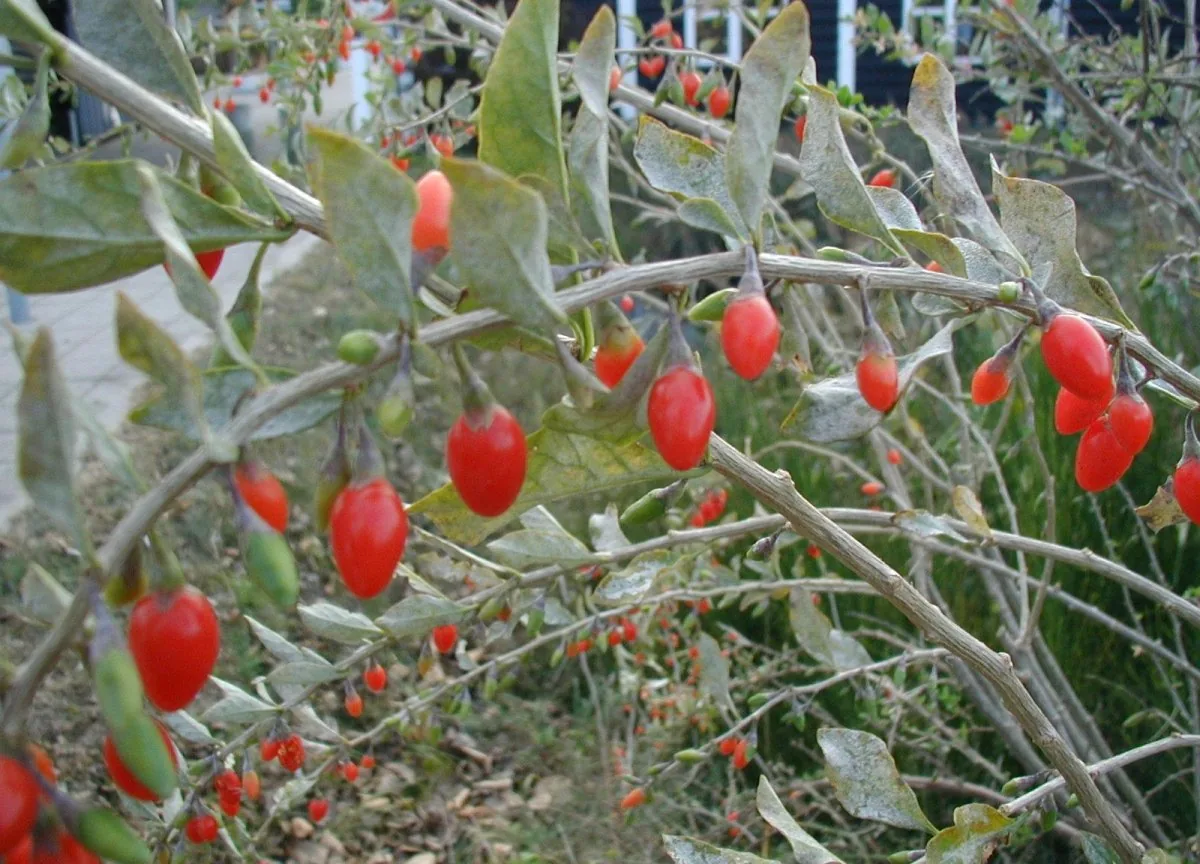

The grower's side of the plant, from a bare-root shrub to a trellised row, is on our partner website, and a link to it sits near the end of this guide.
What the Fruit Holds
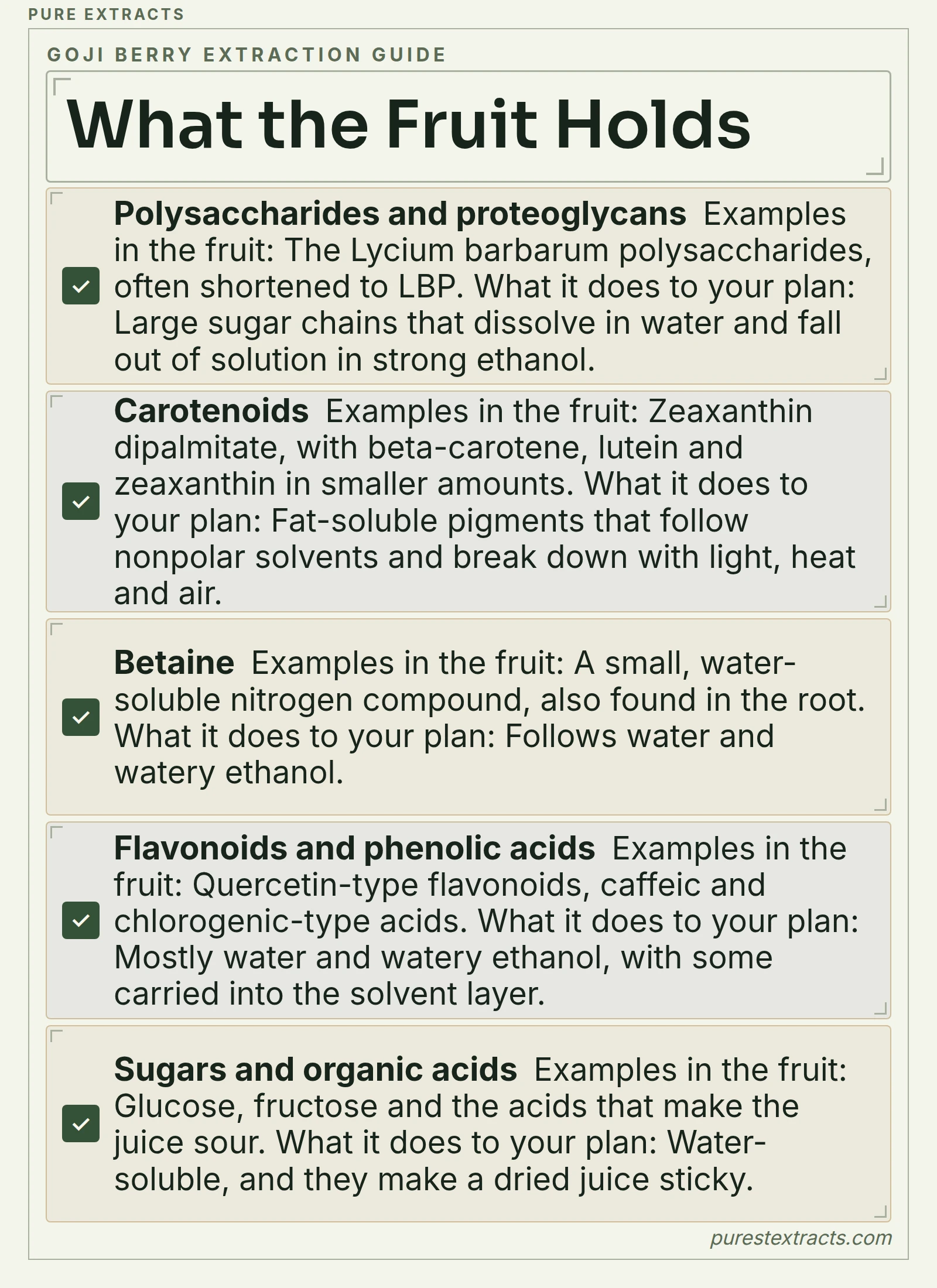
A goji berry is a juicy fruit with a thin skin, a pulp rich in sugar and a handful of seeds. Most of what makes it interesting to an extraction chemist sits in four groups of compounds, and the groups sort cleanly by what they dissolve in.
| Compound group | Examples in the fruit | What it does to your plan |
|---|---|---|
| Polysaccharides and proteoglycans | The Lycium barbarum polysaccharides, often shortened to LBP | Large sugar chains that dissolve in water and fall out of solution in strong ethanol |
| Carotenoids | Zeaxanthin dipalmitate, with beta-carotene, lutein and zeaxanthin in smaller amounts | Fat-soluble pigments that follow nonpolar solvents and break down with light, heat and air |
| Betaine | A small, water-soluble nitrogen compound, also found in the root | Follows water and watery ethanol |
| Flavonoids and phenolic acids | Quercetin-type flavonoids, caffeic and chlorogenic-type acids | Mostly water and watery ethanol, with some carried into the solvent layer |
| Sugars and organic acids | Glucose, fructose and the acids that make the juice sour | Water-soluble, and they make a dried juice sticky |
The polysaccharides are the group most often named in goji research, and they are large molecules, which is why they behave the way they do. A long sugar chain loves water, so it travels with the juice and with hot water, and it stops dissolving when the liquid is mostly ethanol. That last fact is the whole basis of the ethanol precipitation route below.
The carotenoids are the opposite case. The berry's color comes mainly from zeaxanthin dipalmitate, a zeaxanthin molecule with two fatty acid tails attached. Those tails make it fat-soluble. It will not dissolve in juice, it dissolves readily in acetone and nonpolar solvents, and it sits in the skin and pulp of the fruit rather than in the liquid. A study that processed the leftover residue of the fruit found it was a good place to find zeaxanthin dipalmitate, which fits that picture.
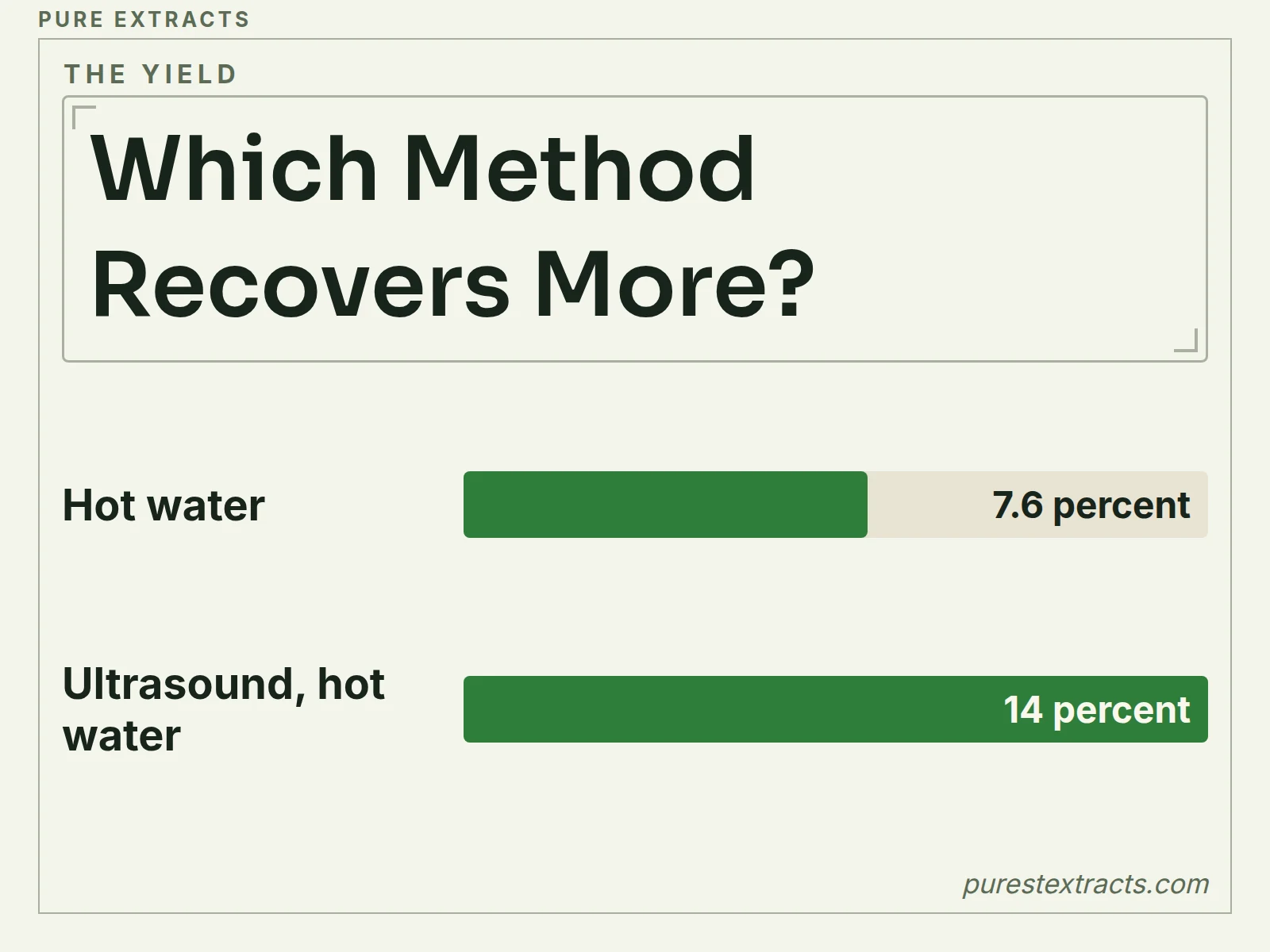
One extraction result is worth keeping in your head before you choose a method. A 2015 comparison recovered 7.6 percent polysaccharide from the fruit with plain hot water followed by ethanol precipitation, and 14 percent with an ultrasound-assisted hot water method run for 80 minutes. The gap tells you that how you extract matters as much as what you extract.
| Method | Polysaccharide recovered, percent of dry fruit |
|---|---|
| Hot water, then ethanol precipitation | 7.6 |
| Ultrasound-assisted hot water, then ethanol precipitation | 14 |
That difference comes from breaking more fruit cells open and pulling more of the chains out, which is the same job a juicer does at the very start of Route A.
Keep in mind that a result like this was measured under one set of lab conditions, on one batch of fruit, so a home run will teach you its own number the first time you weigh the dry powder.
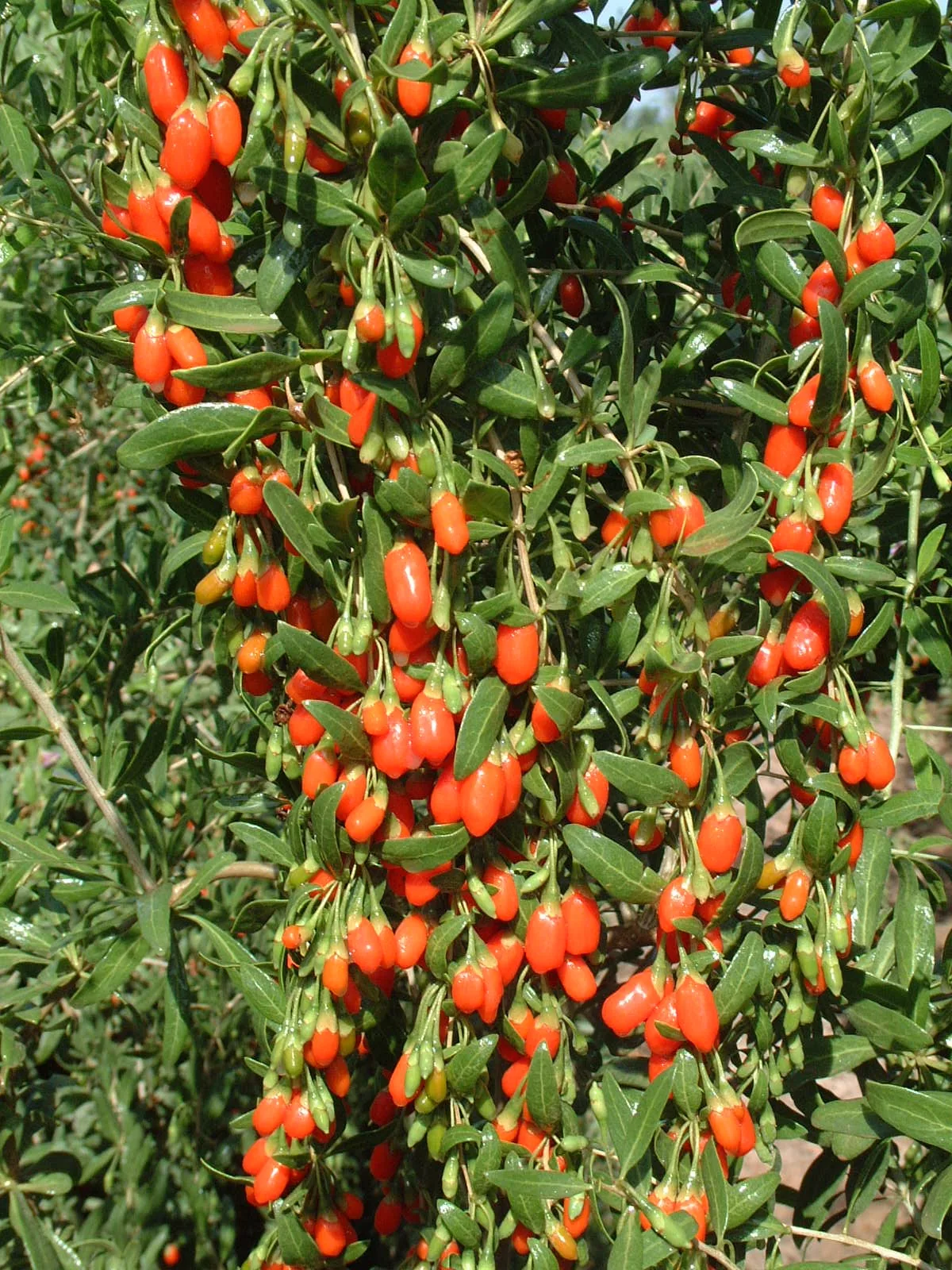

Atropine, the alkaloid that makes some nightshade-family plants dangerous, was not detectable in the fruit, and that is one reason the ripe berry is the part this guide works with.
Which Species This Guide Covers
We cover Lycium barbarum, the species grown along the Yellow River in China for more than 600 years and the one sold in most shops as goji. It is a shrub with weak, arching branches, many of which end in short spines, and its flowers are purple.
| Plant | What it gives | Where it fits here |
|---|---|---|
| Lycium barbarum | Orange-red fruit rich in carotenoids and polysaccharides | The plant for every route in this guide |
| Lycium chinense | The other cultivated goji, with similar red fruit | Handled the same way, but we do not give figures for it |
| Lycium ruthenicum | Dark purple fruit rich in anthocyanins | A separate guide, since its pigment chemistry is different |
The pigment tells the story. The red fruit builds up carotenoids, mostly zeaxanthin, and the carotenoids are undetectable in the black fruit. The black fruit builds anthocyanins instead, which are water-soluble pigments. So a method tuned for the orange pigment of the red berry will not carry over to the black one, and a water-and-acid method suited to the black berry will leave most of the orange pigment behind.
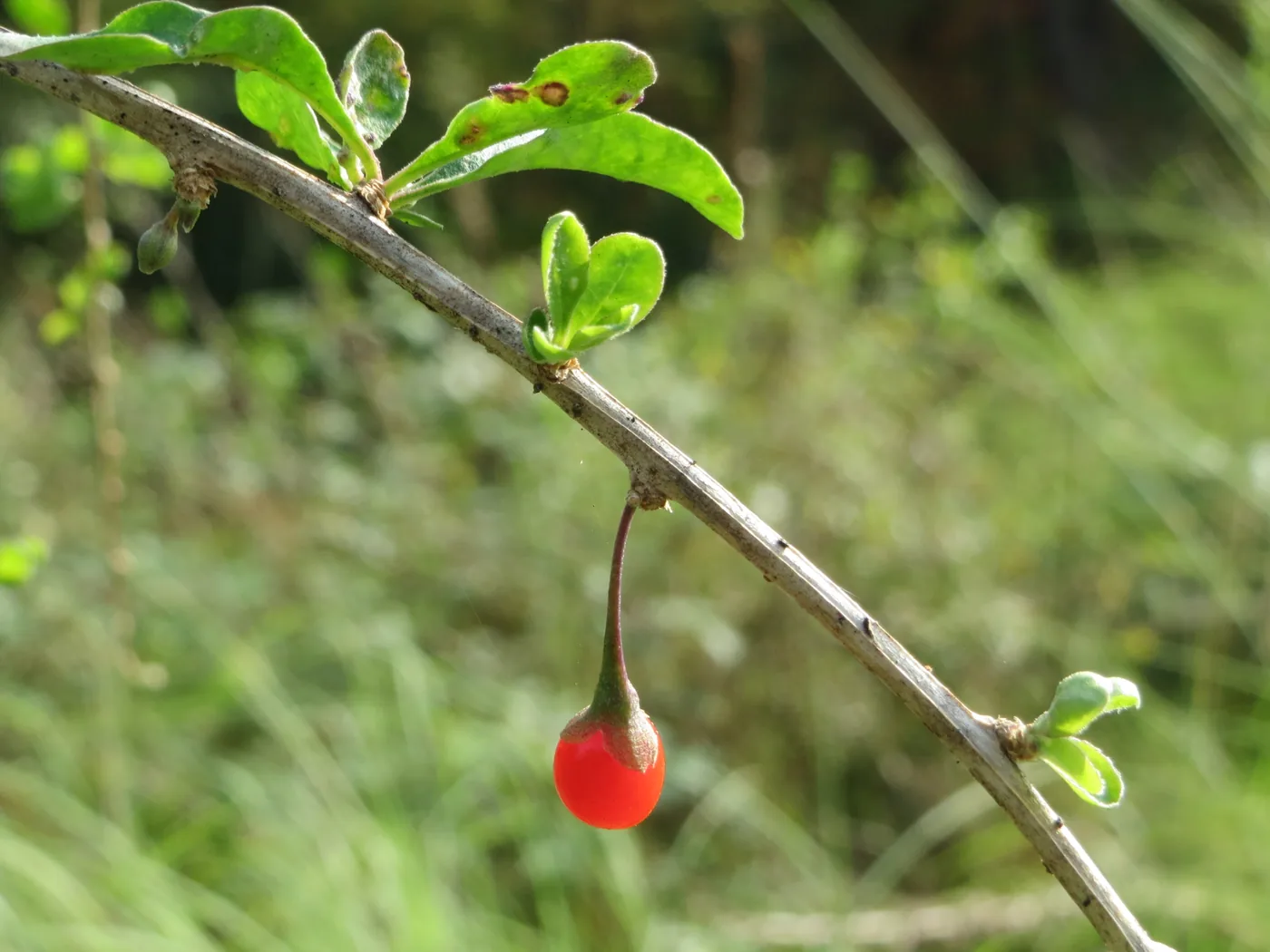

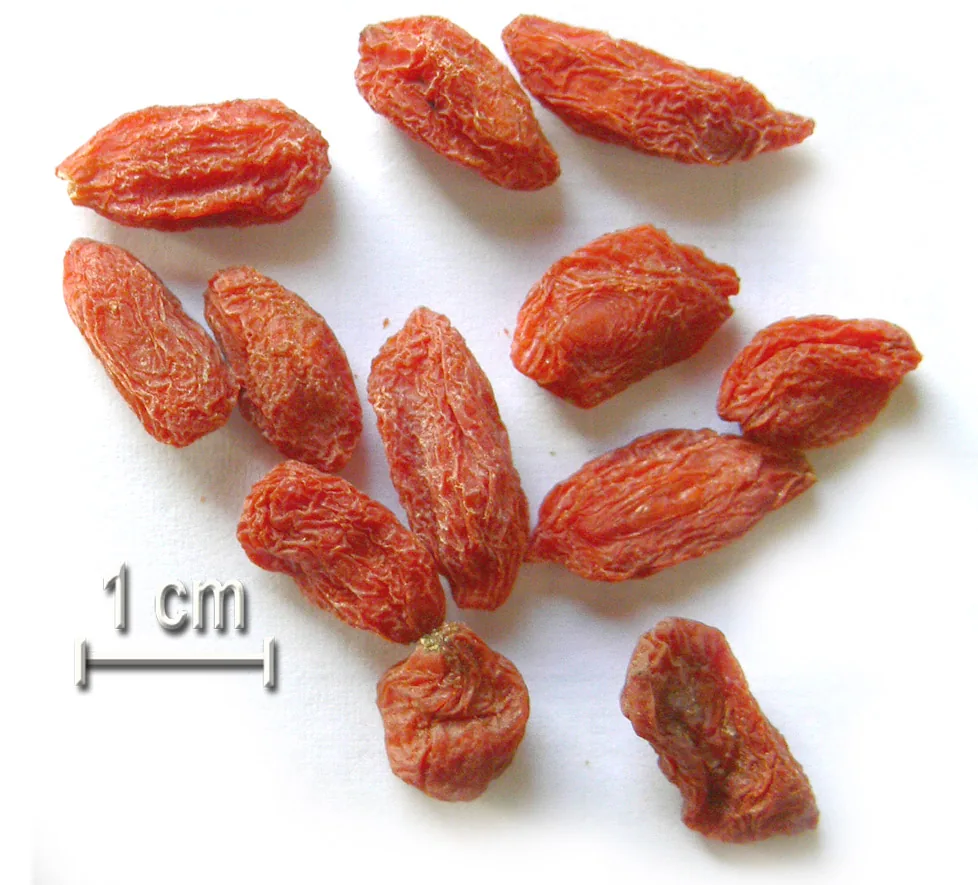
If you are not sure which goji you bought, count on the fruit color: an orange-red berry that dries to a wrinkled red-orange raisin is the red goji this guide describes.
Which Part to Use
A goji shrub offers fruit, leaves, young shoots and root bark, and each has its own history and its own chemistry. The ripe fruit is the part with the long record as a food and the part we work with.
| Part | What to know | Our advice |
|---|---|---|
| Ripe fruit | Bright orange-red, slightly soft, releases with a gentle sideways pull | The part for every route here |
| Green or half-ripe fruit | Low in the finished pigment and not what the routes assume | Leave it on the plant |
| Leaves, shoots and root bark | Used in some traditions, with their own chemistry | Outside this guide, and we give no directions for them |
Ripeness changes the pigment and the juice, so harvest only fruit that has turned fully orange-red and feels slightly soft. Bruised berries turn black, and black spots tell you the fruit was handled roughly or held too long.
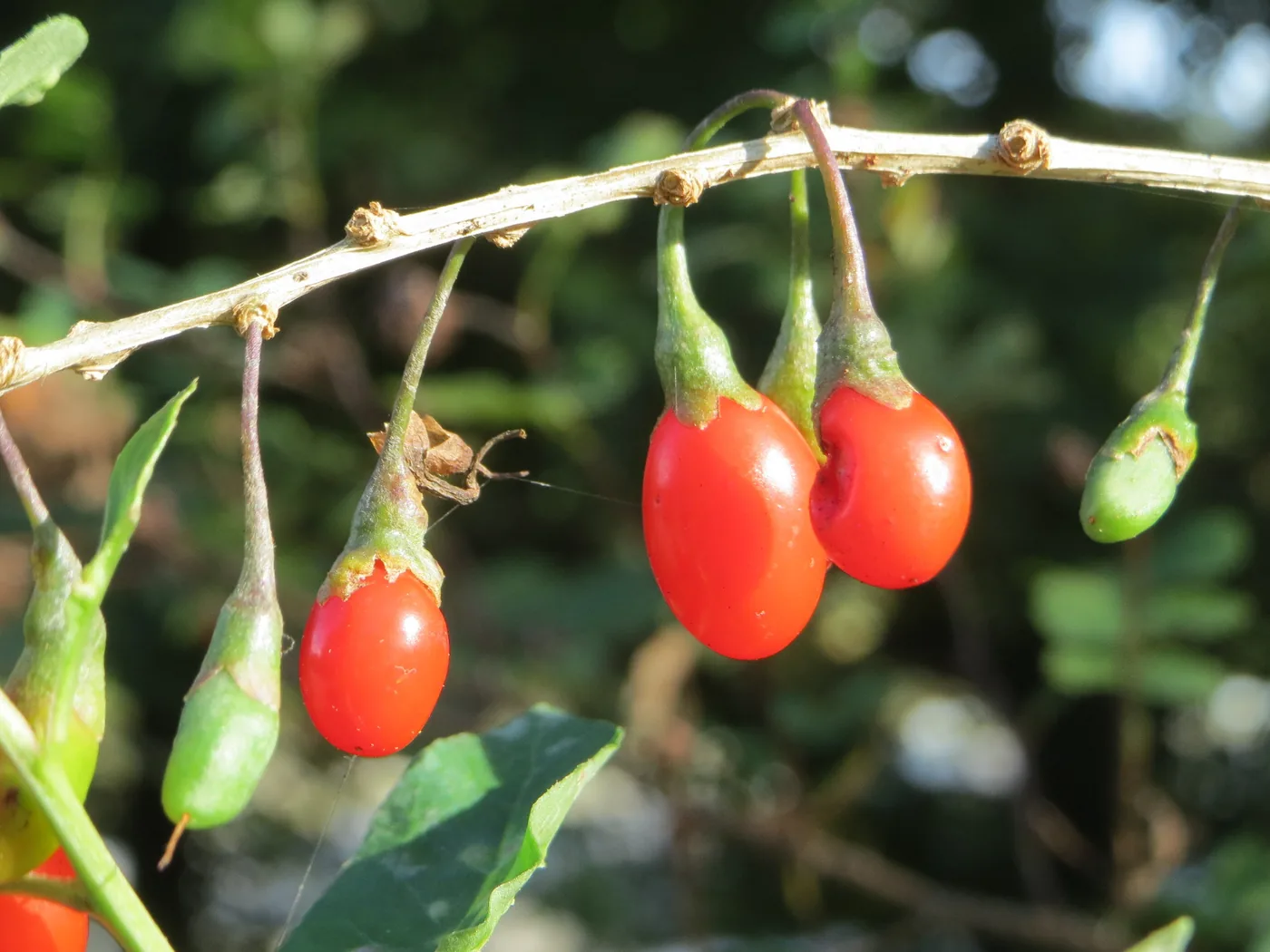

Pull each berry gently to the side so the cap stays on the stem, drop it into a shallow container, and keep the layers shallow so the bottom fruit is not crushed by the top.
How to Choose an Extraction Method for Any Herb
Match the method to the plant: what polarity and heat sensitivity mean, and which solvent pulls out which compounds.
For a More In-Depth Read, Click HereChoosing a Route
Four routes follow in this guide, and each one takes something different from the berry. Read across a row and you can predict the extract before you make it.
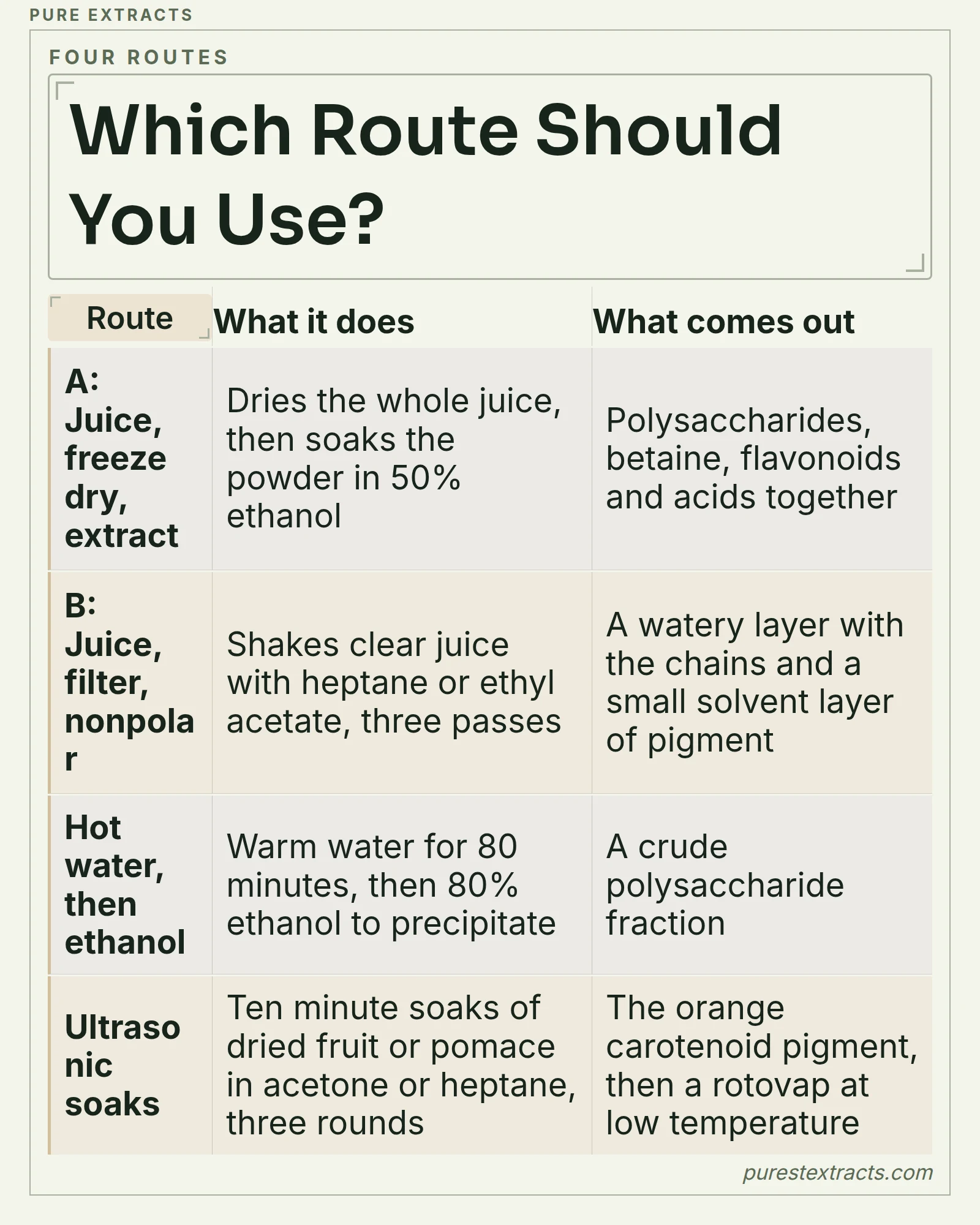
You can decide in three questions. Do you want the water-loving half in one dry powder and you own a freeze dryer? Choose Route A. Do you want to split the juice into a watery half and a pigment half? Choose Route B. Do you want the polysaccharides alone, with no freeze dryer? Use hot water and ethanol precipitation, which only needs a pot, a filter and a jar.
If your goal is the carotenoids, none of the juice routes is the best first step, because the pigment lives in the skin and pulp rather than in the liquid. The ultrasonic soak of the dried or pressed fruit is the direct way to reach it, and the rotary evaporator is how you take the solvent off gently afterward.
Preparing the Fruit
Every route starts the same way, and a careless start spoils each one. Wash your hands, use clean glass and stainless steel, and keep the berries out of direct sun while you work.
- Sort the fruit and discard any berry that is moldy, black or leaking.
- Rinse the berries in cool water and drain them well, then pat them dry.
- Pull off any stems, caps and leaves.
- Weigh the clean fruit and write the weight in your batch notes.
- Juice, freeze or dry the fruit within a day, because a ripe berry softens and ferments fast at room temperature.
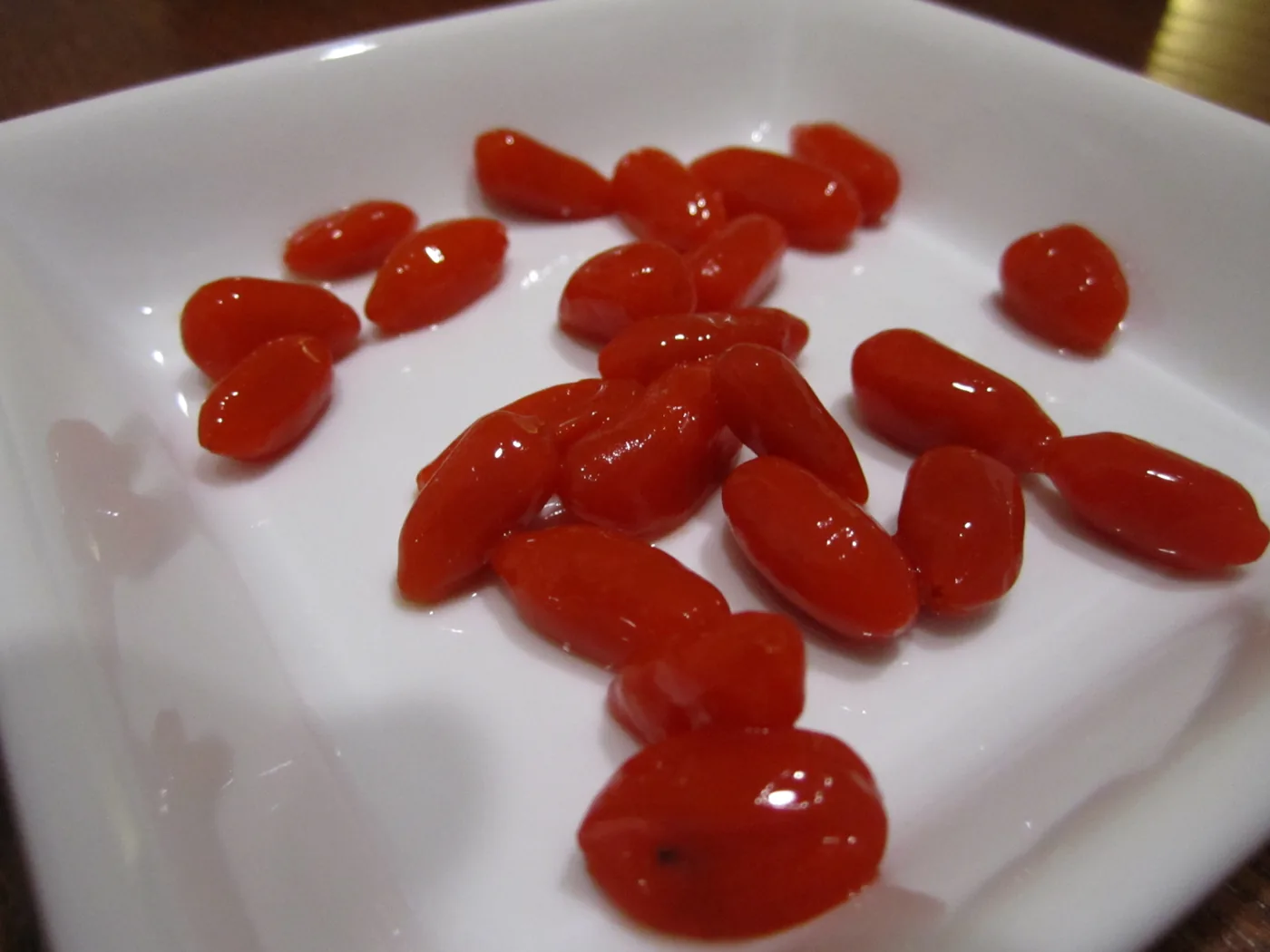
A slow masticating juicer works well for a berry this soft, and a blender followed by a pressing cloth gives the same result with more cleanup. Goji juice is thick and sticky, so a little cool water added during pressing helps the fiber release more juice without changing what the juice carries.

How to Make a Glycerite: Glycerin Herbal Extracts
The alcohol-free extract: which herbs suit vegetable glycerin, how much water to add, how to make it and how long it keeps.
For a More In-Depth Read, Click HereTwo Juice Routes
Both routes begin with the same raw juice, and they split at the filter. Neither needs a laboratory, but Route A needs a freeze dryer and Route B needs a spot with good airflow for the solvent.
Route A: Juice, Freeze Dry, Then Extract the Powder
Freeze drying removes the water as vapor without heat, so the delicate compounds are not cooked. What remains is a dry powder of everything the juice carried, which you then extract with a solvent of your choice. If you do not own a freeze dryer, treat this route as an option for people who do.
- Press the juice and strain it through a clean cloth to remove fibers and seed pieces.
- Pour the juice into shallow trays no more than half an inch deep, so it freezes fast and dries evenly.
- Freeze it solid at 0 degrees F (-18 degrees C) or colder.
- Run it in a freeze dryer until the tray holds no cold spots, then weigh it and weigh it again two hours later. A stable weight means it is dry.
- Scrape the powder into a glass jar with a silica gel packet, and keep it away from light and humidity.
- Weigh 10 g of powder into a jar and add 100 mL of 50 percent ethanol, which is a 1 to 10 ratio. Shake it, leave it 24 hours in a dark place and shake it again whenever you pass it.
- Filter it through paper and keep the liquid in a dark glass bottle.
What does this route keep and lose? It keeps nearly everything that was dissolved in the juice, including the sugars, organic acids, betaine, flavonoids and the large polysaccharide chains. It loses the volatile compounds, and it leaves most of the orange carotenoid pigment behind in the skin and pulp that the filter removed. Goji juice powder is also very sugary, so it draws moisture quickly and turns to a sticky mass if the jar is left open.
Working recipe.
The ratio, the ethanol strength and the 24 hours come from general herbal practice and are not tested figures for this juice. Treat the first batch as a trial and write down what it gives.
That limit is worth accepting because no yield for freeze dried goji juice has been published that we can point you to, so your own scale and notebook are the only record you will have.
Route B: Juice, Filter More, Then a Nonpolar Extraction
This route treats the clear juice as a mixture of a water-loving half and a fat-loving half, and separates the two with a solvent that will not mix with water.
- Press the juice and strain it through a cloth.
- Pass it through a fine filter, such as a coffee filter or lab filter paper, until it runs clear of fibers. Fibers cause an emulsion later.
- Pour the clear juice into a separatory funnel, a glass funnel with a tap at the bottom, set on a ring stand.
- Add an equal volume of heptane or ethyl acetate and invert the funnel gently ten times, venting the tap away from your face after each inversion.
- Let the layers settle. Both solvents float on top of the juice. Drain the lower watery layer into a clean jar and pour the upper solvent layer out the top into another jar.
- Return the watery layer to the funnel and repeat with fresh solvent two more times, for three passes in all.
- Combine the solvent layers, add a spoonful of anhydrous sodium sulfate to take out stray water, filter, and evaporate the solvent outdoors or in a hood with no flame, using a water bath at no more than 105 degrees F (40 degrees C).
What does this route give you? Two products. The solvent layer carries the fat-loving compounds that made it into the juice, mostly a small amount of carotenoid and other lipids. The watery layer keeps the polysaccharides, betaine and most of the flavonoids, and it can go straight into the ethanol precipitation route below or onto a freeze dryer tray.
Because clear juice holds only the carotenoid that was loose in it, the solvent layer is a small and pale fraction compared with the pressed solids. The pulp and skins left on the cloth are where the pigment stays, and a quick ultrasonic soak of that pomace in heptane or acetone is the way to recover it.
Ethyl Acetate Wash of the Juice
Between the water-loving and the fat-loving compounds sit the mid-polarity ones, the flavonoids and phenolic acids that carry little or no sugar. Ethyl acetate is the solvent for this middle group. Shake clear, filtered juice with an equal volume of ethyl acetate, let the layers separate and draw off the top layer, then repeat twice. The solvent layer holds the mid-polarity flavonoids and phenolic acids, and the watery layer keeps the polysaccharides and betaine.
The wash is the gentle way to split the juice by polarity. It is also the step that loses the most to the wrong choice, because a sugar-bearing flavonoid prefers the water and stays behind, so this layer is a partial catch and not a full one. Dry the solvent layer on a rotary evaporator at low temperature.
Solvent Notes
Each solvent below is a safety decision before it is a chemistry decision. Choose the mildest one that does the job, and plan the room before you open the bottle.
| Solvent | What it takes from goji | The safety note |
|---|---|---|
| Water | Polysaccharides, betaine, sugars, acids | Safe, but a watery extract spoils fast, so cool it and use it within a day |
| Ethanol, 50 percent | Flavonoids, phenolic acids and the smaller water-soluble compounds | Flammable, so keep it away from flame and heat sources |
| Ethanol, 80 percent or stronger | Precipitates the polysaccharide chains out of water | Same fire care, and use food or lab grade only |
| Heptane | Zeaxanthin dipalmitate and other fat-soluble compounds | Flammable vapor heavier than air, so work outdoors or in a hood with no ignition source |
| Butane | The same fat-soluble group | Extremely flammable gas, so use closed equipment made for it, outdoors, with no flame or spark |
| Ethyl acetate | Mid-polarity compounds, including some pigment | Flammable and irritating to breathe, so ventilate well |
Solvent vapor is the hazard that surprises people, because it spreads along the floor and finds a pilot light or a spark. Work outside on a still day or in a hood, keep ignition sources away, wear gloves and glasses, and leave methanol and chlorinated solvents out of anything you plan to give a person.

Hot Water and Ethanol Precipitation
This is the ordinary route to the polysaccharides, and it needs a pot, a filter, a thermometer and a jar. It works on dried fruit, on fresh pulp or on the watery layer left over from Route B.
- Crush 50 g of dried fruit in a mortar or a clean blender, which exposes the pulp.
- Place it in a pot with 1 liter of water, which is a 1 to 20 ratio, and warm it to about 175 degrees F (80 degrees C) for 80 minutes, stirring now and then.
- Strain the hot liquid through a cloth, then through paper, and let it cool.
- Reduce the liquid to about a quarter of its volume by gentle heat, or on a rotary evaporator under vacuum.
- Slowly pour in four volumes of cold ethanol for each volume of concentrate, stirring, so the final mixture is about 80 percent ethanol.
- Cover it and chill it overnight. A cloudy, stringy precipitate settles out.
- Pour off the clear liquid, collect the sediment, rinse it with a little cold ethanol and air dry it in a thin layer.
The precipitate is a crude polysaccharide fraction, and it still carries sugars and proteins, so weigh it, record the yield against the dry fruit you started with, and keep it dry. Compare your number to the 7.6 percent that plain hot water gave in the 2015 comparison, and you will see how your own setup performs.
Working recipe.
The 80 minute time matches the published comparison. The 1 to 20 ratio, the temperature and the four volumes of ethanol are working values from general practice, and a first batch will tell you what your fruit gives.
Is hotter better? No, because long heat can break the chains down, and a smaller chain is a different material from the one you set out to collect.

Graded Ethanol Steps
If you want fractions of different sizes, you can raise the ethanol in steps instead of in one pour. A published polysaccharide method for goji leaves added ethanol in stages to give three fractions of different molecular weights, and the same idea works on the fruit concentrate.
| Step | Final ethanol in the mixture | What falls out |
|---|---|---|
| First | About 30 percent | The largest chains |
| Second | About 50 percent | Mid-sized chains |
| Third | About 70 percent | Smaller chains |
Spin or settle each step, pour the clear liquid on to the next one and keep every fraction in its own labeled jar. A fruit paper found that the larger chains measured higher antioxidant capacity than the smallest sugars, which is why people bother to split them.
How to Filter and Clarify an Extract: Carbon, Bentonite and Silica
From coarse straining to fine filters, and how activated carbon, bentonite clay and silica clean up an extract.
For a More In-Depth Read, Click HereQuick Ultrasonic Soaks and the Rotary Evaporator
This is how we reach the carotenoids, and it is built on speed. Zeaxanthin dipalmitate breaks down with light, heat and air, so a long soak does more harm than good. Short ultrasonic soaks, a fast filter and a repeat give you a bright extract without the damage.
- Dry the fruit at 105 degrees F (40 degrees C) until it is leathery, then crush it or use the pomace left from juicing.
- Put 20 g in a glass jar with 200 mL of acetone or heptane, a 1 to 10 ratio, and place the jar in an ultrasonic bath for 10 minutes.
- Filter through paper at once and keep the colored liquid in a dark bottle.
- Return the solids to the jar with fresh solvent and repeat the soak and the filter, three rounds in all.
- Combine the liquids and take the solvent off on a rotary evaporator with the water bath at no more than 105 degrees F (40 degrees C) under deep vacuum.
- Scrape out the orange residue, flush the flask with nitrogen if you have it, and store it in a small dark glass vial in the freezer.
Why use a rotary evaporator at all? Because boiling a solvent off a pigment at room pressure takes heat, and heat costs you carotenoid. Under vacuum the solvent leaves at a bath temperature that the pigment survives, and the flask spins to spread a thin film that dries fast.
Working recipe.
The ratio, the 10 minute soak and the three rounds are working values built around the method of quick soaks and repeats. Solvent choice and cycle count are the settings to adjust once you can see how bright each round comes out.
Watch the color of the liquid in each round, because a round that comes out pale tells you the pigment is nearly gone and a fourth round would only add water and mess.

Best Method For Each Compound
The whole guide comes down to one decision, and it starts with what the fruit holds the most of. In dried fruit from 13 regions of China the polysaccharides measured 23.62 to 42.45 mg per gram, while zeaxanthin dipalmitate measured 4.26 to 10.07 mg per gram. The polysaccharides and the betaine are polar, so the first route in this guide, and the one to try first, is the one that works in water.
| Compound | Polarity | Best solvent or method | Why | What it loses |
|---|---|---|---|---|
| Polysaccharides | Polar | Hot water, then 80 percent ethanol to precipitate (Hot Water and Ethanol Precipitation), or Route A | Water dissolves the long chains and strong ethanol drops them out clean | Small compounds stay in the ethanol, and the pigment is left in the pulp |
| Betaine | Polar | Route A, water or 50 percent ethanol on the freeze dried juice powder | Betaine is a small salt-like molecule that follows water | It goes into the ethanol and not into the precipitate, so keep that liquid |
| Flavonoids | Mid | 50 percent ethanol on the juice powder, or the ethyl acetate wash | Watery ethanol takes the sugar-bearing forms and ethyl acetate takes the ones with little sugar | Ethyl acetate leaves the sugar-bearing forms in the water |
| Phenolic acids | Mid | 50 percent ethanol, or the ethyl acetate wash | They are partly acid and partly oily, so they sit in the middle | Water alone loses part of them |
| Zeaxanthin dipalmitate | Nonpolar | Quick ultrasonic soaks of dried fruit or pomace in heptane or acetone, then a rotary evaporator | The pigment is a fat-soluble ester held in the skin and pulp, not the juice | The water-loving half is left in the pressed solids, so keep the juice for the first routes |
A batch that uses the whole berry is the efficient one. Press the juice for the water-loving half, soak the pressed solids for the pigment half, and nothing that you harvested goes to the compost bin.

Starting From Dried Fruit
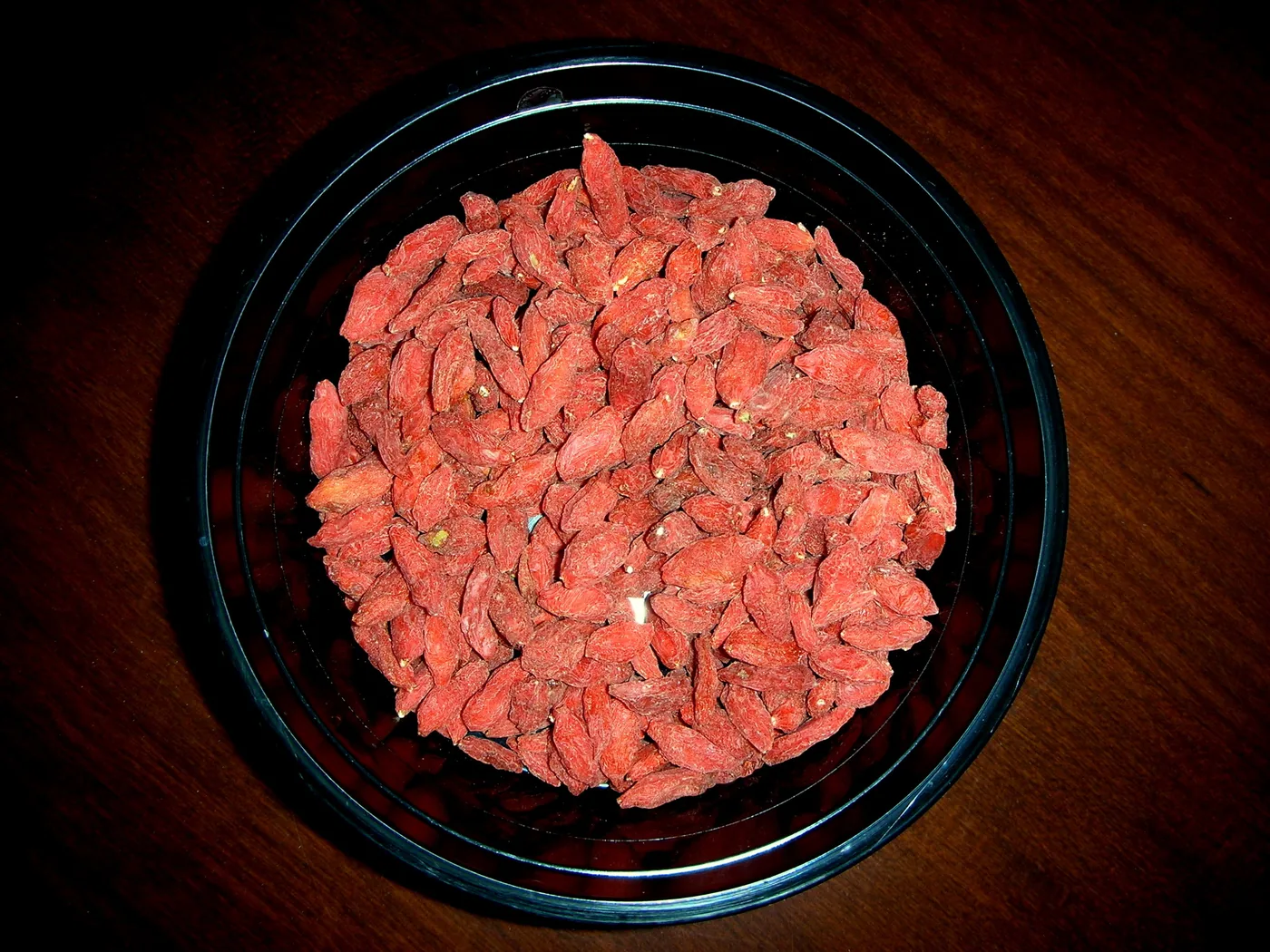
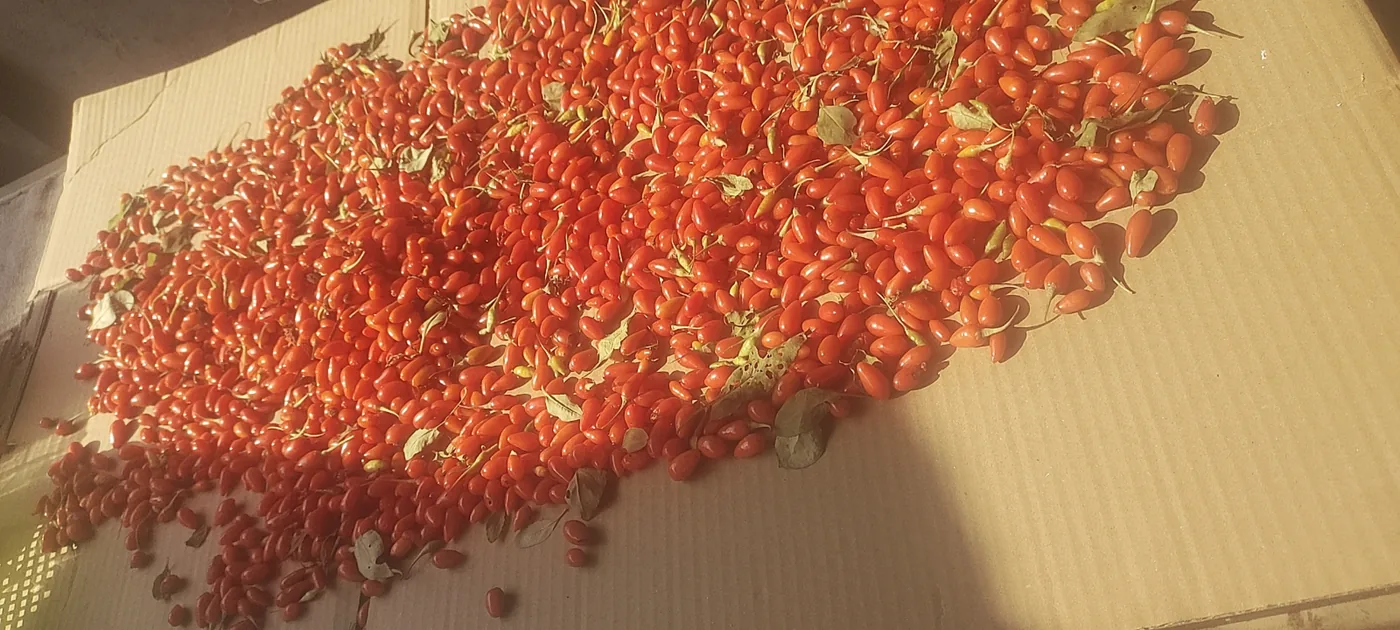
Dried goji is the common starting material because it is shelf-stable and easy to weigh. A dehydrator at 105 degrees F (40 degrees C) dries the berries in about three days, and sun drying on trays also works where the weather is dry and the fruit is covered from birds.
- Spread the berries in a single layer so air reaches each one.
- Turn the trays now and then so they dry evenly.
- Stop when a berry is leathery and does not leave moisture on your fingers.
- Store them in an airtight jar in the dark with a desiccant packet.
Dry fruit changes the plan in one useful way: it can be crushed, which exposes the pulp to solvent, and it can be weighed against a known water loss. A dried berry is roughly a shriveled raisin, and the wrinkled skin is where the pigment sits.

Storage and Batch Records
Every extract you make is a material you will want to repeat or compare, and the record is what lets you do that. Write the batch down before you cap the jar.
| Write down | Why it matters |
|---|---|
| Date, fruit weight and where the fruit came from | Fruit varies from plant to plant and year to year |
| Route, solvent, ratio and time | The only way to repeat a batch exactly |
| Weight of powder, precipitate or residue | Gives you a yield you can compare next time |
| Color of the extract | Tells you how the pigment held up |
Store water-based liquids in the refrigerator and use them within a day or two, store powders and precipitates dry in the dark, and store carotenoid residue in a small dark vial in the freezer. Label every container with the plant, the route and the date.
Cleanup is part of the run. Rinse solvent-wet glass outdoors and let the vapor leave before you wash it, pour used solvent into a labeled waste container instead of the sink, and wipe the bench with ethanol last.

Equipment
You can build every route in this guide from a short list, and a short list separates what is essential from what is nice to have.
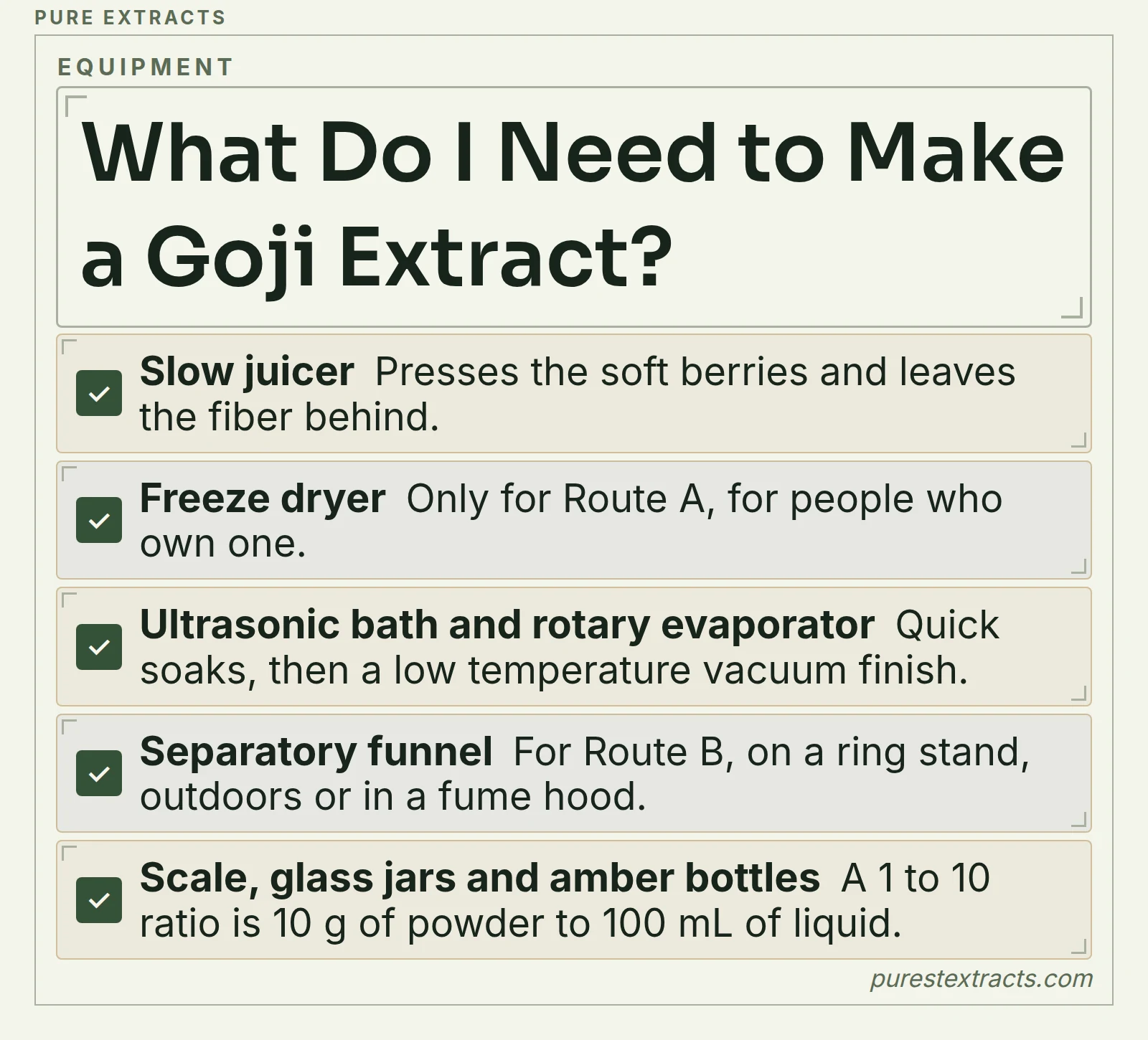
A freeze dryer is the one expensive item, and it is only needed for Route A. Every other route uses tools a small kitchen or workshop already has or can borrow.
Safety
Goji is a food with a long record, and a concentrated extract is a different thing from a handful of berries. These cautions come from what is documented for the fruit and the solvents.
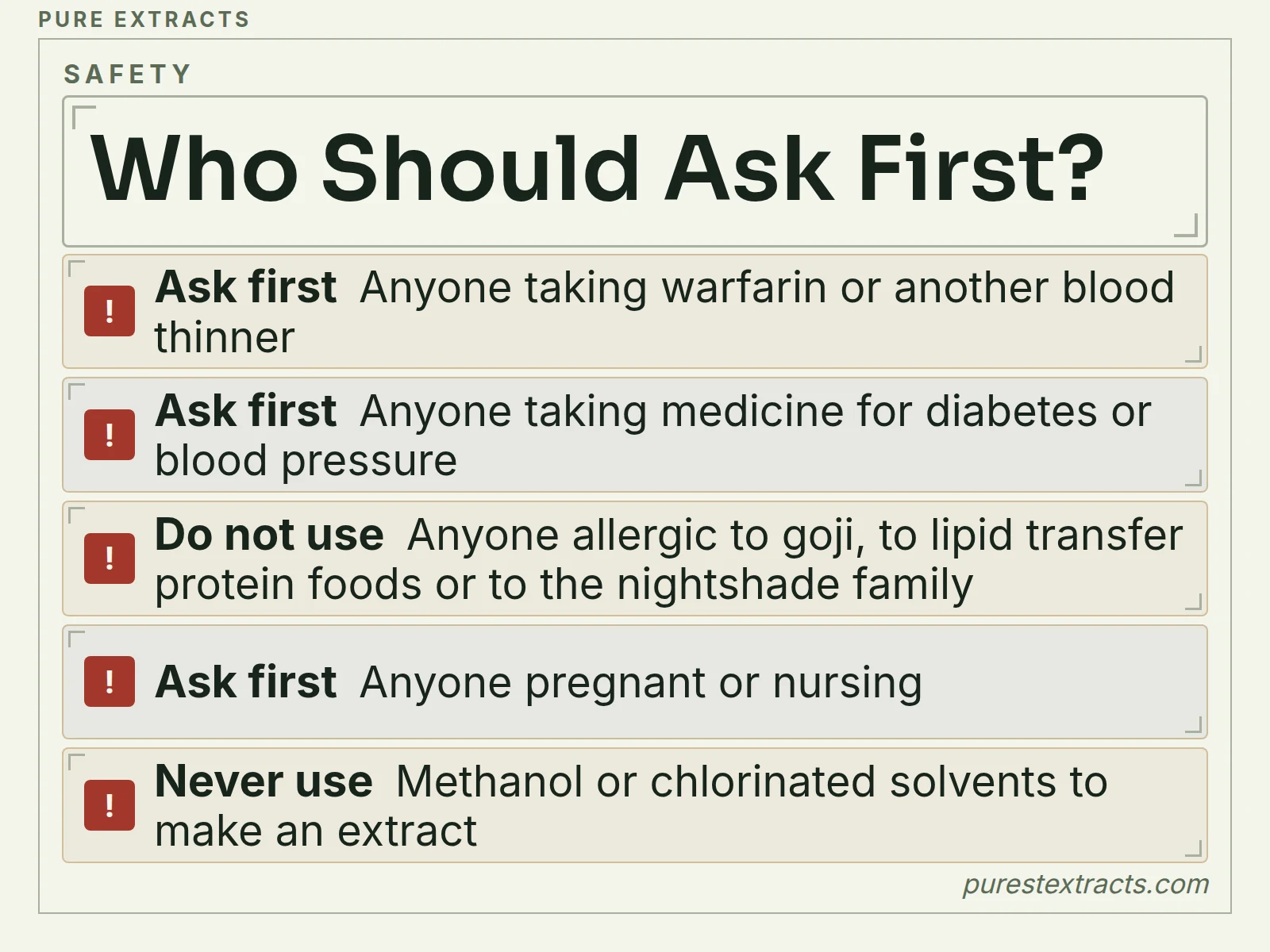
Three facts sit behind that list. Warfarin users should know that goji has been reported to raise the INR, including in a man who bled after drinking goji wine. Allergic reactions, some of them severe, have happened in people who react to certain plant foods. The plant is a close relative of tomato, pepper and eggplant, which matters for anyone who already reacts to those plants.
What to do
These steps keep the work safe for you and for anyone who uses the extract.
- Tell your prescriber before you use any concentrated goji extract if you take warfarin or another blood thinner.
- Tell your prescriber before you use a concentrate if you take medicine for diabetes or blood pressure.
- Try a small taste of the fresh fruit first, because a reaction to the food shows you what a concentrate would do.
- Work outdoors or in a hood with no flame whenever a solvent is open.
- Wear gloves and glasses, and label every jar with its contents and date.
- Keep extracts away from children, and store them out of reach.
Pregnancy and nursing are on their own line, because we have no source we trust that settles the question, so we leave concentrated goji alone in both and send the question to a clinician. The same goes for any medical condition that you manage with drugs.
What not to do
These are the things we leave out of every batch.
- Skip goji if you have a known allergy to goji, to lipid transfer protein foods or to tomato-family plants, unless an allergist says otherwise.
- Keep concentrated extracts away from children.
- Leave methanol, chloroform and every chlorinated solvent out of an extract made for a person.
- Never evaporate a solvent near an open flame, a pilot light or in a closed room.
- Treat goji extract as a food extract, never as a replacement for medical care.
- Do not stir a freezer-cold ethanol mixture near a spark, because the vapor still burns.
If you remember one rule, make it this one: an extract you cannot measure is not a medicine, and a drug interaction is the one hazard you cannot see in the jar.
Troubleshooting
Most problems with these routes have plain causes, and the usual ones fit in a table.
| What you see | The usual cause | What to do |
|---|---|---|
| Juice turns dark within hours | Air and warmth on a sugary juice | Work faster, keep it cold, freeze it at once |
| A thick cream layer between the two liquids | An emulsion from fibers or hard shaking | Filter finer next time, invert gently and let it stand |
| Powder turns sticky in the jar | Sugar and moisture | Dry it again and store it with fresh silica gel |
| Precipitate is gummy, not stringy | Ethanol added too fast or too little | Add it slowly while stirring and chill it overnight |
| Carotenoid extract fades | Light, heat or air | Use amber glass, keep the bath under 105 degrees F and store it cold |
| Solvent layer will not clear | Water carried over | Dry it over sodium sulfate and filter |
When something is not on the list, stop and write down what you did, because few bench problems survive a clean notebook.

Growing the Plant Yourself
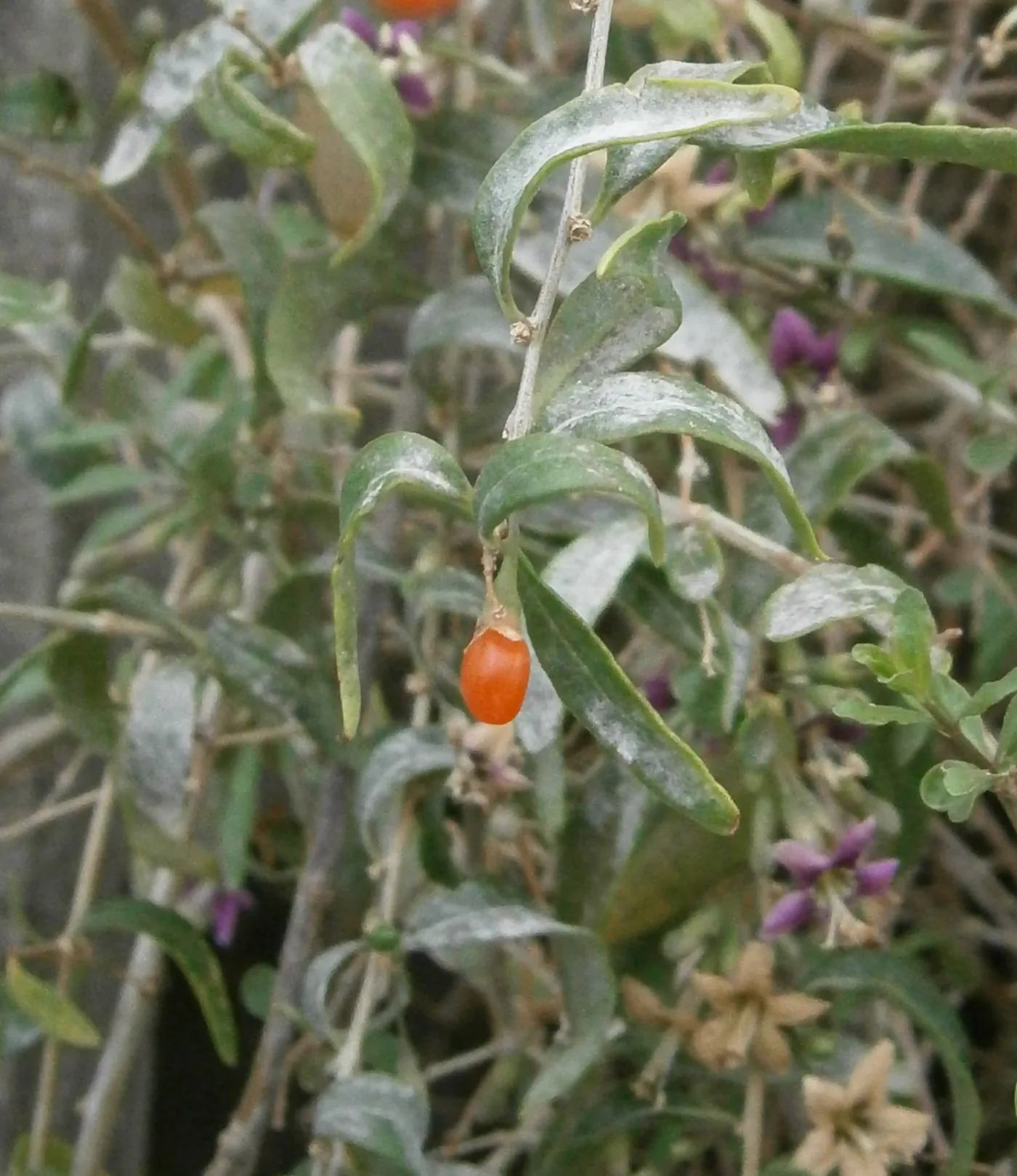
Every extract starts with fruit, and fruit you grew is fruit you can trace from the bush to the jar. Goji is a long-lived shrub that tolerates drought and alkaline soil, and a full harvest comes after a few seasons, so the planting is the first step of the whole process.
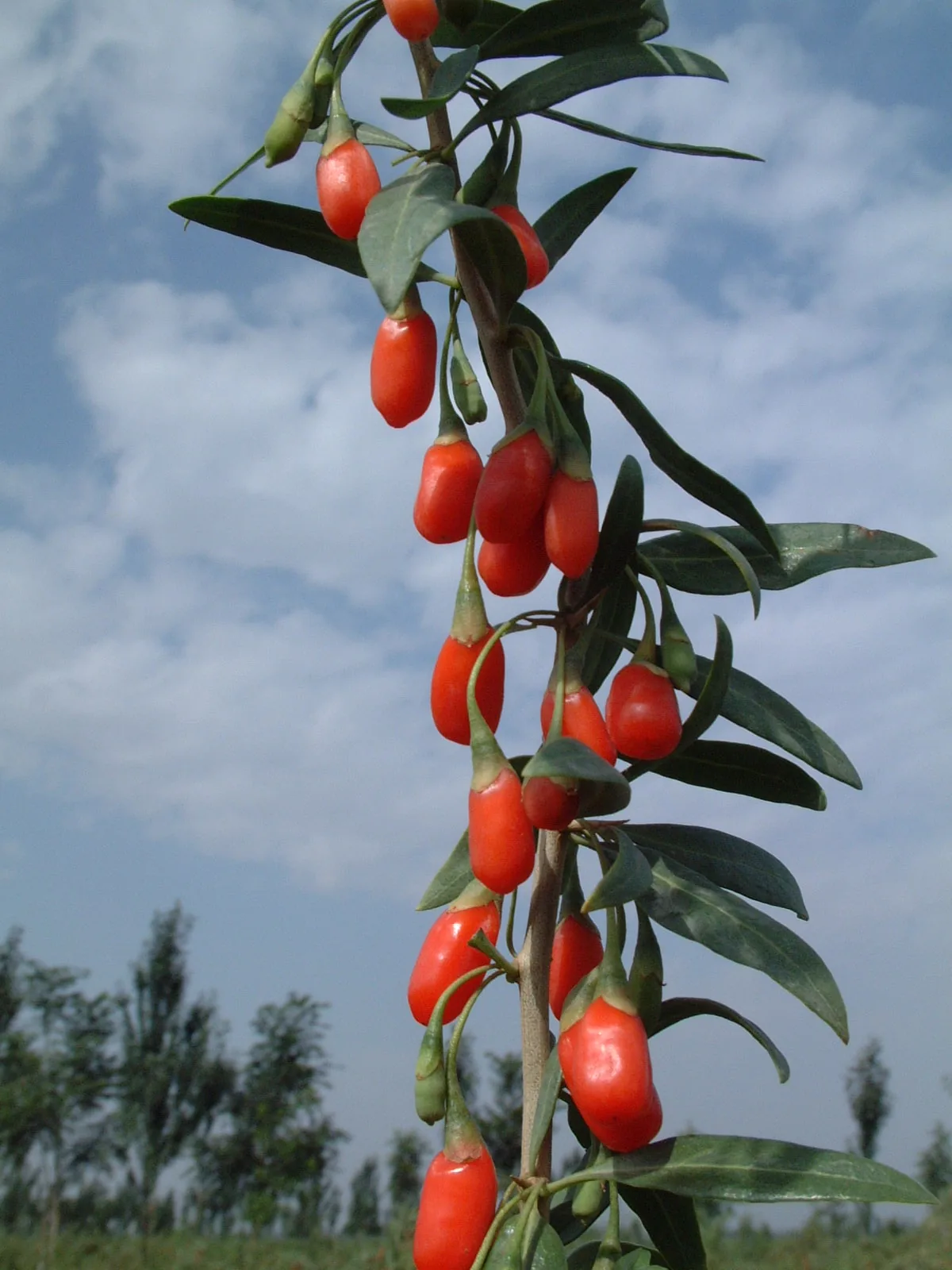

A plant on your own property also lets you harvest at the exact moment the berry turns, which is the single biggest thing you control about the quality of what goes in the pot.
Our partner website, Shearer Farms
Goji Berry (Lycium barbarum) Guide: Planting, Pruning, Harvest and Drying
Grow goji berry (Lycium barbarum, wolfberry): soil and pH, heat, humidity, spacing, trellis, watering, pruning, years to fruit.
References
- Comparison of functional components and antioxidant activity of Lycium barbarum fruits from different regions in China, Molecules: zeaxanthin dipalmitate 4.26 to 10.07 mg per gram, polysaccharide 23.62 to 42.45 mg per gram.
- Wikipedia, Lycium barbarum: shrub description, fruit size and seeds, history of cultivation, polysaccharides and carotenoids, atropine not detectable in the fruit.
- Memorial Sloan Kettering Cancer Center, Lycium: warfarin and INR case, enzyme effects, lipid transfer protein allergy.
- Goji wine and warfarin: raised INR and bleeding, Toxicology Reports (2015).
- Emerging allergens in goji berry superfruit: new IgE binding proteins, Biomolecules (2020).
- Extraction of Lycium barbarum polysaccharides by different methods, Journal of Functional Foods (2015): 7.6 percent with hot water and about 14 percent with ultrasound-enhanced subcritical water, each followed by ethanol precipitation.
- Ultrasound and microwave extraction of Lycium barbarum leaf polysaccharides with graded ethanol fractions, Molecules (2023).
- Polysaccharide fractions of goji fruit by graded ethanol precipitation and ultrafiltration, Molecules (2023).
- Supercritical carbon dioxide extraction of Lycium barbarum residue oil rich in zeaxanthin dipalmitate, Foods (2021).
- Comparative analysis of carotenoid accumulation in red and black goji fruits (Lycium barbarum and L. ruthenicum), University of Minnesota.
- Raintree Nursery, Goji growing guide: harvest, drying at 105 degrees F, freezing.
Common questions
How do I choose a route?
Four routes follow in this guide, and each one takes something different from the berry. Read across a row and you can predict the extract before you make it. You can decide in three questions. Do you want the water-loving half in one dry powder and you own a freeze dryer? Do you want to split the juice into a watery half and a pigment half?
How do I prepare the fruit?
Every route starts the same way, and a careless start spoils each one. Wash your hands, use clean glass and stainless steel, and keep the berries out of direct sun while you work. Sort the fruit and discard any berry that is moldy, black or leaking. Rinse the berries in cool water and drain them well, then pat them dry. Pull off any stems, caps and leaves.
What are two juice routes?
Both routes begin with the same raw juice, and they split at the filter. Neither needs a laboratory, but Route A needs a freeze dryer and Route B needs a spot with good airflow for the solvent. Route A: Juice, Freeze Dry, Then Extract the Powder. Freeze drying removes the water as vapor without heat, so the delicate compounds are not cooked. What remains is a dry powder of everything the juice carried, which you then extract with a solvent of your choice.
What are graded ethanol steps?
If you want fractions of different sizes, you can raise the ethanol in steps instead of in one pour. A published polysaccharide method for goji leaves added ethanol in stages to give three fractions of different molecular weights, and the same idea works on the fruit concentrate. Spin or settle each step, pour the clear liquid on to the next one and keep every fraction in its own labeled jar. A fruit paper found that the larger chains measured higher antioxidant capacity than the smallest sugars, which is why people bother to split them.
What is happening chemically in goji berry extraction?
The whole guide comes down to one decision, and it starts with what the fruit holds the most of. In dried fruit from 13 regions of China the polysaccharides measured 23.62 to 42.45 mg per gram, while zeaxanthin dipalmitate measured 4.26 to 10.07 mg per gram. The polysaccharides and the betaine are polar, so the first route in this guide, and the one to try first, is the one that works in water.
How do I start with goji berry extraction?
Dried goji is the common starting material because it is shelf-stable and easy to weigh. A dehydrator at 105 degrees F (40 degrees C) dries the berries in about three days, and sun drying on trays also works where the weather is dry and the fruit is covered from birds. Spread the berries in a single layer so air reaches each one. Turn the trays now and then so they dry evenly. Stop when a berry is leathery and does not leave moisture on your fingers.
How is the result of goji berry extraction stored?
Every extract you make is a material you will want to repeat or compare, and the record is what lets you do that. Write the batch down before you cap the jar. Date, fruit weight and where the fruit came from: Fruit varies from plant to plant and year to year. Route, solvent, ratio and time: The only way to repeat a batch exactly. Weight of powder, precipitate or residue: Gives you a yield you can compare next time.
What equipment does goji berry extraction need?
You can build every route in this guide from a short list, and a short list separates what is essential from what is nice to have. A freeze dryer is the one expensive item, and it is only needed for Route A. Every other route uses tools a small kitchen or workshop already has or can borrow.
Is goji berry extraction safe?
Goji is a food with a long record, and a concentrated extract is a different thing from a handful of berries. These cautions come from what is documented for the fruit and the solvents. Three facts sit behind that list. Warfarin users should know that goji has been reported to raise the INR, including in a man who bled after drinking goji wine. Allergic reactions, some of them severe, have happened in people who react to certain plant foods.
What usually goes wrong with goji berry extraction?
Most problems with these routes have plain causes, and the usual ones fit in a table. Juice turns dark within hours (Air and warmth on a sugary juice): Work faster, keep it cold, freeze it at once. A thick cream layer between the two liquids (An emulsion from fibers or hard shaking): Filter finer next time, invert gently and let it stand. Powder turns sticky in the jar (Sugar and moisture): Dry it again and store it with fresh silica gel. Precipitate is gummy, not stringy (Ethanol added too fast or too little): Add it slowly while stirring and chill it overnight.
How do I grow the plant yourself?
Every extract starts with fruit, and fruit you grew is fruit you can trace from the bush to the jar. Goji is a long-lived shrub that tolerates drought and alkaline soil, and a full harvest comes after a few seasons, so the planting is the first step of the whole process. A plant on your own property also lets you harvest at the exact moment the berry turns, which is the single biggest thing you control about the quality of what goes in the pot. Our partner website, Pure Extracts. Goji Berry (Lycium barbarum) Guide: Planting, Pruning, Harvest and Drying .
Browse by topic
More guides to explore
 ExtractionCold Press Extraction
 ExtractionEnzymatic Extraction
 ExtractionEthanol Extraction
 ExtractionMicrowave-Assisted Extraction
 ExtractionNatural Dye Extraction and Use
 ExtractionPressurized Hot Water Extraction
 ExtractionSteam Distillation