Plants
How to Make a Gotu Kola Extract: Methods, Solvents and Shelf Life
Which parts of gotu kola to use, which method pulls out its compounds, the solvent and ratio, safety and how long the extract keeps.

On this page
What are you extracting from gotu kola?
Gotu kola (Centella asiatica) yields active triterpenoids: asiaticoside, madecassoside, asiatic acid, and madecassic acid. These compounds operate via TGF-β signaling in fibroblasts, influencing collagen production and angiogenesis. Asiatic acid also impacts neurological function through BDNF/TrkB activation. The goal of extraction is to isolate these constituents for use, recognizing the dual wound healing and nootropic effects stem from a single mechanism expressed differently depending on tissue type.
Extraction choices depend on desired product form. For a traditional alcohol [ethanol tincture], target percentages vary based on what you want to emphasize. A 60-70% ethanol solution with 30-40% water is suitable for extracting the alkaloids and glycosides present in gotu kola, though a broader range of compounds will be captured at that ratio. Using food-grade ethanol is essential; denatured alcohol is unacceptable. Everclear or organic grape alcohol can be diluted with distilled water to achieve this.
Alternatively, a [glycerin extraction] using approximately 60% glycerin and 40% water could be considered, though potency will be lower and shelf life limited to one or two years. Glycerin does not extract compounds as effectively as ethanol. Water [water extraction and decoction] is also possible but less efficient for these specific triterpenoids.
When harvesting, peak triterpenoid content occurs just before flowering, roughly 75-90 days after planting stolon divisions initially, then every 45-60 days thereafter. Fresh leaf doses in traditional Southeast Asian cuisine range from 5-15 g per serving and have a long history of safe use; concentrated dried extract doses are typically 500-1,000 mg. Propagation via stolon divisions has an 85-95% success rate in warm, humid conditions. Seed viability drops below 10% after six months of dry storage. Proper [drying herbs] is a critical first step regardless of the chosen extraction method.
How to Choose an Extraction Method for Any Herb
Match the method to the plant: what polarity and heat sensitivity mean, and which solvent pulls out which compounds.
For a More In-Depth Read, Click HereWhich extraction method suits gotu kola, and why?
Gotu kola (Centella asiatica) presents specific considerations when [choosing a method] for botanical extraction. Its key active compounds - asiaticoside, madecassoside, asiatic acid, and madecassic acid - are triterpenoids operating through TGF-β signaling. These molecules dictate solvent selection.
Considering the polarity of target compounds, an ethanol tincture is most appropriate. The monograph details that 60-70% ethanol with 30-40% water extracts alkaloids and glycosides effectively; gotu kola’s triterpenoids fall within this profile. A 50-60% ethanol solution would also work well for its flavonoids and phenolics. Using food-grade ethanol is critical, avoiding denatured alcohol due to toxicity. Everclear or organic grape alcohol can be diluted with distilled water to achieve the target percentage.
While a vodka (40% ethanol) tincture could extract some compounds from gotu kola leaves and flowers, it lacks adjustability for optimal triterpenoid capture. Glycerin extraction [/glycerin-extraction] is unsuitable as it extracts fewer compounds than ethanol and yields lower potency; glycerites are not equivalent to alcohol tinctures. Apple cider vinegar or water extraction [/water extraction and decoction] would be ineffective for these specific molecules.
Harvest timing impacts potency, with peak triterpenoid content occurring just before flowering, roughly 75-90 days after initial planting of stolon divisions, then every 45-60 days thereafter. Fresh leaf doses in traditional Southeast Asian cuisine reach 5-15 g per serving, a safety benchmark to consider when scaling up from concentrated dried extract dosages (500-1,000 mg). Proper [drying herbs] is essential before extraction. Following extraction, [filtering and clarifying extracts] will refine the final product, and careful [storing extracts] ensures stability for 5+ years, unlike glycerin tinctures which have a shorter shelf life.
What solvent and ratio should you use for gotu kola?
Gotu kola (Centella asiatica) presents specific considerations when [choosing a method] for solvent extraction. The plant’s key active compounds - asiaticoside, madecassoside, asiatic acid, and madecassic acid - respond best to an ethanol-water blend due to their glycoside nature.
Referencing the table of ratios, a 60-70% ethanol solution with 30-40% water is appropriate for extracting these compounds. Use food-grade ethanol only; avoid denatured alcohol. Everclear or organic grape alcohol can be diluted with distilled water to reach this target percentage. The monograph details that doses consumed as food (5-15 g fresh leaf per serving) have established safety data, while concentrated extracts do not. This highlights the importance of controlled extraction and standardization.
While other methods exist, ethanol offers a balance between extracting desired compounds and providing long-term stability. Glycerin extraction is unsuitable as an equivalent due to lower potency and shorter shelf life, although it could be considered for specific applications where alcohol is contraindicated. Vinegar tinctures are not appropriate for broad-spectrum gotu kola extraction.
The text does not specify a temperature requirement for the process, but optimal growth conditions for the plant itself are 25°C. Maintaining consistent moisture throughout the extraction is essential. After extraction, [filtering and clarifying] will remove particulate matter, followed by [storing extracts] in airtight containers away from light and heat to preserve potency. Always prioritize [solvent safety] when working with ethanol.
How to Make a Glycerite: Glycerin Herbal Extracts
The alcohol-free extract: which herbs suit vegetable glycerin, how much water to add, how to make it and how long it keeps.
For a More In-Depth Read, Click HereHow do you make a gotu kola extract step by step?
Gotu kola (Centella asiatica) extract production begins with properly prepared plant material. Drying herbs is essential if not using fresh leaf; optimal triterpenoid content peaks just before flowering, roughly 75-90 days after planting stolon divisions for the first cycle, then every 45-60 days thereafter.
The most versatile extraction method is an ethanol tincture. Consider your target compounds; gotu kola’s active triterpenoids respond well to a 40-50% ethanol solution with 50-60% water, suitable for general-purpose herbs. Begin with food-grade ethanol - Everclear or organic grape alcohol are common starting points. Dilute the ethanol to your target percentage using distilled water. Avoid denatured alcohol due to toxic additives.
Combine plant material and solvent in a clean jar. A typical ratio is not specified in our resources, so adjust based on desired extract strength. Ensure the plant matter is fully submerged. Seal tightly and store in a cool, dark place. Agitate daily for several weeks.
After sufficient maceration, filtering and clarifying removes solid plant material. Use cheesecloth or a fine mesh strainer initially, followed by paper filters if needed.
Evaporating solvent concentrates the extract. This requires caution and adherence to solvent safety protocols. Gentle heat and ventilation are crucial. A rotary evaporator is ideal but not essential; a warm water bath can be used with careful monitoring.
Alternatively, a glycerin extraction using 60% glycerin / 40% water offers an alcohol-free option, though potency will be lower and shelf life shorter (1-2 years). This method is less efficient for triterpenoids.
Proper storing extracts in airtight, dark glass bottles extends shelf life to five or more years for alcohol tinctures.
How to Filter and Clarify an Extract: Carbon, Bentonite and Silica
From coarse straining to fine filters, and how activated carbon, bentonite clay and silica clean up an extract.
For a More In-Depth Read, Click HereWho should be careful with gotu kola?
Gotu kola (Centella asiatica) carries cautions for several groups. Anyone with existing liver issues should exercise care; while traditional use is extensive, concentrated extracts (500-1,000 mg dried extract) have not undergone the same safety testing as whole-food doses (5-15 g fresh leaf per serving).
Pregnant or nursing individuals should avoid gotu kola. Its effects on fetal development and infant health are unknown. Similarly, those with autoimmune diseases require caution. Gotu kola stimulates immune function through pathways involving TGF-β signaling in fibroblasts; this could exacerbate symptoms. Individuals taking blood thinners or medications affecting liver function must consult a healthcare professional before use. Gotu kola may potentiate these effects.
Those planning surgery should discontinue gotu kola at least two weeks prior due to potential impacts on blood clotting and anesthesia. Children are another group where caution is warranted, as safety data for concentrated extracts in this population is lacking. Glycerin extraction might be considered for children if an alcohol-free preparation is desired, but remember glycerites have lower potency and a shorter (1-2 years) shelf life than alcohol tinctures.
When cultivating gotu kola, note it thrives in USDA zones 8b-11 with adequate moisture. Propagation via stolon divisions offers the highest success rate (85-95% in warm, humid conditions), while seed germination is erratic and takes 14-30 days, maintaining a constant 25°C. For extract production, source starter material from a characterized chemotype; variability in triterpenoid content can exceed 300%. Harvesting peak triterpenoid content occurs just before flowering, roughly 75-90 days after planting the first cycle and every 45-60 days thereafter. When making an ethanol tincture, consider a 40-50% ethanol concentration for optimal flavonoid and phenolic extraction.
Before any solvent work: use glass or stainless steel rated for the solvent, work outdoors or beside a fan pulling the vapor away from you, heat ethanol only on an electric or induction hot plate (never an open flame or a gas burner), and do not breathe solvent vapor. This guide is education, not medical advice: check with a doctor before using any herbal extract alongside medication, during pregnancy or for a child.
How do you store a gotu kola extract, and how long does it keep?
Gotu kola extract storage depends on the solvent used during its creation. Alcohol tinctures, made with food-grade ethanol diluted to between 40% and 95%, are stable for five years or more if stored correctly. Keep them in dark glass bottles, tightly sealed, away from heat and direct light. A cool, dark place is best.
Glycerin extractions, using a typical ratio of 60% glycerin / 40% water, have a shorter shelf life, one to two years. They also require dark, airtight containers and cool storage. Glycerin’s higher water content encourages microbial growth over time.
If the extract is an oil infusion, stability depends on the oil itself. Properly prepared and stored infusions can last up to two years, but monitor for rancidity.
Regardless of solvent, protect extracts from temperature fluctuations. Avoid storing near stoves or in direct sunlight. Proper storage maintains potency and prevents degradation of active triterpenoids like asiaticoside and madecassoside. These compounds are sensitive to light and oxidation.
Remember that fresh leaf doses consumed as food, 5-15 g per serving, have centuries of safety data, while concentrated dried extract doses (500-1,000 mg) do not. This difference impacts long-term stability considerations.
Always practice solvent safety when handling ethanol and ensure complete evaporating solvent removal if concentrating the extract. For detailed guidance on various extraction methods, refer to choosing a method. Finally, consult resources on storing extracts for comprehensive best practices.
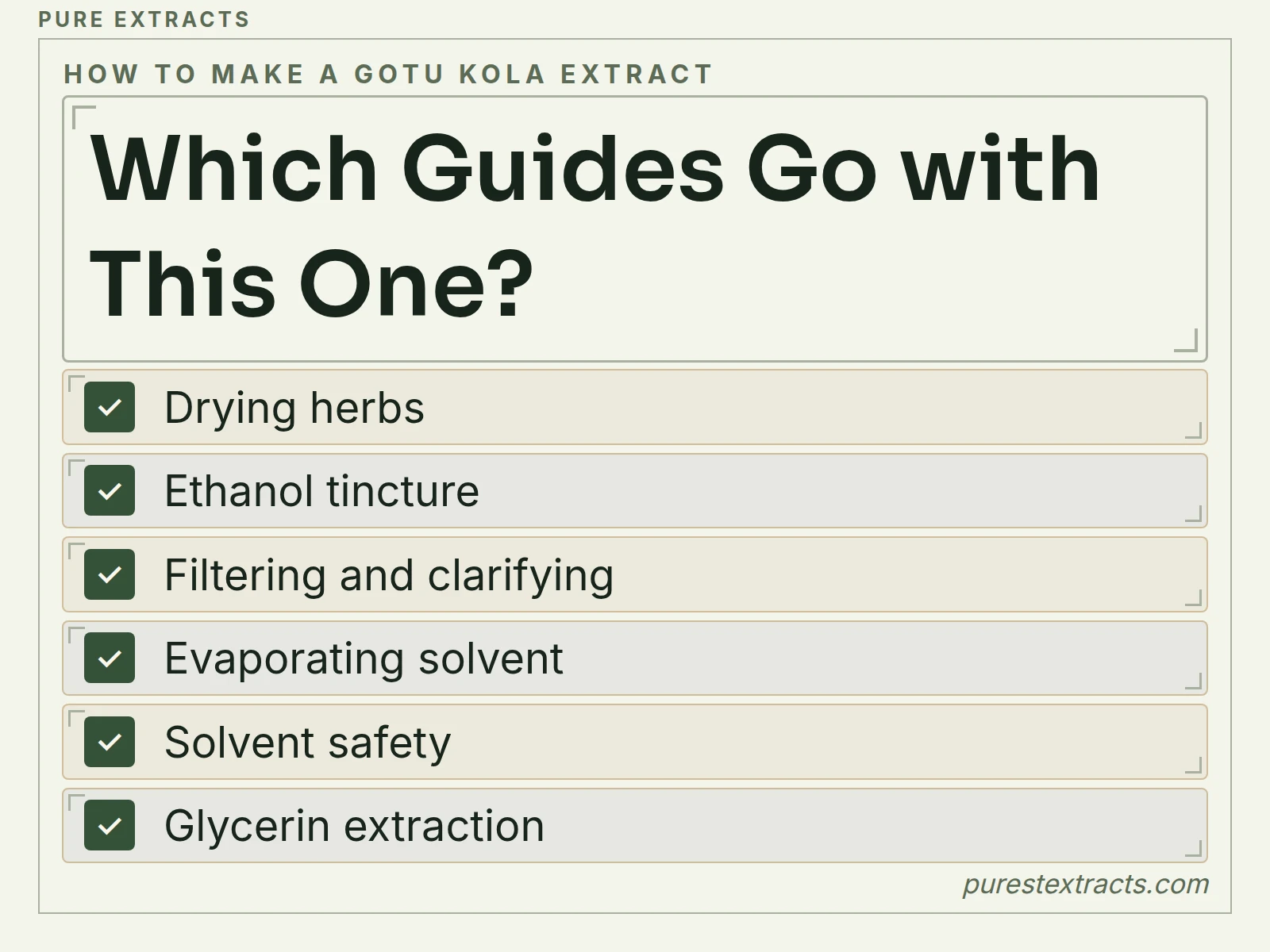
Which guides go with this one?
- Drying herbs
- Ethanol tincture
- Filtering and clarifying
- Evaporating solvent
- Solvent safety
- Glycerin extraction
- Storing extracts
- Oil infusion
- Choosing a method
Sources
- skin, Skin pH levels were significantly reduced in the experimental group (p < 0.001), indicating a more favorable acidic balance. (
- A Novel Moisturizer Formulated With Micronized Centella asiatica and Mandelic Acid Improves Mature, Crepey Skin (2026)
- A Randomized, Double-Blind, Placebo-Controlled Trial Assessing the Effects of Oral Centella asiatica Extract on Skin Aging-Related Parameters in Middl (2026)
- Evaluation of the Efficacy and Safety of a Panthenol-Enriched Mask for Skin Barrier Recovery After Facial Laser Treatment: Results of a Double-Blind R (2025)
- Efficacy and Tolerability of a Cream in Aging Skin (2025)
- Enhanced VEGF Expression in Hair Follicle Dermal Papilla Cells by Centella asiatica Linn (2018)
- Formulation and Evaluation of Halal Hair Growth Promoting Shampoo Containing Centella asiatica and Phyllanthus emblica (2024)
- Strengthening hair with Centella asiatica: a report of clinical and subjective efficacy of a local treatment with a 0.5% hair lotion (2018)
- TRADITIONAL Eclectic / European herbal medicine - This plant should be ranked among the acronarcotic poisons, along with the Oenantha crocat
- TRADITIONAL Documented medicinal use - Adaptogen Anticonvulsant Antidiarrhoeal Antiinflammatory Antipanic Antirheumatic Cardiac Depurative D
- TRUSTED general - Key Actions: Adaptogenic Vulnerary Depurative Nervine (Herbal Reality
- TRUSTED high blood pressure - Several clinical trials suggest that gotu kola can reduce venous hypertension in patients with chronic venous
Common questions
What are you extracting from gotu kola?
Gotu kola ( Centella asiatica ) yields active triterpenoids: asiaticoside, madecassoside, asiatic acid, and madecassic acid. These compounds operate via TGF-β signaling in fibroblasts, influencing collagen production and angiogenesis. Asiatic acid also impacts neurological function through BDNF/TrkB activation. The goal of extraction is to isolate these constituents for use, recognizing the dual wound healing and nootropic effects stem from a single mechanism expressed differently depending on tissue type. Extraction choices depend on desired product form.
Which extraction method suits gotu kola, and why?
Gotu kola ( Centella asiatica ) presents specific considerations when [choosing a method] for botanical extraction. Its key active compounds - asiaticoside, madecassoside, asiatic acid, and madecassic acid - are triterpenoids operating through TGF-β signaling. These molecules dictate solvent selection. Considering the polarity of target compounds, an ethanol tincture is most appropriate. The monograph details that 60-70% ethanol with 30-40% water extracts alkaloids and glycosides effectively; gotu kola’s triterpenoids fall within this profile.
What solvent and ratio should you use for gotu kola?
Gotu kola ( Centella asiatica ) presents specific considerations when [choosing a method] for solvent extraction. The plant’s key active compounds - asiaticoside, madecassoside, asiatic acid, and madecassic acid - respond best to an ethanol-water blend due to their glycoside nature. Referencing the table of ratios, a 60-70% ethanol solution with 30-40% water is appropriate for extracting these compounds. Use food-grade ethanol only; avoid denatured alcohol. Everclear or organic grape alcohol can be diluted with distilled water to reach this target percentage.
How do you make a gotu kola extract step by step?
Gotu kola ( Centella asiatica ) extract production begins with properly prepared plant material. Drying herbs is essential if not using fresh leaf; optimal triterpenoid content peaks just before flowering, roughly 75-90 days after planting stolon divisions for the first cycle, then every 45-60 days thereafter. The most versatile extraction method is an ethanol tincture . Consider your target compounds; gotu kola’s active triterpenoids respond well to a 40-50% ethanol solution with 50-60% water, suitable for general-purpose herbs.
Who should be careful with gotu kola?
Gotu kola ( Centella asiatica ) carries cautions for several groups. Anyone with existing liver issues should exercise care; while traditional use is extensive, concentrated extracts (500-1,000 mg dried extract) have not undergone the same safety testing as whole-food doses (5-15 g fresh leaf per serving). Pregnant or nursing individuals should avoid gotu kola. Its effects on fetal development and infant health are unknown. Similarly, those with autoimmune diseases require caution.
How do you store a gotu kola extract, and how long does it keep?
Gotu kola extract storage depends on the solvent used during its creation. Alcohol tinctures, made with food-grade ethanol diluted to between 40% and 95%, are stable for five years or more if stored correctly. Keep them in dark glass bottles, tightly sealed, away from heat and direct light. A cool, dark place is best. Glycerin extractions, using a typical ratio of 60% glycerin / 40% water, have a shorter shelf life, one to two years.
What are related guides?
Plants Activated Charcoal Production Plants Adaptogenic Compounds Plants Oregano, Medicinal Applications . How botanical extracts are made, step by step, from the people who run the extractions. What we learn, sent about once a week. All guides Ebooks Courses Free extras . About Contact Privacy Terms .
Browse by topic
More guides to explore
 ExtractionCold Press Extraction
 ExtractionEnzymatic Extraction
 ExtractionEthanol Extraction
 ExtractionMicrowave-Assisted Extraction
 ExtractionNatural Dye Extraction and Use
 ExtractionPressurized Hot Water Extraction
 ExtractionSteam Distillation