Guides
Leaf of Life (Bryophyllum pinnatum) Extraction Guide: Juice, Tincture and Flavonoids
How to turn the fresh leaf of Bryophyllum pinnatum into a freeze-dried juice extract, a nonpolar split of the juice or a tincture, and why the heart-active compounds in the leaf shape every step.
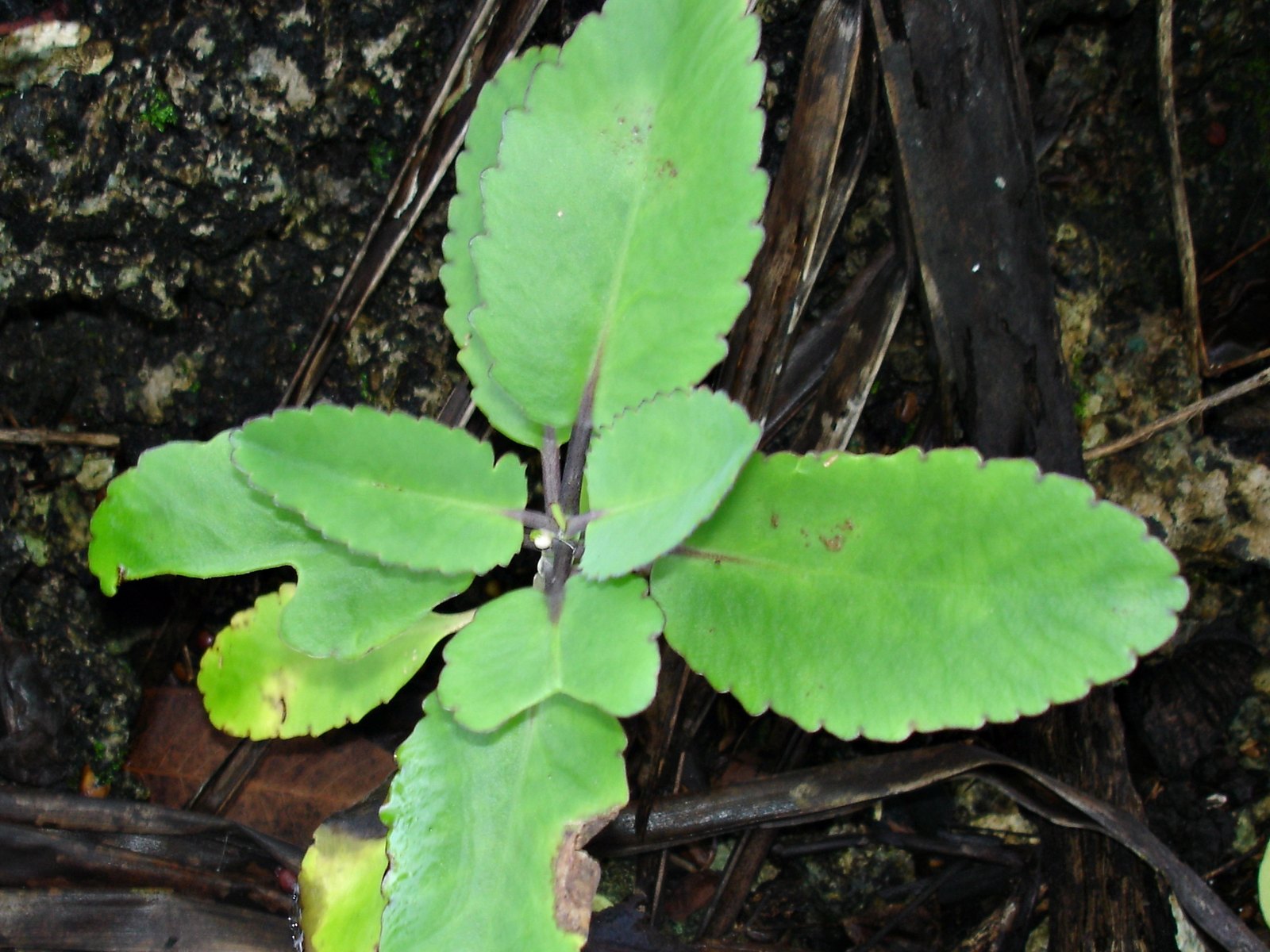
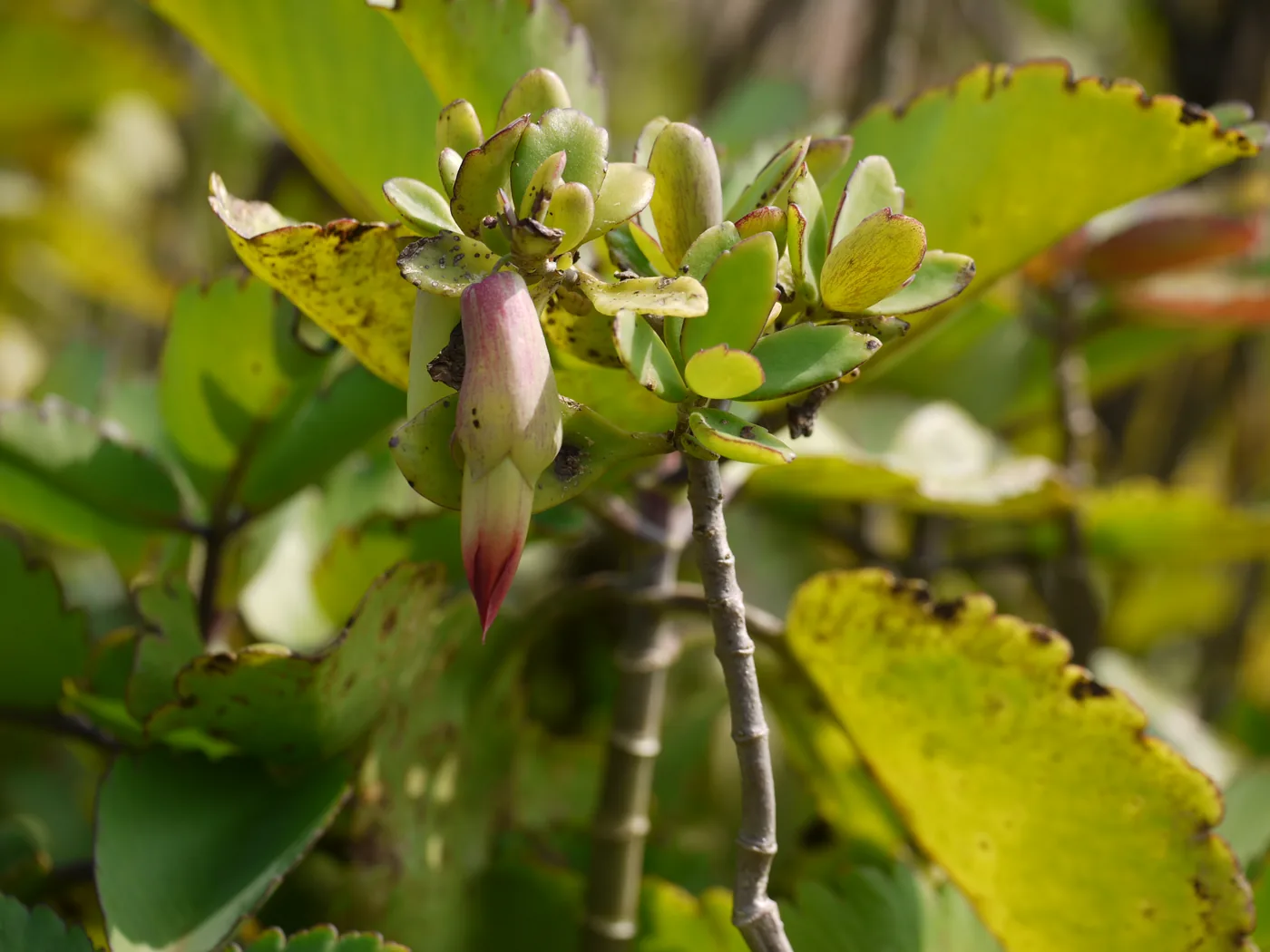
Photograph: David E Mead, CC0. Source: Wikimedia Commons

On this page
Introduction
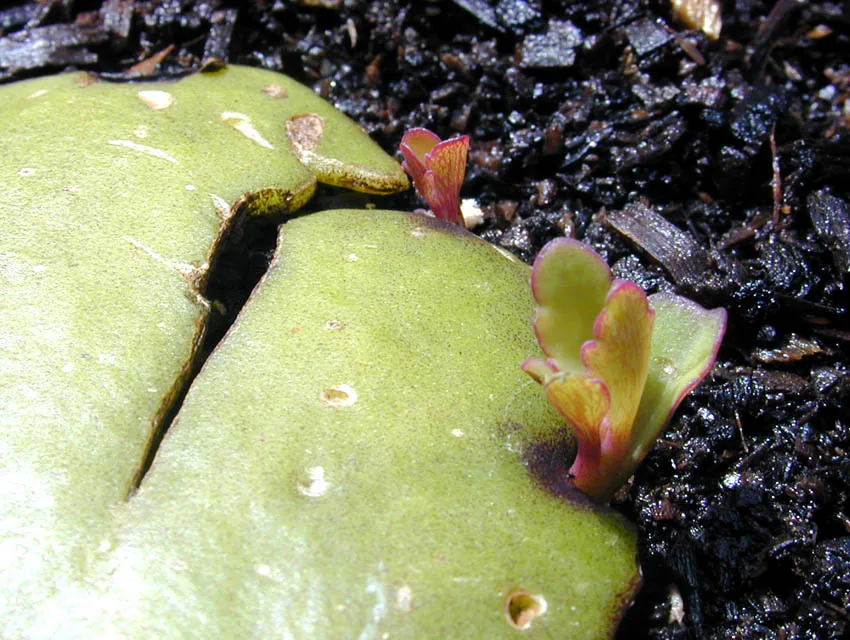
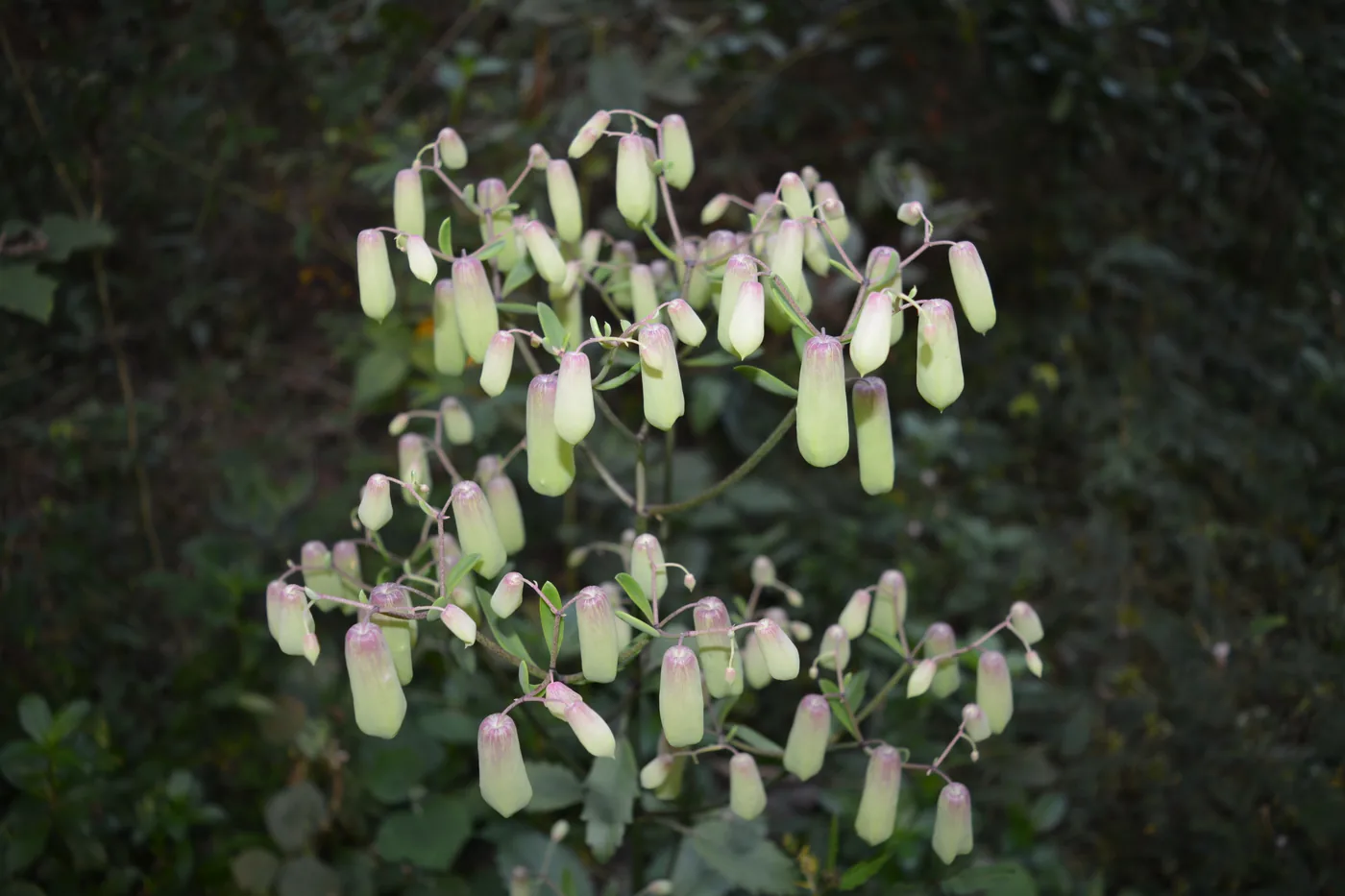
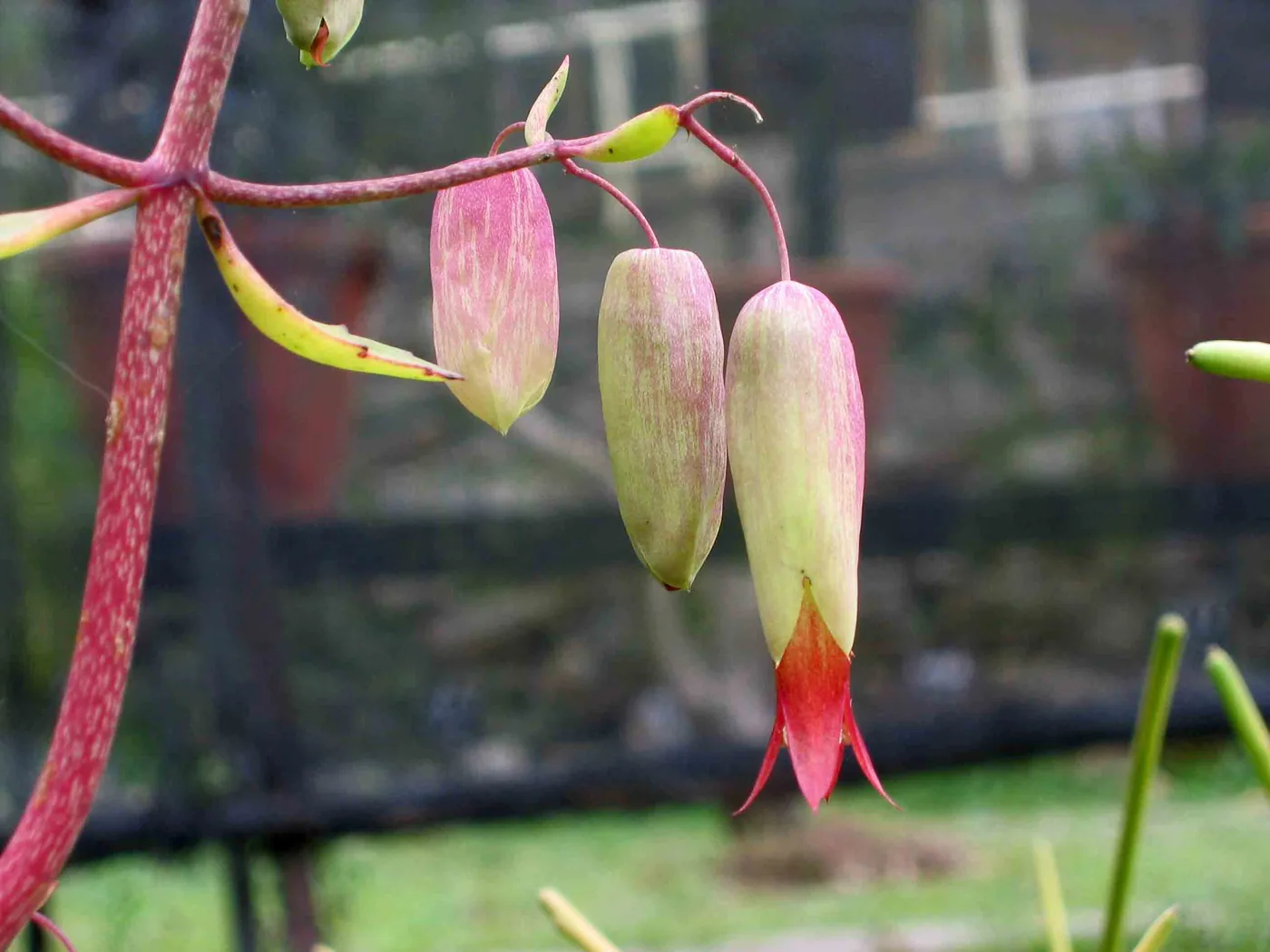
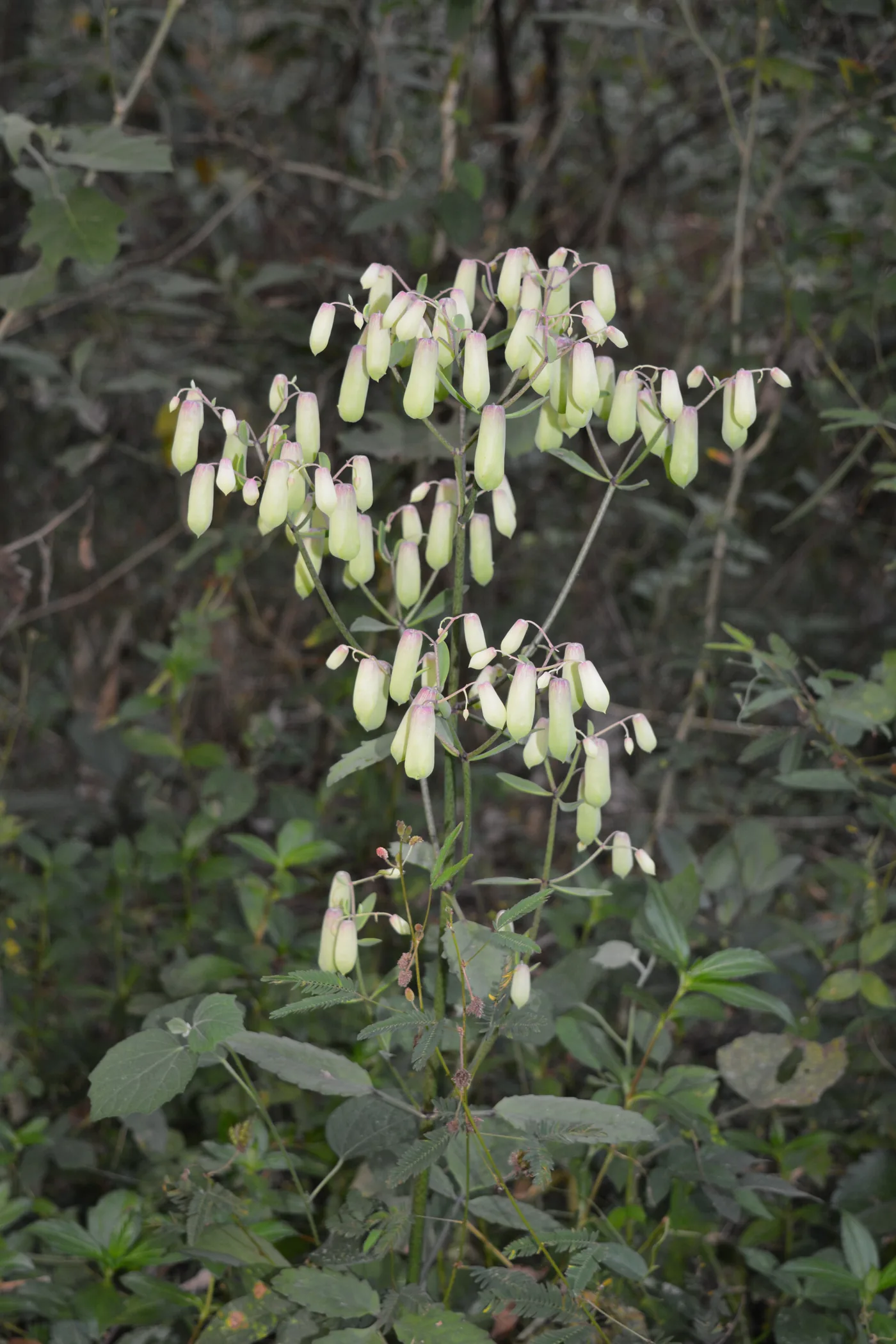
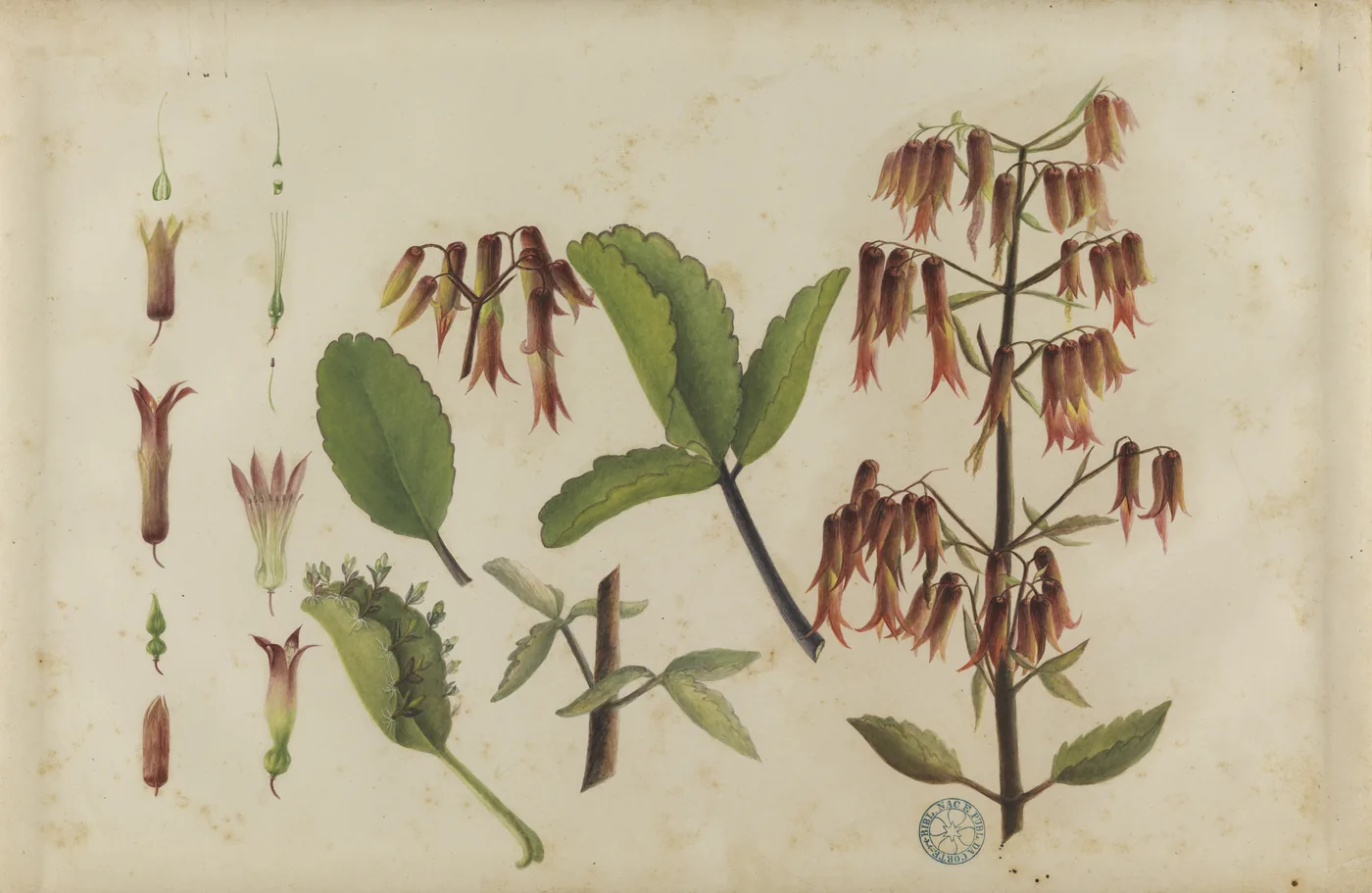
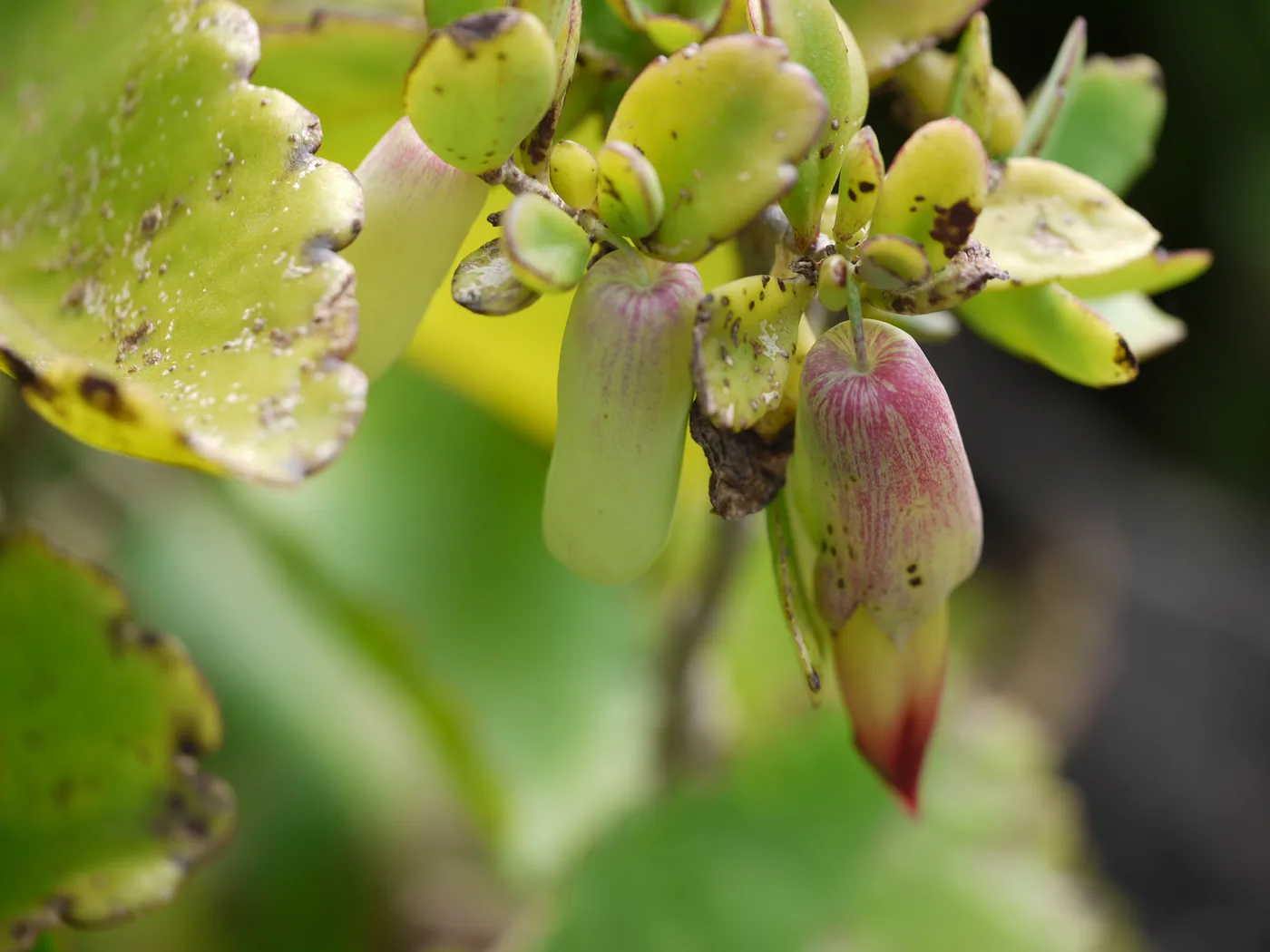
The leaf of this plant is a water tank, built by a succulent that comes from Madagascar, and a single leaf can sit on a bench for weeks without wilting. Along its scalloped edge it grows tiny plantlets, complete with roots, which is why people call it the air plant, the miracle leaf, the life plant and the leaf of life. The botanical name is Bryophyllum pinnatum, and the same plant is filed as Kalanchoe pinnata in many catalogues.
Almost everything useful in this plant sits inside that wet leaf, and the same leaf also carries a family of heart-active compounds that make the plant dangerous to cattle, dogs and anyone who treats it like a salad. This guide covers both halves. We explain what the leaf holds, how to get its water-soluble chemistry out through two juice routes, how a whole-leaf ethanol tincture differs, what the traditional home uses look like when we state them honestly, and why we never write a recipe that concentrates the cardiac compounds for swallowing. Each route gets its steps, what it keeps, what it loses and what to do about the solvent.
Summary
- The part: the fresh, fleshy leaf. It is mostly water, so it is juiced, frozen or extracted fresh within a day.
- Route A: juice the leaf, freeze dry the juice to a powder, then extract the powder with ethanol and water. It keeps the water-soluble flavonoid glycosides, phenolic acids and mucilage together.
- Route B: juice the leaf, strain it through cloth and a fine filter, then run a liquid-liquid extraction with a nonpolar solvent. It splits the juice into a watery layer and a solvent layer, and the solvent layer is where the cardiac compounds go.
- Tincture: the whole fresh leaf in ethanol, a slower route that pulls both families at once.
- Danger: bufadienolides, steroid compounds that act on the heart the way digoxin does. Cattle have died from eating the plant.
- Who should stay away: anyone pregnant, nursing, giving it to a child, taking heart medicine, or keeping cattle, dogs or cats where they can reach the plant.
- Dose: none is established for any extract in this guide, and we do not give one.
Why start with the leaf instead of the solvent? Because a leaf that is nine parts water behaves like a juice, and the juice decides which solvent can possibly work.
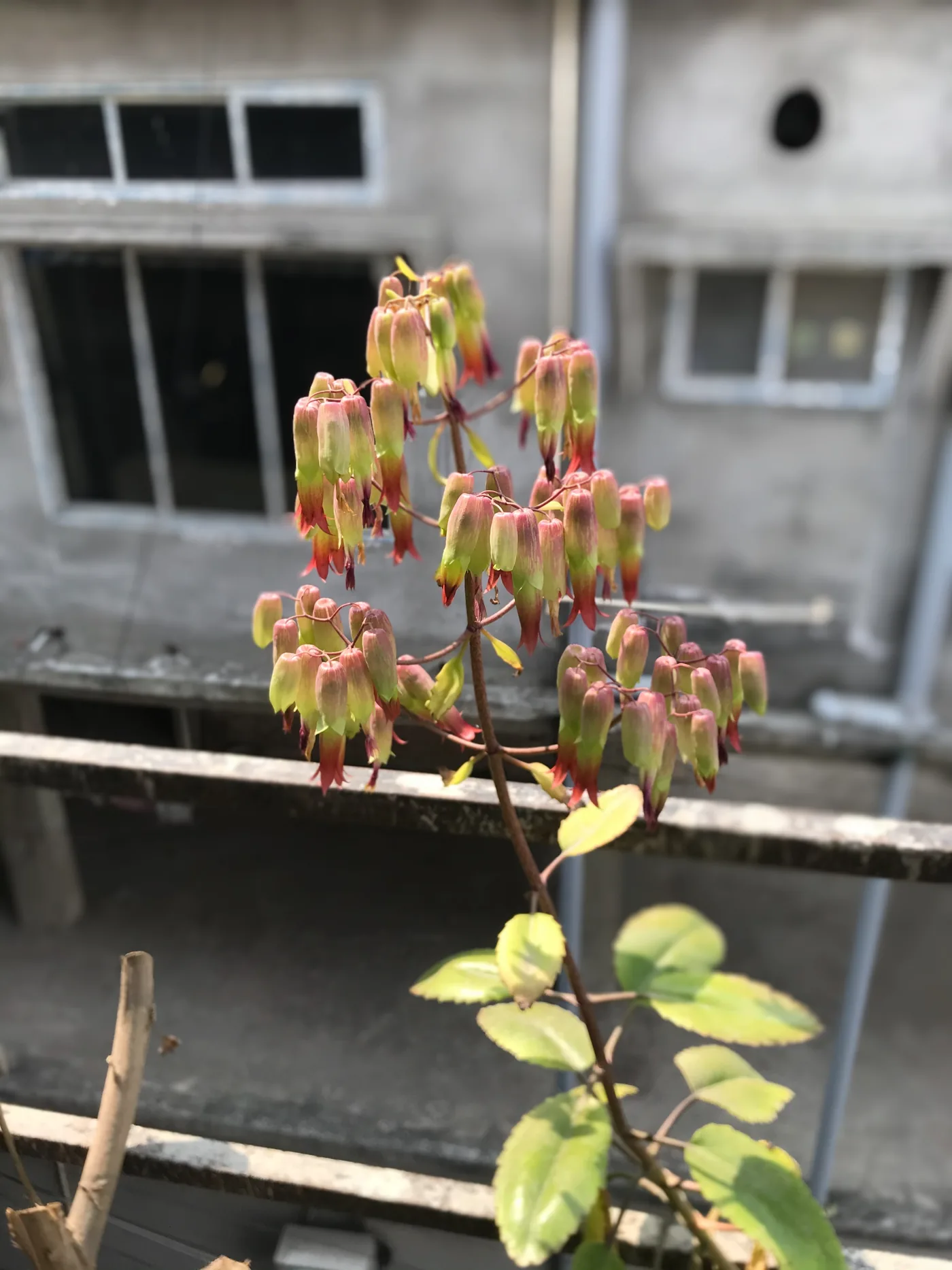

The grower's side of this plant, from a plantlet in a pot to a winter indoors, sits on our partner website, and a link to it appears near the end of this guide.
What the Leaf Holds
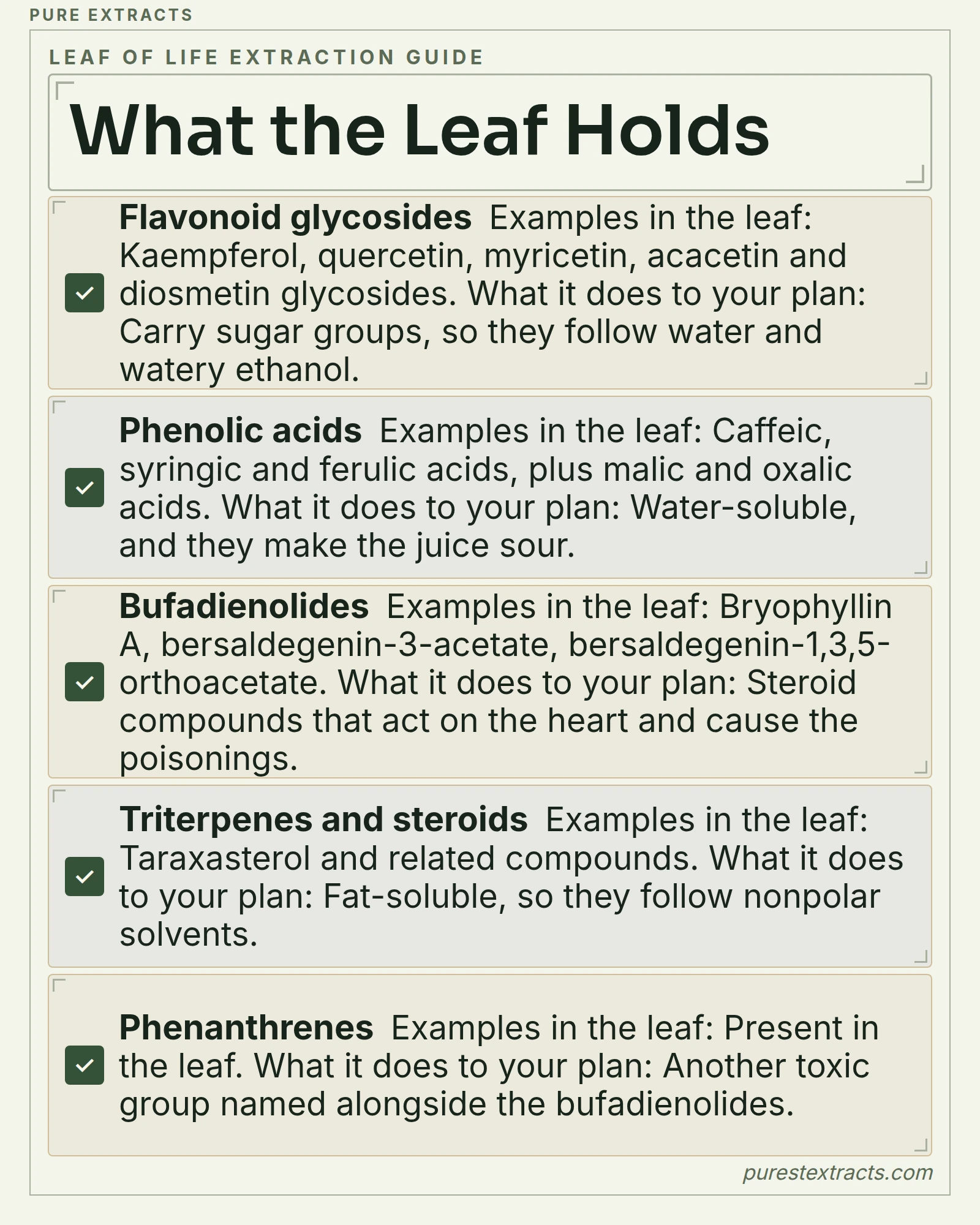
The leaf is a succulent organ, 4 to 12 inches long on a full-grown plant, with the lower leaves simple and the upper leaves divided into three to five pairs of lobes. Water fills most of it. Fresh leaf measures 89.57 percent moisture, which tells you why a pressed leaf gives juice and a dried leaf gives a few grams of green flakes.
| Compound family | Examples in the leaf | What it does to your plan |
|---|---|---|
| Flavonoid glycosides | Kaempferol, quercetin, myricetin, acacetin and diosmetin glycosides | Carry sugar groups, so they follow water and watery ethanol |
| Phenolic acids | Caffeic, syringic and ferulic acids, plus malic and oxalic acids | Water-soluble, and they make the juice sour |
| Bufadienolides | Bryophyllin A, bersaldegenin-3-acetate, bersaldegenin-1,3,5-orthoacetate | Steroid compounds that act on the heart and cause the poisonings |
| Triterpenes and steroids | Taraxasterol and related compounds | Fat-soluble, so they follow nonpolar solvents |
| Phenanthrenes | Present in the leaf | Another toxic group named alongside the bufadienolides |
Flavonoids are the group people mean when they talk about the antioxidant side of this leaf. A methanol extract of the leaf was dominated by flavonoid glycosides, and nine of them were isolated and named, including a quercetin glycoside and a myricetin glycoside that were new to science. A sugar on the end of a flavonoid pulls it toward water, and that one fact organizes the two juice routes below.
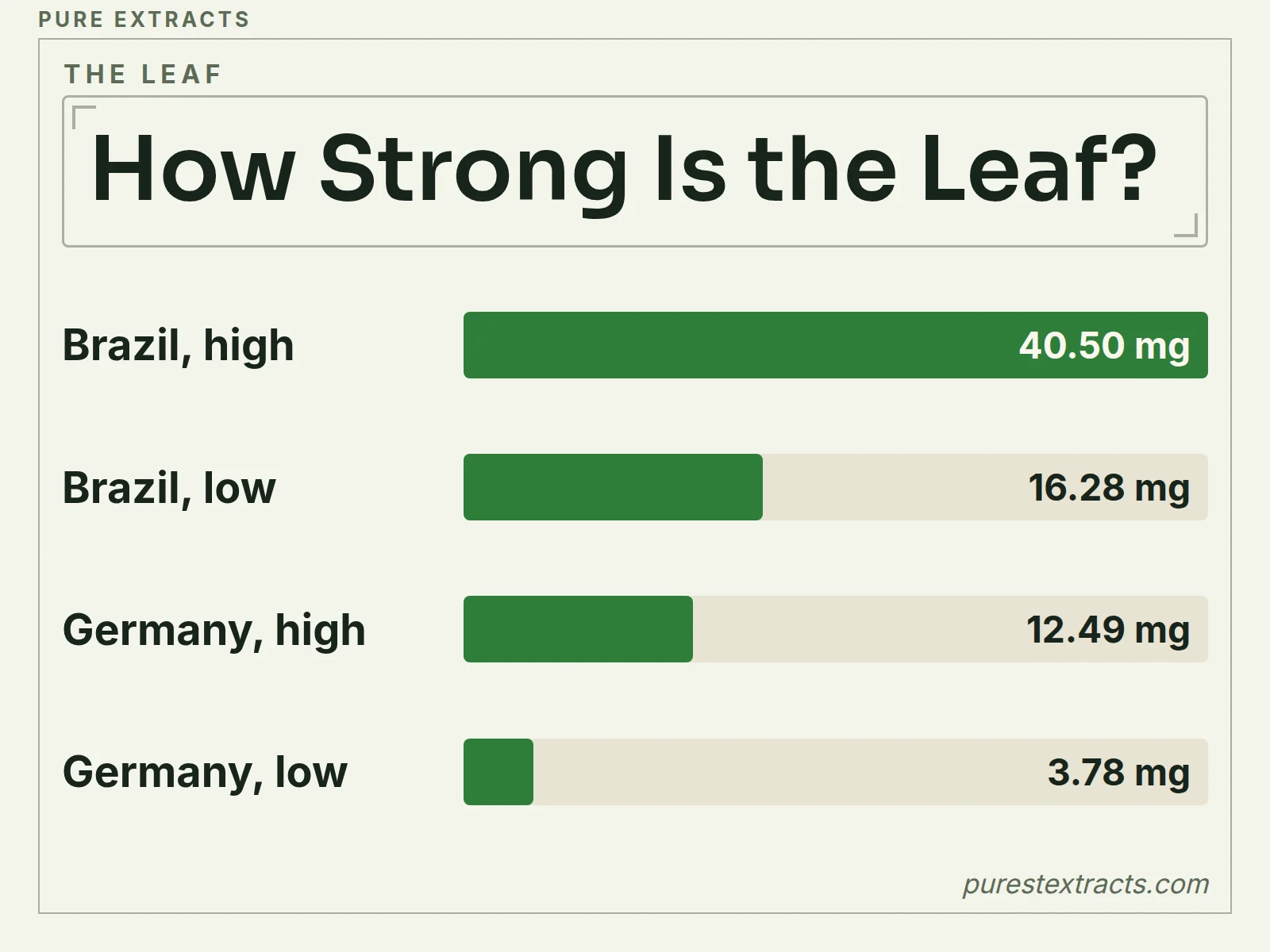
The bufadienolides are the group that cannot be ignored. Four of them were measured in leaves from two growing regions, and the numbers are worth seeing next to each other.
| Sample | Total of four main bufadienolides |
|---|---|
| Leaf grown in Brazil, highest | 40.50 mg per 100 g dry weight |
| Leaf grown in Brazil, lowest | 16.28 mg per 100 g dry weight |
| Leaf grown in Germany, highest | 12.49 mg per 100 g dry weight |
| Leaf grown in Germany, lowest | 3.78 mg per 100 g dry weight |
| Press juice, Brazil | 0.89 to 1.16 mg per 100 mL |
| Press juice, Germany | 0.091 to 0.163 mg per 100 mL |
Young leaves hold markedly more of these compounds than old ones, and the leaf grown in Brazil measured higher than the leaf grown in Germany. That means no two batches match, and a recipe that works on a pot at a friend's house will not tell you what is in a leaf from your own plant.
Now put the juice numbers beside the leaf numbers. A press juice holds a small fraction of what the dry leaf holds per unit, since juice is mostly water. A concentrate of any kind, whether freeze dried or solvent separated, is a different material from the juice you started with.
Which Part to Use
A plant offers a leaf, a stem, a flower head and a root, and they are not equal. The leaf is the part with a long record of traditional use and the part this guide works with.
| Part | What to know | Our advice |
|---|---|---|
| Fresh leaf | Fleshy, wet and the most used part | The part for every route here |
| Young leaf | Higher in bufadienolides | Harvest mature leaves if you want less of the heart-active compounds |
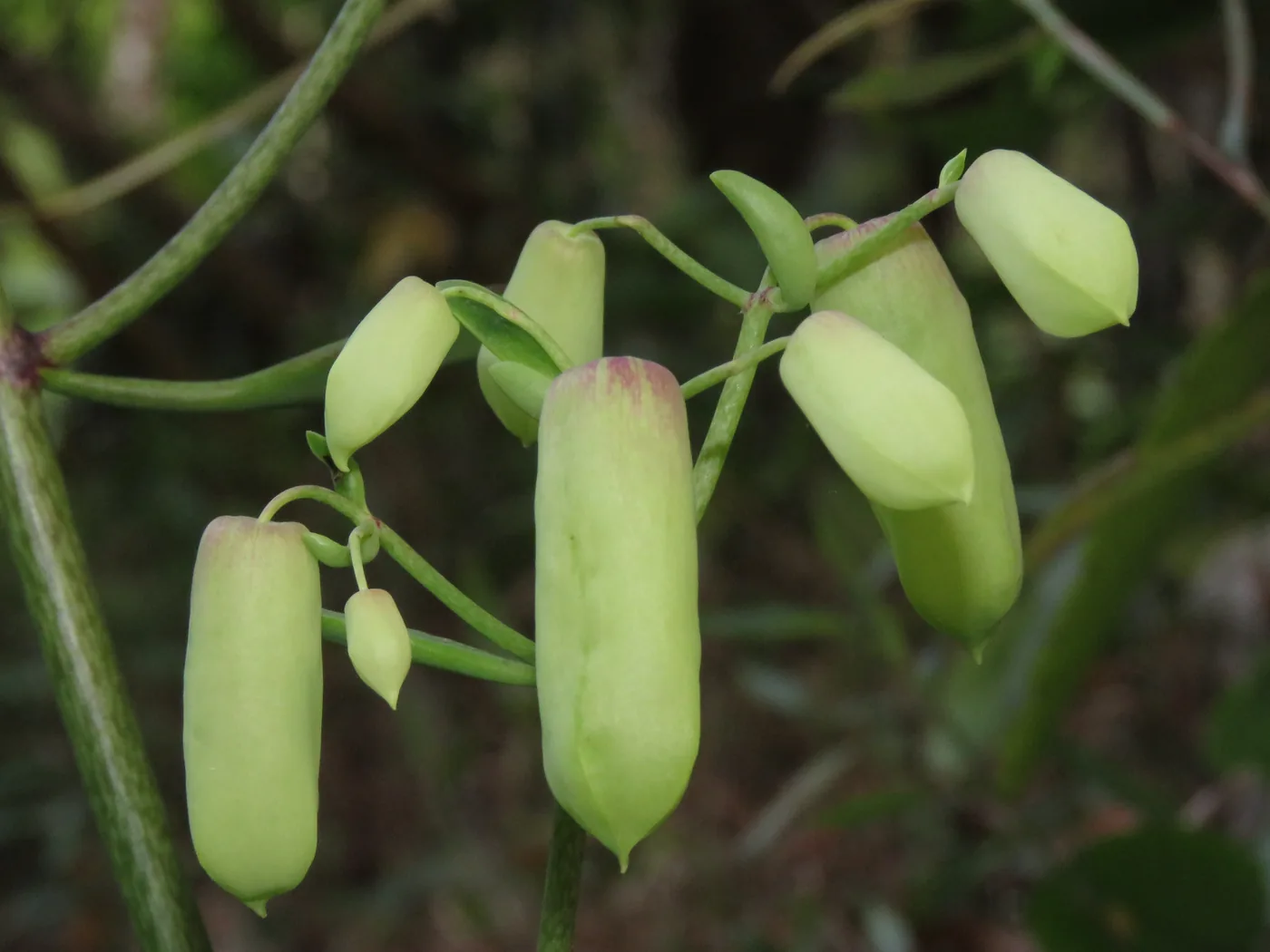
| Flower head | About five times more toxic than the leaves and stems | Leave it on the plant |
| Root | The highest bryotoxin level in one analysis | Leave it in the pot |
The flower heads carry the heaviest dose of toxin, which matters on a farm. Cattle poisonings are recorded most often when the plant is flowering, so a flower stalk that goes into a bucket with the leaves has changed the risk of the whole batch.
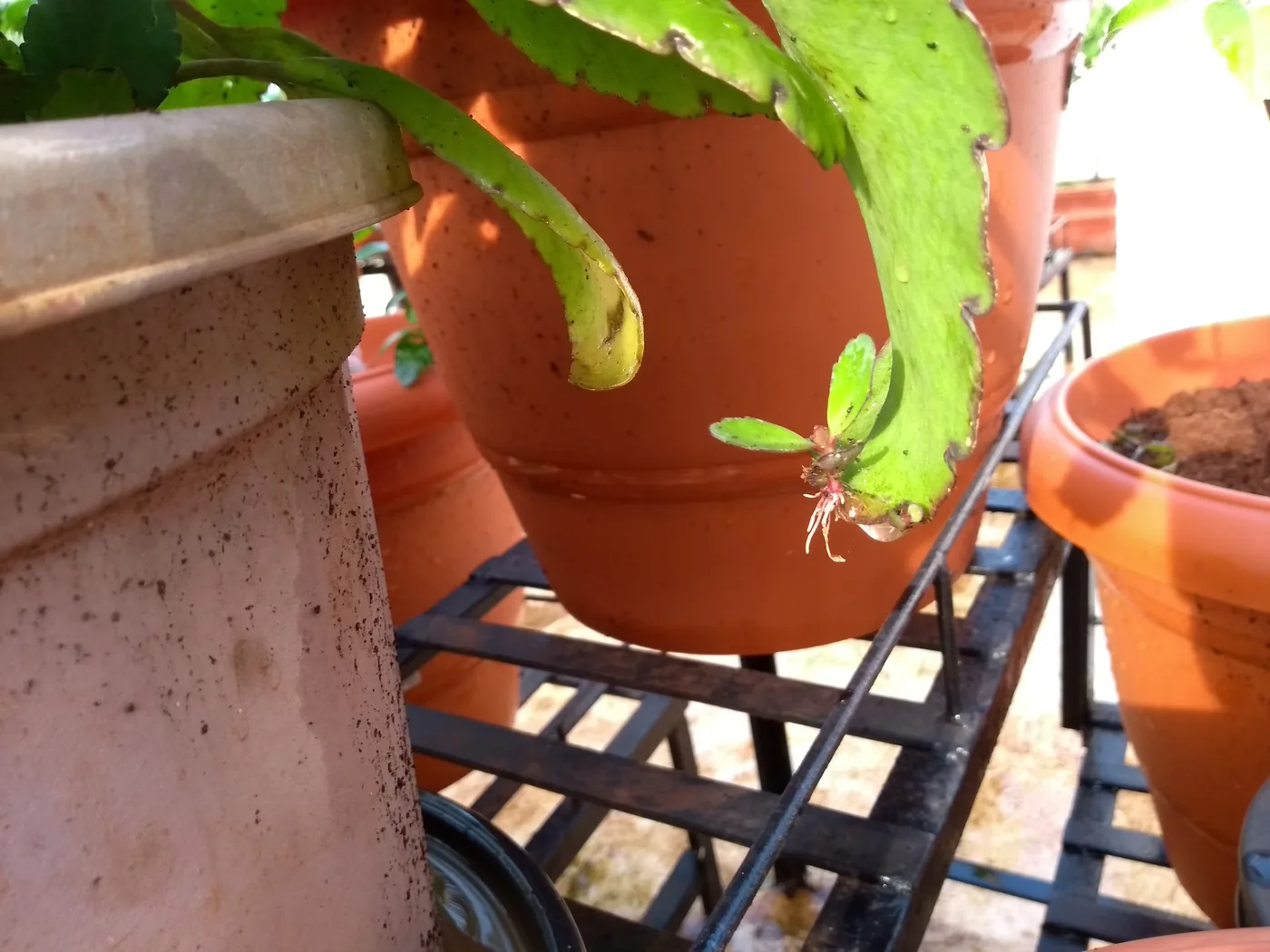

Take only leaves that are clean, firm and pale to mid green, cut with a knife and not torn off, and leave the growing tip alone so the plant keeps going.
Choosing a Method
Four routes follow, and the table lines up what each one does with the leaf. Read across a row and you can predict the extract before you make it.
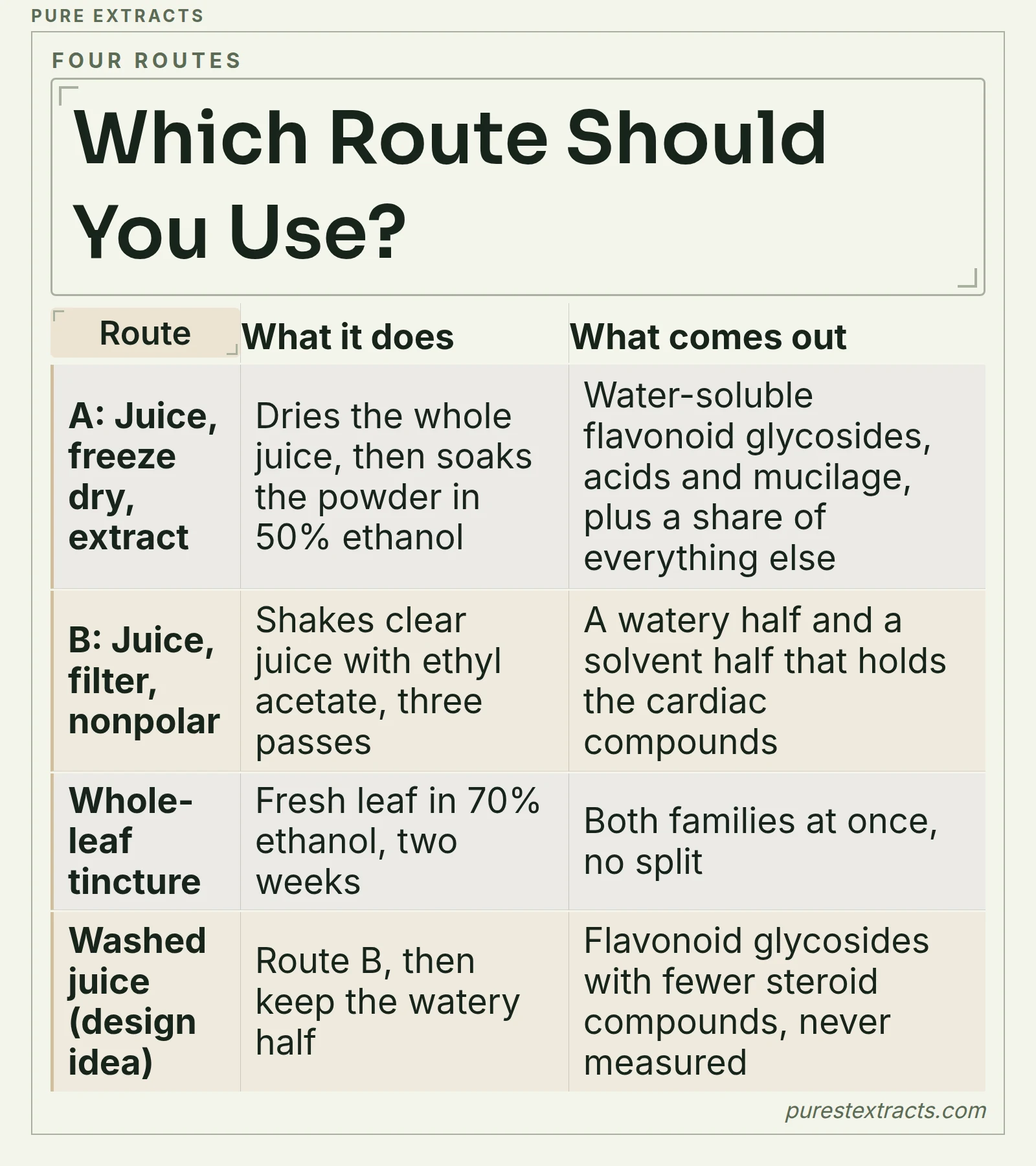
You can decide in three questions. Do you want everything the juice carried in one dry powder? Choose Route A. Do you want to know which half holds the cardiac compounds? Choose Route B, and treat the solvent half as poison. Do you want the simplest thing with no juicer? Choose the tincture, and treat it as a laboratory sample.
If your goal is the water-loving chemistry, meaning the flavonoid glycosides and phenolic acids, Route A is the cleaner choice because it dries everything together and then lets you choose a solvent for the powder. If your goal is to separate the leaf into a watery half and a fat-loving half, Route B does that, and it is the route that demands the most care with solvents and the most respect for what ends up in the solvent half.
Best Method For Each Compound
The leaf is mostly flavonoid glycosides, which carry sugar and follow water, so the first method here is a water-based one. The steroid compounds that make the leaf poisonous are not a target. Nothing in this guide tells you to concentrate them, and the row for them below says what to do with them.
| Compound | Polarity | Best solvent or method | Why | What it loses |
|---|---|---|---|---|
| Flavonoid glycosides | Polar | Route A: juice, freeze dry, then a watery ethanol or hot water soak of the powder | The sugar on the flavonoid pulls it into water, and freeze drying keeps the whole juice together | Ethanol-soluble small compounds of mid polarity are only partly caught |
| Phenolic acids | Mid | The same watery ethanol soak, or a whole-leaf ethanol tincture | Caffeic and ferulic acids dissolve in watery ethanol | Plain cold water loses part of them |
| Bufadienolides | Mid | Do not extract on purpose. Washing the juice with ethyl acetate moves them into the solvent layer, which is thrown away as hazardous waste | They are the cause of the animal poisonings and act on the heart | The wash takes only part of them, and nobody has measured what is left, so a washed juice is still an unknown |
| Triterpenes and steroids | Nonpolar | Route B, a nonpolar solvent applied to filtered juice or ground dry leaf | Fat-soluble compounds such as taraxasterol follow heptane | The water-loving flavonoids stay behind in the watery layer |
One caution runs through all four rows. A method fitted to the chemistry tells you what a solvent will carry, and it does not make a leaf extract safe to swallow. Read the safety section before you make any extract, and give none to a person or an animal.
Preparing the Leaf
Every route starts the same way, and a careless start spoils each one. Work with gloves on, because leaf juice can irritate skin and the plant is toxic.
- Harvest mature leaves in the morning, leaving the flower stalks and the growing tips on the plant.
- Rinse each leaf in cool water and pat it dry, then pull off any plantlets, soil or dead patches.
- Weigh the clean leaves and write the weight in your batch notes before anything else happens.
- Chop the leaves into pieces about the size of a coin, which breaks the cells without heating them.
- Juice or soak the pieces within an hour, since a cut leaf starts to brown and sour almost at once.
A slow masticating juicer is a good tool for a leaf this wet, because it presses without chopping so hard that the foam and heat spoil the juice. A blender followed by a pressing cloth works too, and it leaves more green fiber in the juice that the filter must catch.

Two Juice Routes
Both routes begin with the same raw juice, and they split at the filter. Neither needs a laboratory, but Route B needs a fume hood or an open-air spot.
Route A: Juice, Freeze Dry, Then Extract the Powder
Freeze drying removes the water as vapor without heat, so the delicate flavonoid glycosides and phenolic acids are not cooked. What is left is a dry powder of everything the juice carried.
- Press the juice and strain it through a clean cloth to remove fibers.
- Pour the juice into shallow trays no more than half an inch deep, so it freezes quickly and dries evenly.
- Freeze it solid at 0 degrees F (-18 degrees C) or colder.
- Run it in a freeze dryer until the tray holds no cold spots, then weigh it and weigh it again two hours later. A stable weight means it is dry.
- Scrape the powder into a glass jar with a silica gel packet, and keep it away from light and humidity.
- Weigh 10 g of powder into a jar and add 100 mL of 50 percent ethanol, which is a 1 to 10 ratio. Shake it, leave it 24 hours in a dark place and shake it again whenever you pass it.
- Filter it through paper and keep the liquid in a dark glass bottle.
What does this route keep and lose? It keeps nearly everything that was dissolved in the juice, including the sugars, organic acids, flavonoid glycosides and the mucilage, the slippery plant gel that makes the juice thick. Volatile compounds are lost, and the fat-soluble material that stayed in the pressed solids never makes it in. Whatever heart-active compounds were in the juice get concentrated too, so the powder is stronger than the leaf by weight.
Working recipe.
The ratio, ethanol strength and 24 hours are a working recipe from general herbal practice, not tested numbers for this plant, and we say so.
That limit is worth keeping in mind because nobody has published a freeze drying yield for this juice, so your first batch teaches you what your own juice gives.
Route B: Juice, Filter More, Then a Nonpolar Extraction
This route treats the juice as a mixture of a water-loving half and a fat-loving half, and separates them with a solvent that will not mix with water.
- Press the juice and strain it through a cloth.
- Pass it through a fine filter, such as a coffee filter or lab filter paper, until it runs clear of fibers. Fibers cause an emulsion later.
- Pour the clear juice into a separatory funnel, a glass funnel with a tap at the bottom, set on a ring stand.
- Add an equal volume of ethyl acetate and invert the funnel gently ten times, venting the tap away from your face after each inversion.
- Let the layers settle. Ethyl acetate floats on top of the juice. Drain the lower watery layer into a clean jar and pour the upper solvent layer out the top into another jar.
- Return the watery layer to the funnel and repeat with fresh solvent two more times, for three passes in all.
- Combine the solvent layers, add a spoonful of anhydrous sodium sulfate to take out stray water, filter and evaporate the solvent outdoors or in a hood with no flame, using a water bath at no more than 105 degrees F (40 degrees C).
Which compounds go where? The flavonoid glycosides and the phenolic acids carry sugars or acid groups and stay mostly in the watery layer. The steroid-based bufadienolides, the triterpenes and the plain flavonoid aglycones move into the solvent layer, because their structure is far less friendly to water. Heptane is even more nonpolar and takes up less of the mid-polarity compounds than ethyl acetate does, which is why we name ethyl acetate first.
Working recipe.
The equal volume, the three passes and the water bath temperature are working choices from general separation practice. This plant has no published recipe for the liquid-liquid step.
Be plain about what this route makes. The solvent half of the leaf is the half that holds the cardiac compounds, so the dried residue is not a gentler extract. It is the dangerous half, concentrated. Treat it as a poison on the shelf, label the jar, keep it where nobody can reach it, and do not swallow it or give it to an animal.
Solvent Notes
Ethyl acetate, heptane and ethanol are the three liquids in this guide, and all three burn. Their vapors are heavier than air and creep along a bench to a pilot light, a hot plate or a spark from a switch.
- Work outdoors in still air, or in a hood that pulls air away from you.
- Keep every flame, heater, pilot light and spark source out of the room.
- Pour solvent only into glass and metal, never into thin plastic.
- Cap every container the moment you finish pouring.
- Keep the amount on the bench to what you need for that run.
- Collect solvent waste in a labeled, closed container and take it to a hazardous waste drop-off. Never pour it down a drain or onto soil.
Evaporating the solvent is where accidents happen, because the vapor leaves the dish and fills the air above it. A water bath at no more than 105 degrees F and a hood or open air keep the vapor moving away from you, and a heated plate or open flame has no place in the job.

A Whole-Leaf Ethanol Tincture
A tincture is a leaf soaked in alcohol and water, and it is the oldest of the extraction methods. It skips the juicer entirely.
- Chop 100 g of clean fresh leaf and place it in a glass jar.
- Add 200 mL of 70 percent ethanol. Because the leaf is close to nine parts water, the finished liquid lands near 50 percent ethanol, which suits the sugar-bearing flavonoids.
- Close the jar, shake it, and leave it two weeks in a dark place, shaking daily.
- Strain through a cloth, press the leaf, and filter the liquid through paper into a dark bottle.
- Label it with the date, the leaf weight, the ethanol strength and the word POISON where children and pets cannot miss it.
The whole-leaf soak pulls both families at once, the flavonoid glycosides and a share of the bufadienolides, so it does not split them the way Route B does. Leave out any acid. Bryophyllin A converts into bryophyllin B with a trace of acid, and a vinegar tincture changes the chemistry in a way no one has mapped.
Working recipe.
The 1 to 2 ratio and the two weeks are a working recipe borrowed from general fresh-herb practice. Nobody has measured what this tincture holds.
Keep the tincture as a laboratory sample rather than a remedy, and record every batch so that a bad one can be traced.

How to Choose an Extraction Method for Any Herb
Match the method to the plant: what polarity and heat sensitivity mean, and which solvent pulls out which compounds.
For a More In-Depth Read, Click HereWhat People Have Done at Home
For generations, households in the Caribbean, South America, Africa and Asia have used this leaf, and the traditions are well documented. We state them as traditions and nothing more.
- Headache: two or three washed fresh leaves are crushed, applied to the forehead and covered with a cloth, repeated up to four times a day.
- Cold or cough, as a tea: 15 g of fresh leaves are boiled in half a liter of water for 5 minutes in a covered pot, cooled, strained, and a cup is drunk three times a day for 3 to 7 days.
- Cold or cough, as juice: the juice of five to seven leaves, a tablespoon three times a day.
- Kidney stones: leaf juice is used in several traditions.
- Hypertension: used in Trinidad and Tobago.
- Inflammation and fevers: used by Amazonian Creoles.
The monograph that records the headache, cold and cough preparations adds two limits that belong beside every one of them. Preparations must never be kept longer than 24 hours, even in the refrigerator, and the plant is not for use in pregnancy, while breastfeeding, or in children. Nothing documents its safety for any of those three.
These are folk practices, and they are not our advice. In a mouse test, fresh juice and decoction caused no deaths or toxic signs over twelve days, and fresh juice put on rabbit skin caused no redness or swelling. Two adult cattle that ate large amounts died within 48 hours with drooling, staggering and severe arrhythmia. A human is not a mouse and not a cow, so the honest position is that the amounts above are what people did, and not an amount we can call safe.

The Pregnancy Question
You may have read that this plant is used for early labor. It is. Swiss clinics, mostly in the anthroposophic tradition, give carefully made, standardized press-juice preparations to pregnant women under a doctor's supervision, and the preparations are reported to be well tolerated. Laboratory work on human uterine tissue found that press juice and a flavonoid fraction both weakened contractions, and added to standard drugs they weakened them more.
That is not an invitation to juice the leaves at home. The clinical evidence is thin: one randomized trial against nifedipine was stopped early because too few women enrolled, and a placebo trial had only 26 patients. Doses are not published for anyone to copy, and a kitchen juice varies leaf by leaf, season by season and plant by plant. The practical rule is simple. Pregnancy and nursing are reasons to stay away from any home preparation, and a pregnant woman who wants this plant discussed should raise it with her own obstetric clinician.

What the Evidence Stops At
Here is a fair statement of where knowledge ends, because a guide that oversold the leaf would be doing you harm.
- The compound lists are real: the flavonoids, phenolic acids, triterpenes and bufadienolides have been isolated and named.
- The cattle poisonings are real and documented, and the cardiotoxic mechanism is understood. Bufadienolides block the sodium-potassium pump in heart cells, the same target as digitalis drugs.
- Human clinical testing is small, mostly retrospective and concentrated in preterm labor.
- No dose is established for any extract, powder or tincture in this guide.
- Whether any one batch is safe cannot be told by looking, tasting or smelling it.
Most claims you meet about this leaf, such as kidney stone relief or blood pressure control, rest on traditional use and on animal or laboratory work. That is a reason to be curious. It is not a reason to treat a family of cardiac compounds as a harmless kitchen herb, and it is why we leave dose out entirely.

Keeping the Flavonoids and Leaving the Toxins Behind
If you are interested in the flavonoid side, the chemistry gives you a direction. Flavonoid glycosides are the water-loving group, and the bufadienolides are the less water-loving group.
That suggests a design: take the juice, wash it once or twice with ethyl acetate the way Route B does, throw the solvent half away as hazardous waste, and keep the watery half. It would hold the flavonoid glycosides and phenolic acids with a smaller share of the steroid compounds. We list it as a design idea, not a tested method, because nobody has measured what remains in the watery layer.
The test that matters is the one you cannot run at a kitchen table. A laboratory would measure the bufadienolides by liquid chromatography with mass spectrometry, the same method used to count them in the leaf. Without that number, a washed juice is an unknown, and an unknown heart-active mixture is not something to hand to a person.

Storage and Batch Records
Fresh juice and decoction spoil within a day. Keep it cold, use it that day or throw it out, and never keep it past 24 hours, even in the refrigerator.
A freeze dried powder keeps far better when sealed with a desiccant, but it is still a concentrate, so it gets a label that names the plant, the date, the leaf weight and the word POISON. A tincture in a dark glass bottle lasts months, and the label matters more than the bottle.

Write a batch card for every run, with the leaf weight, the part, the date, the solvent, the ratio, the time and the weight of what you got. The first time a batch behaves oddly, you will thank yourself.
| Line on the batch card | What to write |
|---|---|
| Plant and part | Bryophyllum pinnatum, mature leaf, flower stalk left on the plant |
| Leaf weight | Grams of clean fresh leaf, weighed before chopping |
| Juice or soak | Volume of juice, or volume and strength of ethanol |
| Route and solvent | A, B or tincture, with the solvent and the number of passes |
| Dates and times | Date harvested, date started, hours in the freezer or in the jar |
| What came out | Weight of powder or volume of liquid, and its color |
| Where it is kept | The shelf and the label, including the word POISON |
A card like this lets you compare two leaves, two seasons or two plants without guessing, and that comparison is the only measurement a home bench can make.
Cleaning Up After a Run
A run is not over when the jar is capped. The leaf trimmings, the spent solvent and every tool that touched the juice still carry the heart-active compounds, and each one needs a plan before the first leaf is cut.
- Bag the leaf scraps and trash them where cattle, sheep, goats, dogs and cats cannot reach, and never compost them in a pile an animal can get into.
- Collect the solvent half of Route B in a labeled, closed container and treat it as hazardous waste, never as something to pour out.
- Wash the knife, the juicer parts, the funnel and the cutting board with soap and hot water, and keep them for this work alone.
- Wipe the bench and wash your hands and forearms last.
Dedicated tools are the cheapest safeguard in this guide. A juicer that also makes breakfast is a juicer that can move a poison to someone who never agreed to it, and a second set of tools costs far less than that mistake.
Finally, write the cleanup on the batch card. A line that says the scraps were bagged and the solvent was collected turns a habit into a record, and the record is what you read when something smells wrong six weeks later.
Equipment
Some routes need a long list of gear, and this one is manageable. The checklist names what to have before the first leaf is cut.
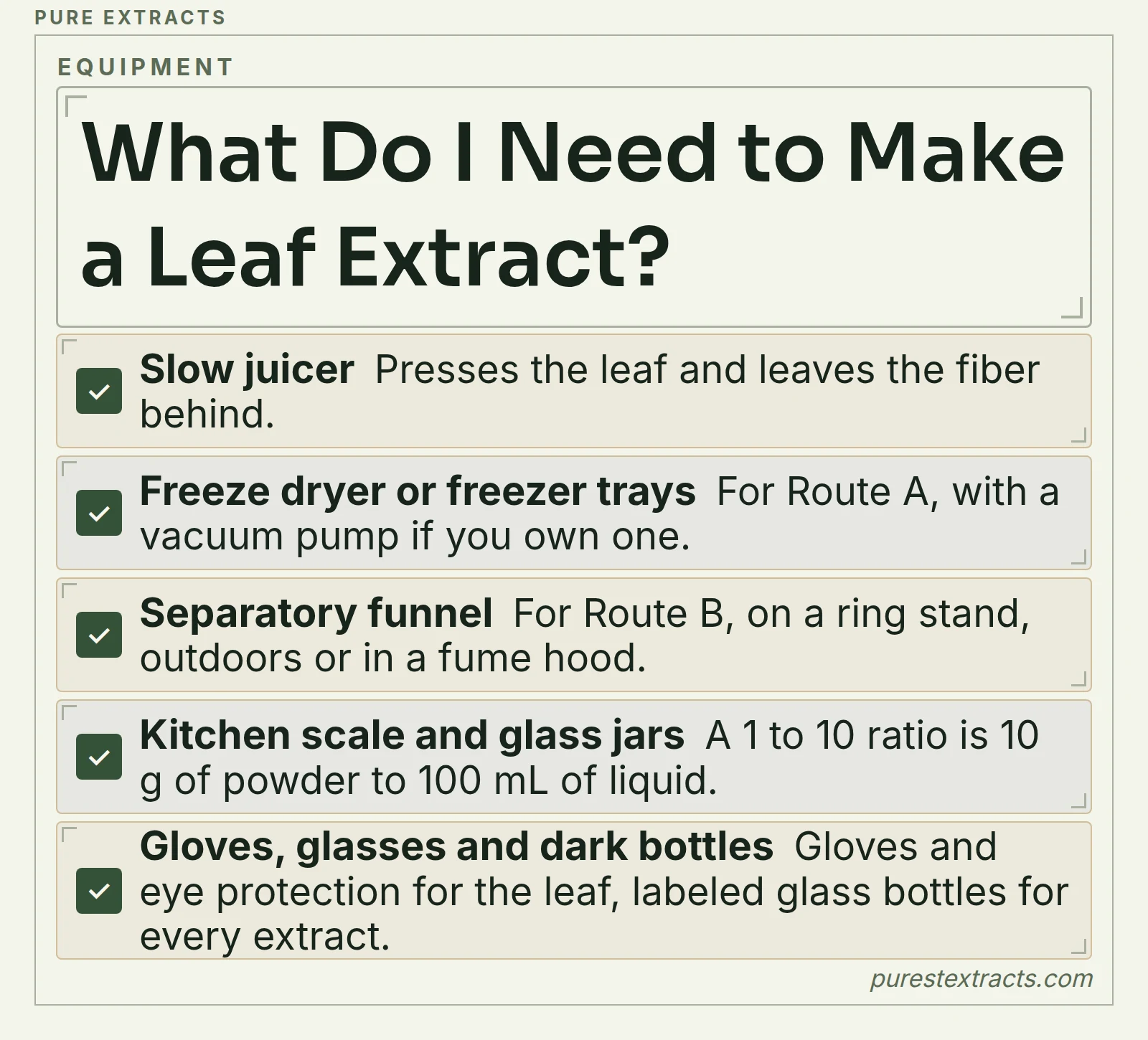
Of all of it, the separatory funnel and the ventilation matter most for Route B. A tap that leaks sends solvent onto your bench, and a closed room fills with vapor you cannot see. Work outdoors in still air or in a proper hood.
How to Make a Glycerite: Glycerin Herbal Extracts
The alcohol-free extract: which herbs suit vegetable glycerin, how much water to add, how to make it and how long it keeps.
For a More In-Depth Read, Click HereSafety
The leaf is toxic, and the guide would be incomplete without a plain account of who is at risk. The bufadienolides are cardiac glycosides. They inhibit the sodium-potassium pump in heart muscle, and in a large enough amount the result is arrhythmia and cardiac arrest. Cattle and sheep have died of it, and dogs are thought to be especially sensitive. The plant is listed as toxic to dogs and cats, usually with stomach upset and, in a large amount, a change in heart rhythm.
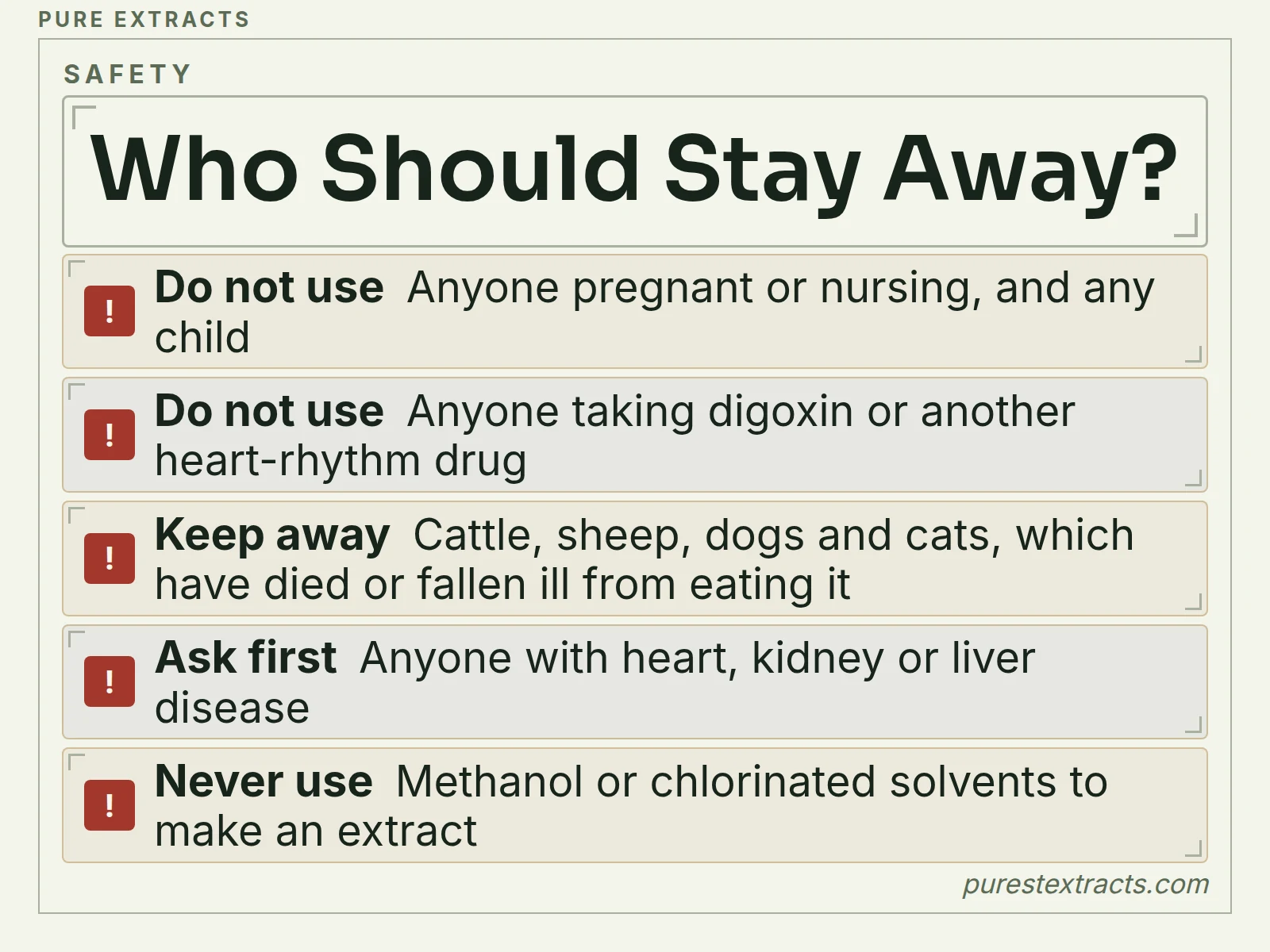
Digoxin works on the same target, so nobody on digoxin or on any other heart-rhythm drug should use a preparation from this plant, and nobody has tested what happens when they do. A reaction can build over days, since small amounts eaten repeatedly add up.
What to do
These habits keep a workshop, a family and a farm out of trouble.
- Wear gloves, safety glasses and long sleeves whenever you cut, crush or juice the leaves.
- Label every jar with the plant, the date and the word POISON, and keep it high and locked.
- Work with solvents outdoors or in a hood, away from flame, sparks, pilot lights and hot plates.
- Collect solvent waste in a labeled, closed container and take it to a hazardous waste drop-off.
- Throw the pressed leaf solids somewhere livestock and pets cannot get them.
- Call a doctor or poison control right away for any swallowing by a child or pet, and tell them the plant name is Bryophyllum pinnatum.
- Talk to a clinician before any use if you have heart, kidney or liver disease.
Pets and livestock deserve their own plan. Call a vet within the hour if an animal has eaten the plant, because heart function falls sharply after the first day.
What not to do
Each of these is a line that should never be crossed.
- Do not swallow the solvent layer or the dried residue from Route B.
- Keep every preparation away from children, anyone pregnant or nursing, and pets.
- Skip any combination with digoxin or another heart medicine.
- Leave methanol, chloroform and every chlorinated solvent out of any extract made for a person.
- Do not evaporate a solvent near an open flame or in a closed room.
- Medical care comes first, and a leaf juice is no substitute for it and treats no disease.
- Acid, such as vinegar, stays out of the tincture.
If you remember one rule, make it this one: an extract you cannot measure is not a medicine, and a heart-active plant is not a place for guessing.
How to Filter and Clarify an Extract: Carbon, Bentonite and Silica
From coarse straining to fine filters, and how activated carbon, bentonite clay and silica clean up an extract.
For a More In-Depth Read, Click HereTroubleshooting
Most problems with a juice route have plain causes, and the usual ones fit in a list.
| What you see | The usual cause | What to do |
|---|---|---|
| Juice turns brown within minutes | Enzymes in the cut leaf | Work faster, keep it cold, freeze it at once |
| A thick cream layer between the two liquids | An emulsion from fibers or hard shaking | Filter finer next time and invert gently, then let it stand |
| Powder turns sticky in the jar | Moisture got in | Dry it again and store it with fresh silica gel |
| Tincture is cloudy | Fine solids or mucilage | Filter it again and let it rest a day |
| Skin tingles after juicing | Juice contact | Wash with soap and water and wear gloves next time |
| Solvent layer will not clear | Water carried over | Dry it over sodium sulfate and filter |
When something is not on the list, stop and write down what you did. Few bench problems survive a clean notebook.
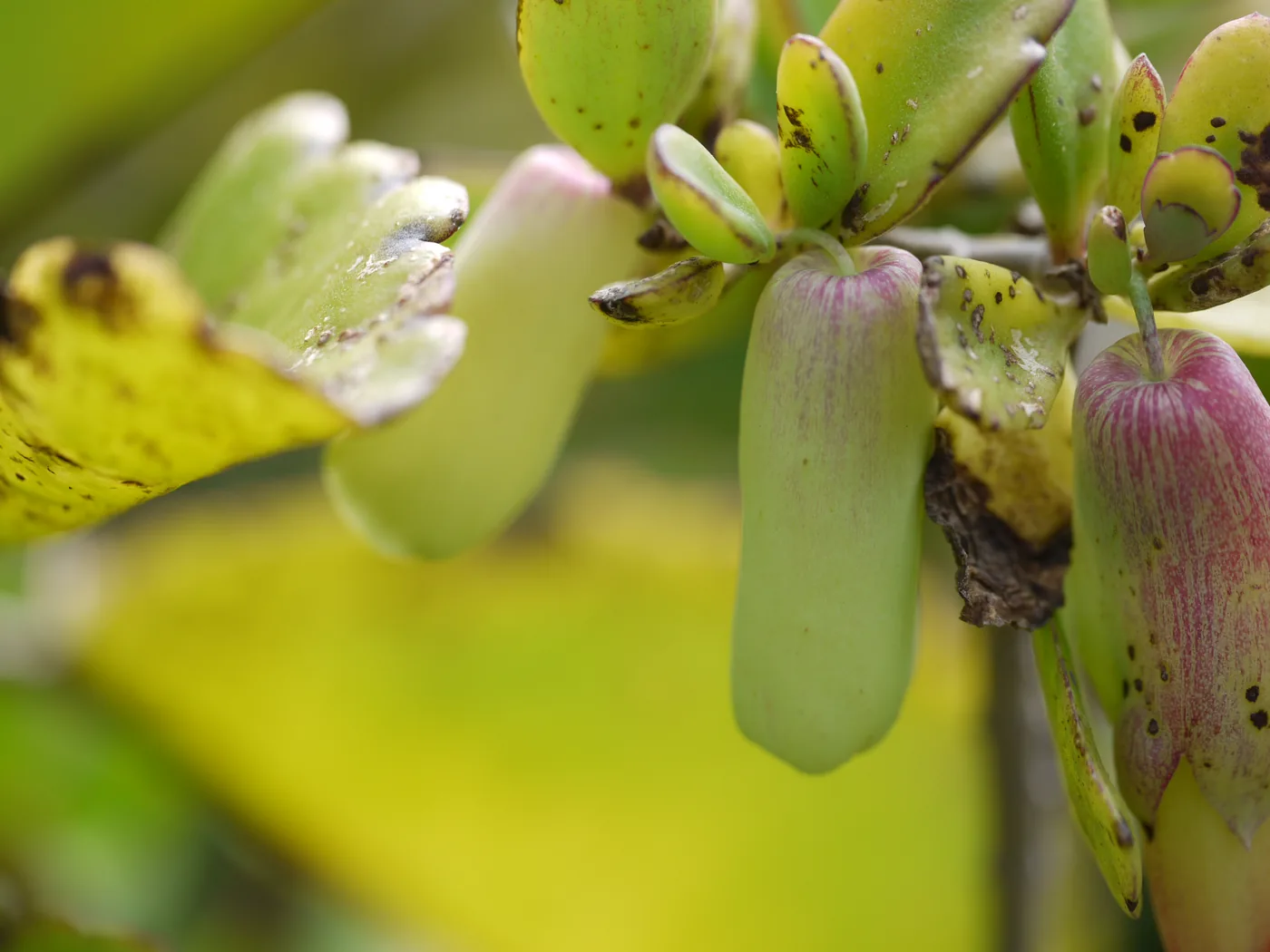

Growing the Plant Yourself
Every extract starts with a leaf, and a leaf you grew is a leaf you can trace. The plant is cold-tender, grows from the plantlets on its own leaf edges, and does well in a pot, which suits a Texas household that needs to carry it indoors for the winter.
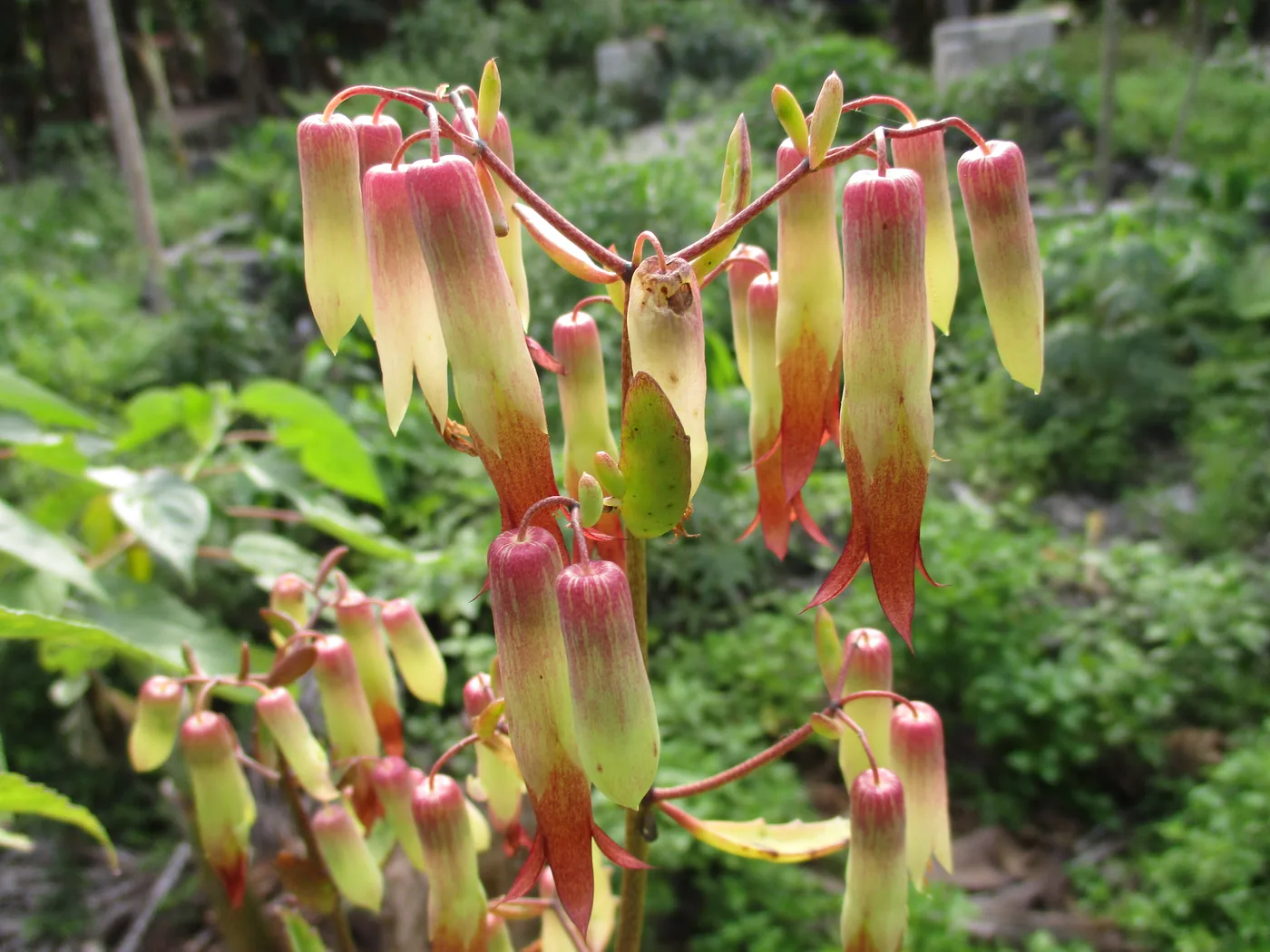

A potted plant also keeps it away from livestock, which is the safest place for it on a ranch.
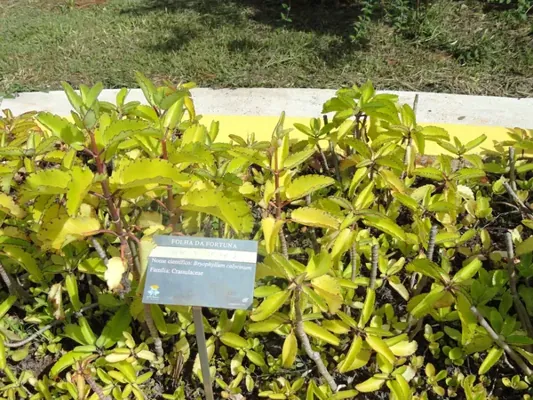
Our partner website, Shearer Farms
Leaf of Life (Bryophyllum pinnatum) Guide: Plantlets, Potting, Winter Indoors and Harvest
Grow leaf of life (Bryophyllum pinnatum, Kalanchoe pinnata): pots, frost, light, soil, water, plantlets and cuttings, spread.
References
- Phytochemistry of Kalanchoe pinnata leaves: flavonoids dominate hot-water and ethanol-water extracts of fresh leaf, Pharmaceutical Biology (2018).
- Wikipedia, Kalanchoe pinnata: description, plantlets, range, cold tolerance, bufadienolides, calf poisoning, traditional uses, compound families.
- TRAMIL, Bryophyllum pinnatum monograph: headache, cold and cough preparations, 24-hour storage limit, animal and rodent toxicity tests, pregnancy, breastfeeding and children.
- NSW Department of Primary Industries, Mother of millions: livestock and pet toxicity, flower heads five times more toxic, flowering season, signs.
- ASPCA, Kalanchoe: toxic to dogs and cats, bufadienolides.
- Quantification of bufadienolides in Bryophyllum leaves and press juice by UHPLC-MS/MS, Planta Medica (2015): leaf and press juice totals, young leaves higher.
- Metabolite profiling of the leaves of Bryophyllum pinnatum: flavonol glycosides isolated from a methanol extract, Planta Medica (2013).
- Bryophyllin A and bersaldegenin-3-acetate from Bryophyllum pinnatum, Chemical and Pharmaceutical Bulletin (1988).
- PROSEA, Bryophyllum: bufadienolides, bryotoxins in flower heads, leaves and roots, cattle poisoning.
- Omah and colleagues, Effects of processing methods on the chemical properties of sprouting leaf (Bryophyllum pinnatum), Journal of Food Technology Research (2022): moisture of fresh leaf.
- The impact of Bryophyllum on preterm delivery, ClinicalTrials.gov NCT00163579.
- A review of clinical evidence for Bryophyllum pinnatum in obstetrics of clinical evidence, BMC Complementary Medicine and Therapies (2019).
- Press juice and flavonoid fraction of the leaf on human myometrium, University of Basel repository.
- Chemistry and pharmacology of Bryophyllum pinnatum (Lam.) Oken, a review, Springer (2025).
Common questions
How do I choose a method?
Four routes follow, and the table lines up what each one does with the leaf. Read across a row and you can predict the extract before you make it. You can decide in three questions. Do you want everything the juice carried in one dry powder? Do you want to know which half holds the cardiac compounds?
What is happening chemically in leaf of life extraction?
The leaf is mostly flavonoid glycosides, which carry sugar and follow water, so the first method here is a water-based one. The steroid compounds that make the leaf poisonous are not a target. Nothing in this guide tells you to concentrate them, and the row for them below says what to do with them. Flavonoid glycosides (Polar, Route A: juice, freeze dry, then a watery ethanol or hot water soak of the powder, The sugar on the flavonoid pulls it into water, and freeze drying keeps the whole juice together): Ethanol-soluble small compounds of mid polarity are only partly caught.
How do I prepare the leaf?
Every route starts the same way, and a careless start spoils each one. Work with gloves on, because leaf juice can irritate skin and the plant is toxic. Harvest mature leaves in the morning, leaving the flower stalks and the growing tips on the plant. Rinse each leaf in cool water and pat it dry, then pull off any plantlets, soil or dead patches. Weigh the clean leaves and write the weight in your batch notes before anything else happens.
What are two juice routes?
Both routes begin with the same raw juice, and they split at the filter. Neither needs a laboratory, but Route B needs a fume hood or an open-air spot. Route A: Juice, Freeze Dry, Then Extract the Powder. Freeze drying removes the water as vapor without heat, so the delicate flavonoid glycosides and phenolic acids are not cooked. What is left is a dry powder of everything the juice carried.
What is a whole-leaf ethanol tincture?
A tincture is a leaf soaked in alcohol and water, and it is the oldest of the extraction methods. It skips the juicer entirely. Chop 100 g of clean fresh leaf and place it in a glass jar. Add 200 mL of 70 percent ethanol. Because the leaf is close to nine parts water, the finished liquid lands near 50 percent ethanol, which suits the sugar-bearing flavonoids.
What is the pregnancy question?
You may have read that this plant is used for early labor. Swiss clinics, mostly in the anthroposophic tradition, give carefully made, standardized press-juice preparations to pregnant women under a doctor's supervision, and the preparations are reported to be well tolerated. Laboratory work on human uterine tissue found that press juice and a flavonoid fraction both weakened contractions, and added to standard drugs they weakened them more. That is not an invitation to juice the leaves at home.
How is the result of leaf of life extraction stored?
Fresh juice and decoction spoil within a day. Keep it cold, use it that day or throw it out, and never keep it past 24 hours, even in the refrigerator. A freeze dried powder keeps far better when sealed with a desiccant, but it is still a concentrate, so it gets a label that names the plant, the date, the leaf weight and the word POISON. A tincture in a dark glass bottle lasts months, and the label matters more than the bottle. Write a batch card for every run, with the leaf weight, the part, the date, the solvent, the ratio, the time and the weight of what you got.
What is cleaning up after a run?
A run is not over when the jar is capped. The leaf trimmings, the spent solvent and every tool that touched the juice still carry the heart-active compounds, and each one needs a plan before the first leaf is cut. Bag the leaf scraps and trash them where cattle, sheep, goats, dogs and cats cannot reach, and never compost them in a pile an animal can get into. Collect the solvent half of Route B in a labeled, closed container and treat it as hazardous waste, never as something to pour out. Wash the knife, the juicer parts, the funnel and the cutting board with soap and hot water, and keep them for this work alone.
What equipment does leaf of life extraction need?
Some routes need a long list of gear, and this one is manageable. The checklist names what to have before the first leaf is cut. Of all of it, the separatory funnel and the ventilation matter most for Route B. A tap that leaks sends solvent onto your bench, and a closed room fills with vapor you cannot see. Work outdoors in still air or in a proper hood.
Is leaf of life extraction safe?
The leaf is toxic, and the guide would be incomplete without a plain account of who is at risk. The bufadienolides are cardiac glycosides. They inhibit the sodium-potassium pump in heart muscle, and in a large enough amount the result is arrhythmia and cardiac arrest. Cattle and sheep have died of it, and dogs are thought to be especially sensitive. The plant is listed as toxic to dogs and cats, usually with stomach upset and, in a large amount, a change in heart rhythm.
What usually goes wrong with leaf of life extraction?
Most problems with a juice route have plain causes, and the usual ones fit in a list. Juice turns brown within minutes (Enzymes in the cut leaf): Work faster, keep it cold, freeze it at once. A thick cream layer between the two liquids (An emulsion from fibers or hard shaking): Filter finer next time and invert gently, then let it stand. Powder turns sticky in the jar (Moisture got in): Dry it again and store it with fresh silica gel. Tincture is cloudy (Fine solids or mucilage): Filter it again and let it rest a day.
How do I grow the plant yourself?
Every extract starts with a leaf, and a leaf you grew is a leaf you can trace. The plant is cold-tender, grows from the plantlets on its own leaf edges, and does well in a pot, which suits a Texas household that needs to carry it indoors for the winter. A potted plant also keeps it away from livestock, which is the safest place for it on a ranch. Our partner website, Pure Extracts. Leaf of Life (Bryophyllum pinnatum) Guide: Plantlets, Potting, Winter Indoors and Harvest .
Browse by topic
More guides to explore
 ExtractionCold Press Extraction
 ExtractionEnzymatic Extraction
 ExtractionEthanol Extraction
 ExtractionMicrowave-Assisted Extraction
 ExtractionNatural Dye Extraction and Use
 ExtractionPressurized Hot Water Extraction
 ExtractionSteam Distillation