Plants
How to Make a Passionflower Extract: Methods, Solvents and Shelf Life
Which parts of passionflower to use, which method pulls out its compounds, the solvent and ratio, safety and how long the extract keeps.
On this page
What are you extracting from passionflower?
Passionflower extractions target a range of phytochemicals, with C-glycosyl flavonoids serving as key markers for species identification. These include isochaftoside, schaftoside, isoorientin, orientin, vitexin and isovitexin. Broad classes extracted also encompass flavonoids, glycosides, alkaloids, phenolic compounds, and volatile constituents. Specific phenolic acids like caffeic, chlorogenic, and ferulic acids are present, alongside trace amounts of indole/harmala alkaloids - harman and harmaline being relevant for safety considerations. A contested “benzoflavone” (BZF) moiety has been proposed but is not consistently found.
The choice of solvent impacts which compounds you obtain. For a comprehensive extraction covering most general-purpose herbs, an ethanol tincture using between 40% and 50% ethanol with 50-60% water is suitable. This ratio effectively captures flavonoids and phenolics. A 60-70% ethanol solution combined with 30-40% water can also be used to extract alkaloids and glycosides, though the specific ratios depend on desired compounds. [ethanol tincture]
Other methods exist but offer different results. Glycerin extraction [glycerin extraction] yields a less potent product, suitable for alcohol-sensitive applications, utilizing a typical 60% glycerin / 40% water ratio. Vinegar (acetic acid ~5%) is best suited to mineral-rich herbs and does not replace ethanol as a general solvent. Water extraction [water extraction and decoction] focuses on polar molecules.
Proper preparation begins with [drying herbs]. Food-grade ethanol is essential; avoid denatured alcohol due to toxicity. Following extraction, [filtering and clarifying extracts] removes particulate matter. Solvent removal requires careful attention to [evaporating solvent], followed by proper [storing extracts] in airtight containers. Understanding the principles of [choosing a method] ensures you obtain the desired compounds from this versatile herb.
Which extraction method suits passionflower, and why?
Passionflower’s phytochemical profile dictates the best approach to extraction. It contains flavonoids, glycosides, alkaloids, phenolic compounds and volatile constituents; these fall into broad classes suited for several methods, but ethanol is preferred. [choosing a method]
The monograph identifies C-glycosyl flavonoids as marker compounds. These respond well to an alcohol solvent. A 40-50% ethanol solution with 50-60% water is appropriate for extracting these and other general-purpose constituents like phenolics, caffeic, chlorogenic, and ferulic acids, found in the plant. This ratio balances extraction efficiency with preserving delicate compounds.
While a 60-70% alcohol solution could also work, it may not capture the full spectrum of flavonoids as effectively as the lower percentage. Using vodka (40% ethanol / 80 proof) is adequate for folk method tinctures of leaves and flowers but lacks adjustability; passionflower’s roots and aerial parts benefit from a tailored solvent strength.
Glycerin extraction [glycerin extraction] is possible, though less efficient overall. Glycerin extracts some compounds, but potency will be lower than an alcohol-based tincture, and shelf life is shorter, around one to two years versus five or more for alcohol tinctures.
Water extraction [water extraction and decoction] would prioritize polar molecules, missing many of passionflower’s key constituents. Oil infusions [oil infusion] are unsuitable as they do not effectively extract the target compounds. CO2 extraction [CO2 extraction] is a viable industrial method but requires specialized equipment unavailable for most home extractions.
After extraction, proper filtering and clarifying [filtering and clarifying] is essential to remove plant matter. Solvent safety [solvent safety] must be prioritized when using ethanol, ensuring food-grade alcohol is used. Proper storage [storing extracts] in a cool, dark place will maximize shelf life.
What solvent and ratio should you use for passionflower?
Passionflower falls into the flavonoid and phenolic compound category, making an ethanol tincture the most appropriate method for extraction [ethanol tincture]. The table indicates a ratio of 40-50% ethanol to 50-60% water is best suited for these constituents. A 40% ethanol solution, like vodka (80 proof), can work for leaves and flowers but lacks adjustability. For precision, begin with food-grade ethanol at 90-95% concentration and dilute with distilled water to achieve the target percentage.
The monograph identifies C-glycosyl flavonoids as key markers; these are best captured using this mid-range alcohol concentration. While a broader range of 60-70% ethanol / 30-40% water also works, the 40-50% ratio offers more flexibility for targeting passionflower’s specific profile. Glycerin extraction [glycerin extraction] is possible but yields lower potency and isn't directly comparable to an alcohol tincture.
Consider that passionflower contains indole/harmala alkaloids in trace amounts; while not a primary target, ethanol will extract these alongside the flavonoids. The choice of solvent impacts which molecules are extracted based on polarity and solubility. Ethanol covers a broad range, making it versatile for complex plant chemistry.
Proper preparation is essential. Ensure herbs are thoroughly [drying herbs] before extraction to prevent mold growth and maximize yield. Once complete, proper [filtering and clarifying extracts] will remove particulate matter. Store the finished tincture in a cool, dark place for optimal shelf life - alcohol tinctures can last five years or more when stored correctly [storing extracts]. Always prioritize [solvent safety] when working with ethanol.
How to Choose an Extraction Method for Any Herb
Match the method to the plant: what polarity and heat sensitivity mean, and which solvent pulls out which compounds.
For a More In-Depth Read, Click HereHow do you make a passionflower extract step by step?
Passionflower extracts begin with properly prepared plant material. Begin by drying herbs the aerial parts to ensure low moisture content before extraction. This prevents mold and maximizes shelf life.
For a standard alcohol tincture, choose an ethanol percentage appropriate for flavonoids. A ratio of 40-50% ethanol with 50-60% water is suitable for general-purpose herbs like passionflower ethanol tincture. Use only food-grade ethanol; avoid denatured alcohol due to toxicity solvent safety. If starting with a higher proof spirit like Everclear (190 proof / 95% ethanol), dilute it with distilled water to reach the target percentage. Vodka, at 40% ethanol, is inadequate for comprehensive extraction of passionflower’s constituents.
Combine dried passionflower material with the chosen solvent in a clean glass jar. A common ratio is 1:5 plant material to liquid by weight. Seal tightly and store in a cool, dark place. Macerate for four to six weeks, shaking daily. This allows sufficient time for compounds like c-glycosyl flavonoids, including vitexin and orientin, to dissolve into the solvent.
After maceration, filtering and clarifying the mixture through cheesecloth or a fine mesh strainer removes plant debris. Further filtration with paper filters yields a clearer tincture.
If reducing the alcohol content is desired, carefully perform evaporating solvent under low heat and vacuum to avoid damaging sensitive compounds. Store finished tinctures in airtight, dark glass bottles at room temperature for up to five years storing extracts.
Alternatively, a glycerin extraction using 60% glycerin / 40% water can be used. This yields a less potent but alcohol-free extract suitable for specific applications. The process is similar to the tincture method regarding maceration and filtration.
Who should be careful with passionflower?
Passionflower presents specific cautions for certain individuals. The presence of indole/harmala alkaloids - harman and harmaline specifically - requires careful consideration regarding safety.
Those taking medications affecting the central nervous system should exercise caution. Passionflower’s mechanism is not fully established, but evidence suggests it may modulate the GABA system. [ESTABLISHED that mechanism is unclarified; GABA modulation is the leading hypothesis]. This action could amplify the effects of sedatives, anxiolytics, or antidepressants. Concurrent use requires medical supervision.
Pregnant and breastfeeding individuals should avoid passionflower due to insufficient safety data. The potential impact on fetal development or infant health has not been studied.
Individuals with liver disease require caution. While not specifically detailed in available documentation, the liver metabolizes many plant compounds; compromised liver function may affect processing of passionflower’s constituents.
Passionflower contains C-glycosyl flavonoids , isochaftoside, schaftoside, isoorientin, orientin, vitexin, and isovitexin - considered markers for species identification [ESTABLISHED]. These, along with other broad phytochemical classes like alkaloids and phenolic acids [ESTABLISHED], contribute to the plant’s effects.
When preparing a passionflower extract, choosing a method depends on target compounds. A 40-50% ethanol solution is suitable for flavonoids and phenolics, common in this herb [ethanol tincture]. Glycerin extraction [/articles/glycerin-extraction] is an alternative if alcohol is undesirable, though potency will be lower. Avoid using vodka (40% ethanol) if targeting resins or alkaloids.
Always use food-grade ethanol; denatured alcohol is unsafe [solvent safety]. Proper storage of extracts is essential for maintaining quality - alcohol tinctures can last five years or more [storing extracts], while glycerites have a shorter shelf life.
Before any solvent work: use glass or stainless steel rated for the solvent, work outdoors or beside a fan pulling the vapor away from you, heat ethanol only on an electric or induction hot plate (never an open flame or a gas burner), and do not breathe solvent vapor. This guide is education, not medical advice: check with a doctor before using any herbal extract alongside medication, during pregnancy or for a child.
How to Make a Glycerite: Glycerin Herbal Extracts
The alcohol-free extract: which herbs suit vegetable glycerin, how much water to add, how to make it and how long it keeps.
For a More In-Depth Read, Click HereHow do you store a passionflower extract, and how long does it keep?
Passionflower extracts require careful storage to maintain potency and prevent degradation. The ideal conditions depend on the solvent used during [ethanol tincture] production. Alcohol-based tinctures, made with between 40% and 95% ethanol, are stable for five or more years if stored correctly. Keep them in dark glass bottles, tightly sealed, away from light, heat, and air. A cool, dark place is best; refrigeration is not necessary but will further extend shelf life.
Glycerin extracts, created through [glycerin extraction], have a shorter lifespan of one to two years. Glycerin’s higher water content supports microbial growth, so monitor for any signs of spoilage like cloudiness or unusual odor. Store glycerites similarly to alcohol tinctures: dark glass, sealed, cool and dark.
Regardless of the solvent, protect extracts from temperature fluctuations. Avoid storing near stoves, windowsills, or in unconditioned spaces. Properly dried herbs used as starting material for any extraction method - including [drying herbs] - will contribute to a longer-lasting final product.
Water extractions require special attention. These are prone to mold and bacterial growth. Refrigeration is essential, and the shelf life is limited to days or weeks. Consider adding an alcohol preservative if long-term storage is desired.
Always label extracts with the date of production and the solvent used. Inspect for changes in color, clarity, or odor before use. If any doubt exists about its quality, discard it. Proper [storing extracts] practices ensure a safe and effective final product.
How to Filter and Clarify an Extract: Carbon, Bentonite and Silica
From coarse straining to fine filters, and how activated carbon, bentonite clay and silica clean up an extract.
For a More In-Depth Read, Click HereWhich guides go with this one?
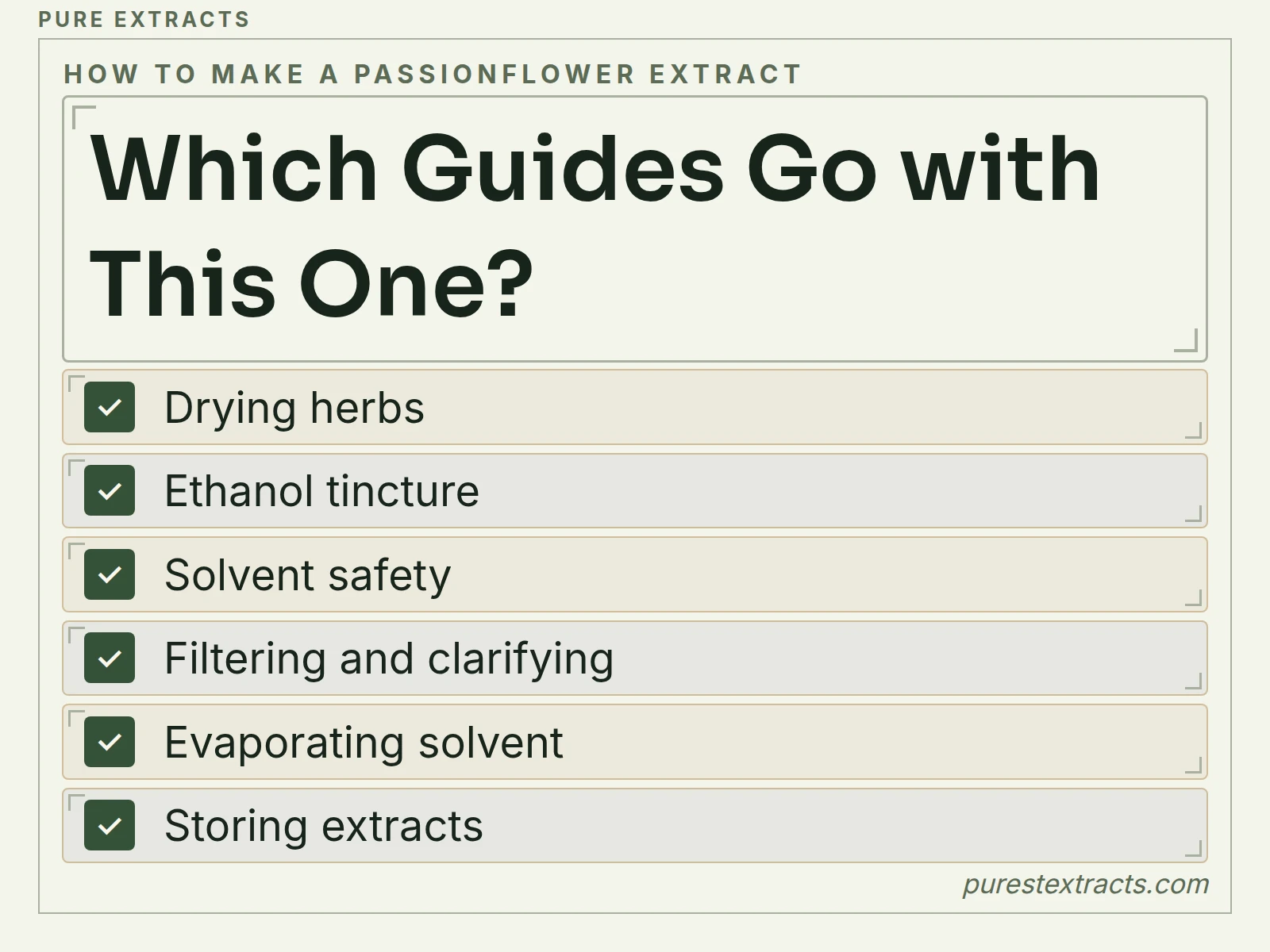
- Drying herbs
- Ethanol tincture
- Solvent safety
- Filtering and clarifying
- Evaporating solvent
- Storing extracts
- Glycerin extraction
- Choosing a method
Sources
- anxiety, Both CBT and P. incarnata were associated with significantly greater reductions in BDZ dosage at three months (CBT: p = 0.005, effect size:
- Clinical, humanistic, and economic outcomes of Passiflora alata Curtis use in participants with mild to moderate anxiety: a non-randomized experimenta (2026)
- Effects of Passiflora incarnata on salivary biomarkers and anxiety in patients undergoing third molar extraction surgery (2025)
- Exploring the Effects of a Calming Herbal Tea Blend on Perioperative Anxiety: A Randomized Clinical Trial (2025)
- Effects of Passiflora incarnata and Valeriana officinalis in the control of anxiety due to tooth extraction: a randomized controlled clinical trial (2024)
- Herbal Remedies and Their Possible Effect on the GABAergic System and Sleep (2021)
- Passiflora incarnata in Neuropsychiatric Disorders-A Systematic Review (2020)
- Effects of Passiflora incarnata Linnaeus on polysomnographic sleep parameters in subjects with insomnia disorder: a double-blind randomized placebo-co (2020)
- TRADITIONAL Eclectic / European herbal medicine - The physiological action of passiflora has not been well-studied. Medicinal doses produce
- TRADITIONAL Cherokee (Native American) - Dermatological -- Aid Compound infusion of root used for boils. Hamel, Paul B. and Mary U. Chiltosk
- TRADITIONAL Documented medicinal use - Antidepressant Antispasmodic Astringent Diaphoretic Epilepsy Homeopathy Hypnotic Narcotic Sedative Va
- TRUSTED general - Key Actions: Sedative Anxiolytic Nervine Relaxant (Herbal Reality
Common questions
What are you extracting from passionflower?
Passionflower extractions target a range of phytochemicals, with C-glycosyl flavonoids serving as key markers for species identification. These include isochaftoside, schaftoside, isoorientin, orientin, vitexin and isovitexin. Broad classes extracted also encompass flavonoids, glycosides, alkaloids, phenolic compounds, and volatile constituents. Specific phenolic acids like caffeic, chlorogenic, and ferulic acids are present, alongside trace amounts of indole/harmala alkaloids - harman and harmaline being relevant for safety considerations.
Which extraction method suits passionflower, and why?
Passionflower’s phytochemical profile dictates the best approach to extraction. It contains flavonoids, glycosides, alkaloids, phenolic compounds and volatile constituents; these fall into broad classes suited for several methods, but ethanol is preferred. The monograph identifies C-glycosyl flavonoids as marker compounds. These respond well to an alcohol solvent. A 40-50% ethanol solution with 50-60% water is appropriate for extracting these and other general-purpose constituents like phenolics, caffeic, chlorogenic, and ferulic acids, found in the plant.
What solvent and ratio should you use for passionflower?
Passionflower falls into the flavonoid and phenolic compound category, making an ethanol tincture the most appropriate method for extraction [ethanol tincture]. The table indicates a ratio of 40-50% ethanol to 50-60% water is best suited for these constituents. A 40% ethanol solution, like vodka (80 proof), can work for leaves and flowers but lacks adjustability. For precision, begin with food-grade ethanol at 90-95% concentration and dilute with distilled water to achieve the target percentage.
How do you make a passionflower extract step by step?
Passionflower extracts begin with properly prepared plant material. Begin by drying herbs the aerial parts to ensure low moisture content before extraction. This prevents mold and maximizes shelf life. For a standard alcohol tincture, choose an ethanol percentage appropriate for flavonoids. A ratio of 40-50% ethanol with 50-60% water is suitable for general-purpose herbs like passionflower ethanol tincture .
Who should be careful with passionflower?
Passionflower presents specific cautions for certain individuals. The presence of indole/harmala alkaloids - harman and harmaline specifically - requires careful consideration regarding safety. Those taking medications affecting the central nervous system should exercise caution. Passionflower’s mechanism is not fully established, but evidence suggests it may modulate the GABA system. [ESTABLISHED that mechanism is unclarified; GABA modulation is the leading hypothesis].
How do you store a passionflower extract, and how long does it keep?
Passionflower extracts require careful storage to maintain potency and prevent degradation. The ideal conditions depend on the solvent used during [ethanol tincture] production. Alcohol-based tinctures, made with between 40% and 95% ethanol, are stable for five or more years if stored correctly. Keep them in dark glass bottles, tightly sealed, away from light, heat, and air. A cool, dark place is best; refrigeration is not necessary but will further extend shelf life.
What are related guides?
Plants Activated Charcoal Production Plants Adaptogenic Compounds Plants Oregano, Medicinal Applications . How botanical extracts are made, step by step, from the people who run the extractions. What we learn, sent about once a week. All guides Ebooks Courses Free extras . About Contact Privacy Terms .
Browse by topic
More guides to explore
 ExtractionCold Press Extraction
 ExtractionEnzymatic Extraction
 ExtractionEthanol Extraction
 ExtractionMicrowave-Assisted Extraction
 ExtractionNatural Dye Extraction and Use
 ExtractionPressurized Hot Water Extraction
 ExtractionSteam Distillation